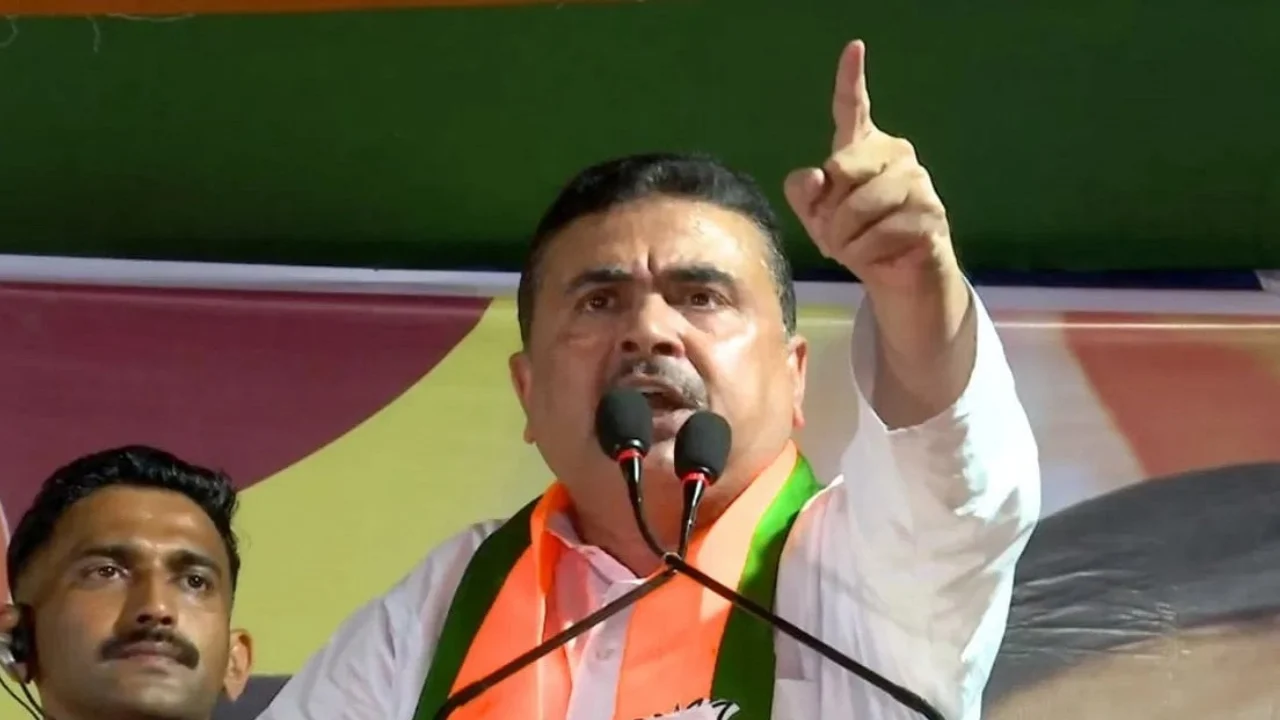
The chief minister of West Bengal, Suvendu Adhikari, has alleged that “foreign-backed Islamist fundamentalist” groups may have been involved in the recent violence surrounding protests over an exam paper leak in India. He claimed that most of those involved in the violence at the protests were not students but Jamaat-leaning fundamentalists, and that investigating agencies would examine whether they had the backing of foreign forces.
Speaking to journalists on Sunday, Suvendu Adhikari said these people have no connection with the movement. They are not students, they are Jamaati (Islamist) fundamentalists. Whether they had the support of foreign forces will emerge in the investigation, he said.
On Friday, police clashed with left-backed protesters at a demonstration held over allegations of a leak of the NEET question paper. Police baton-charged the crowd and fired tear gas to bring the situation under control.
After the incident the administration announced that the state’s newly framed “anti-goonda” law would be applied against those accused of violence. Suvendu Adhikari said those involved in the violence would be given punishment that their next three generations would remember.
He had earlier claimed in the state assembly that none of the roughly 70 people identified from the protest were students and that they had no connection with the movement against the NEET paper leak.
Suvendu Adhikari claimed the violence may have been incited out of anger at the government’s steps against illegal madrasas in the state, the implementation of a court order on OBC certificates, the enforcement of cattle slaughter laws and measures to control noise pollution.
Referring also to an attack on a journalist during the protest, he alleged that media workers had been deliberately targeted and that attempts had been made on their lives.
The central government has meanwhile prepared to table the Public Examinations (Prevention of Unfair Means) Amendment Bill, 2026, in the Lok Sabha on Monday. Under the proposed amendment, fast-track courts would be set up in every state for the swift disposal of paper-leak cases, investigations would have to be completed within two months, and those convicted would face a minimum of five and a maximum of 10 years in jail and a fine of up to 50 lakh rupees.
The government said the amendment is being brought against the background of the students’ movement over the NEET paper leak. The party leading the movement announced on Saturday, however, that it was withdrawing its 36-day agitation. It said the decision had been taken after the resignation of the union education minister, Dharmendra Pradhan, and the government’s agreement to its other demands.
বাংলায় মূল প্রতিবেদন পড়ুন · Read the original Bengali report