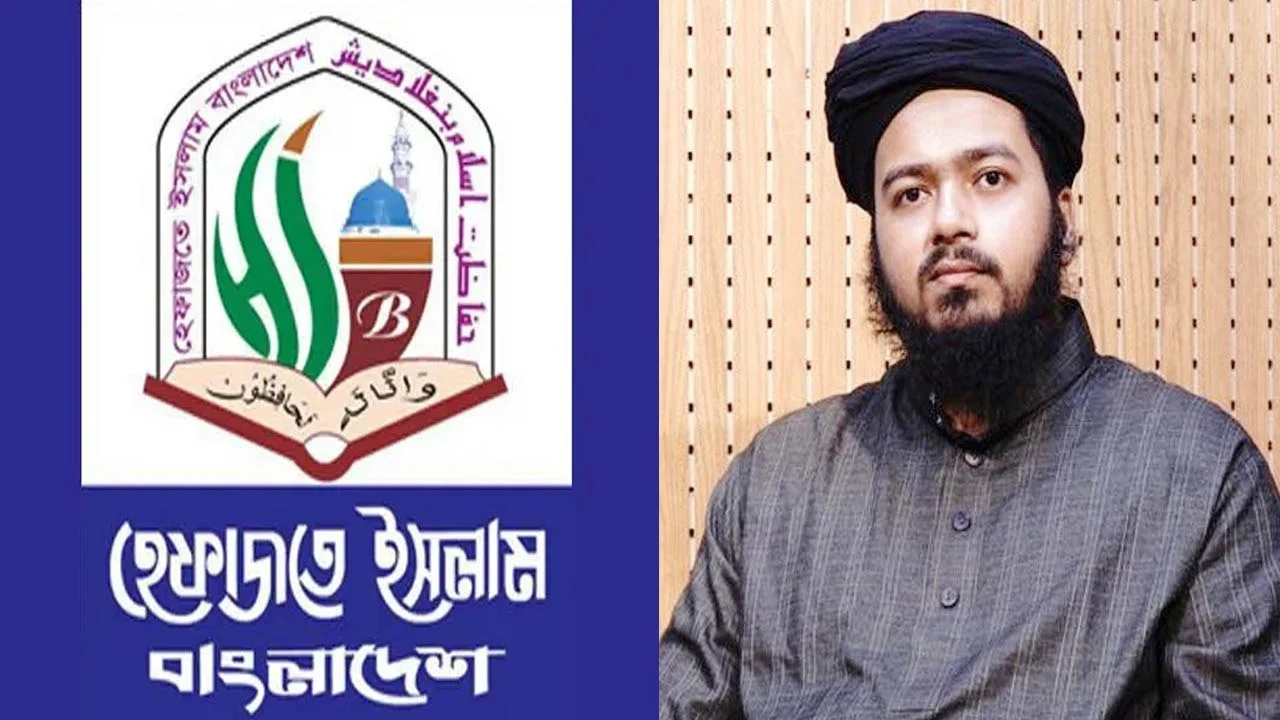
Islamic scholar and Bangladesh Jamaat-e-Islami member Mufti Ali Hasan Usama has said the claim that “Jamaat’s creed is bad” is a blatant falsehood. “Jamaat is a political party. It includes people from many educational streams — Deobandi, Madani, Azhari — and people of many schools of thought: Hanafi, la-madhhabi, Sunni, Tablighi. Even a Hindu, Krishna Nandi, has been a Jamaat candidate for MP. So there is no scope to pass off any single creed as the creed of all of Jamaat’s leaders and activists,” he said.
He made the remarks in response to a report on Qawmi students joining Jamaat and Hefazat-e-Islam’s concern over it.
“Creed is each person’s own; the politics of establishing the faith is for all,” Mufti Usama said. “Jamaat never says we hold Maududi’s creed. Jamaat’s own constitution states that the creed indicated in the Quran and authentic hadith will be Jamaat’s creed. Even so, the opposition to Jamaat is essentially not doctrinal but political. Through such propaganda they gain various benefits from the secularists.”
He said: “‘Qawmi’ is an educational stream; no specific political party is named ‘Qawmi’. Anyone who studies in a Qawmi institution can join any political party. That is why senior Qawmi figures, including Allama Atahar Ali Khan, joined the BNP and became MPs on the ‘sheaf of paddy’ symbol. Maulana Ruhul Amin — former khatib of the national mosque, a top leader of the Qawmi board Al-Haiatul Ulya and muhtamim of Gowhardanga Madrasa — was a nomination-seeker on the Awami League’s ‘boat’ symbol, and Dr Abu Reza Nadvi also became an MP.”
Mufti Usama said: “Secularism is clear disbelief. Even so, if ‘Qawmi’ identity is not harmed by joining a secular party, then why would ‘Qawmi’ identity be lost by joining Jamaat, the world’s largest Islamic political organisation?”
Usama added: “Deobandism is not the name of any party. Deobandism is the name of tawhid, sunnah and raising the word of Allah. I was a Deobandi, I am, and I will remain so forever, God willing. I was a teacher and director of several Qawmi madrasas and have taught many texts including Sahih Bukhari, Tirmidhi, Mishkat and Fatawa Shami. I intend to remain associated with Qawmi madrasas in future too, so no one can forcibly expel me from Qawmi. No one has been given that contract either. The present conscious younger generation will show a red card to those who, trading on the Qawmi name and posing as contractors, treat the BNP as the ‘Congress of Bangladesh’ and grovel to it to pursue worldly gain.”
The report he responded to said several well-known scholars of the Qawmi stream had already joined Jamaat-e-Islami, and that many teachers and students of various Qawmi institutions were reportedly following the same path. Against this backdrop, on 16 July, at the invitation of Hefazat-e-Islam Bangladesh Amir Allama Shah Muhibbullah Babunagari, a discussion was held with leaders of seven Qawmi-stream Islamic parties at Jamia Azizul Uloom Babunagar Madrasa in Fatikchhari, Chattogram.
Acknowledging that concern was expressed at the meeting over students joining Jamaat, Hefazat-e-Islam Bangladesh joint secretary general and Khelafat Majlis vice-amir Maulana Ahmad Ali Kasemi said: “This was not on our meeting’s agenda, but it came up in discussion. Because our scholars have an alliance with Jamaat, students are leaning towards that party, so Hefazat expressed concern — since many scholars still do not regard Jamaat-e-Islami as a rightful Islamic party.”
He also said a section of Qawmi youth were leaning towards the BNP too and joining it, but that, regrettably, this was not discussed at the meeting, though it certainly deserved discussion.
বাংলায় মূল প্রতিবেদন পড়ুন · Read the original Bengali report