Mostafizur Rahman lives in Biprabhag village in Dakshin Dinajpur district of India's West Bengal state. Among the five members of his family, only his name was dropped during this year's Special Intensive Revision (SIR) of the West Bengal electoral rolls, leaving him without voting rights.
Following Supreme Court directions, he appealed the deletion before a judicial tribunal and submitted all his identity documents linked to citizenship. His case remains pending.
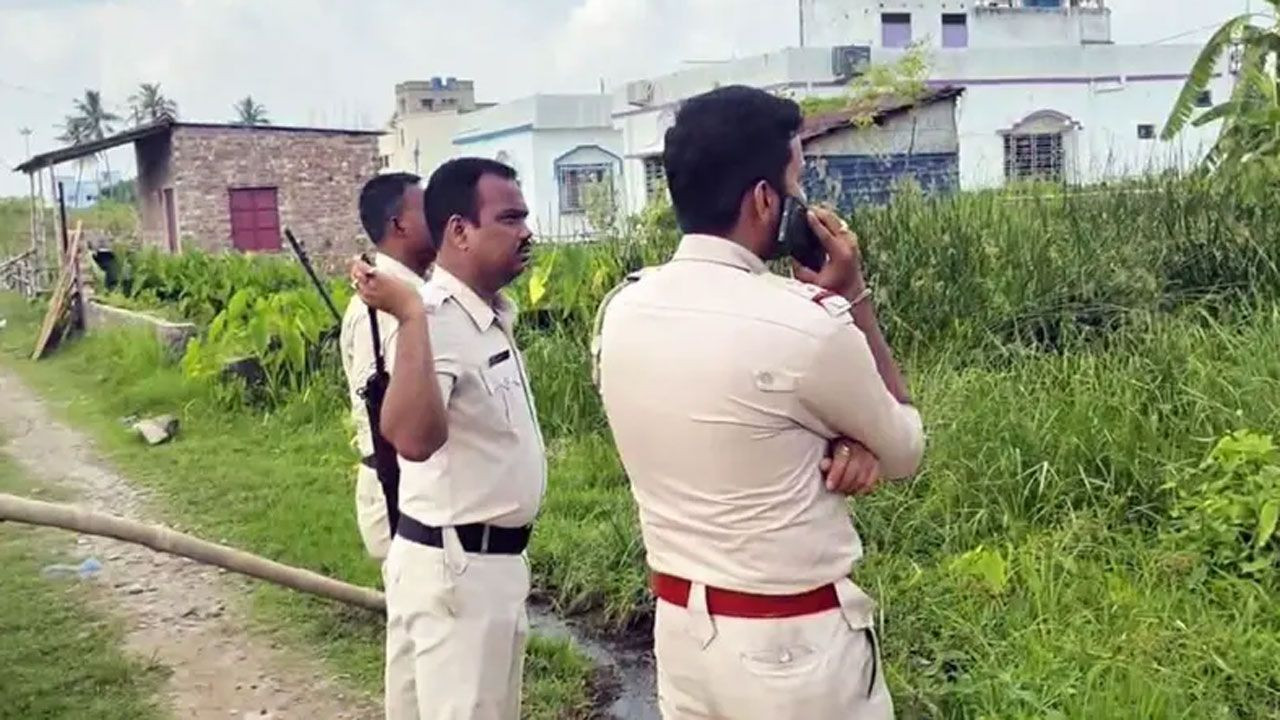
However, on Wednesday night a police officer and several civic police volunteers came to his home and asked to see his citizenship documents.
Since earlier this week, complaints have surfaced across parts of the state that West Bengal police personnel have been involved in verifying the documents of excluded voters. Local residents and activists say police are going door to door in some places, issuing notices summoning excluded voters to police stations in others, and holding camps elsewhere to check the records of all deleted voters in a neighborhood.
Experts say police anywhere in India have never independently carried out citizenship verification drives.
"The police told me they would set up a camp in the neighborhood from the next morning," Rahman said. "Everyone whose name was dropped from the voter list would have to submit their documents again, and the police would verify them."
He said the police carried a checklist naming various documents with "Yes/No" columns marked against each item based on what a dropped voter presented.
Rahman's wife, Bilkis Begum, is a booth-level officer (BLO) for the Election Commission. During the state's Special Intensive Revision, she was responsible for distributing and collecting forms door to door. Yet even she was unaware of this new police document-verification drive.
"Many people are calling me to ask about this new verification process," she said. "Despite being an Election Commission official, I cannot give them a clear answer."
"This fresh police verification of dropped voters has created panic among people," she said. "Mostly, police are visiting homes in the evening or at night. Villagers are already anxious after losing their names from the voter rolls, and sudden police visits add to their confusion. People are exhausted from repeatedly proving their validity by submitting the same papers, making photocopies and standing in queues."
"My parents are valid voters, my wife is a valid voter, my son is a valid voter," Rahman asked. "Why wouldn't I be valid? Where is my fault?"
About 100 km away, in the Mothabari police station area of Malda, the situation is much the same. A Mothabari police officer said officers have been going from village to village, polling booth by polling booth, for the past three days to check the records of excluded voters.
Residents say civic police volunteers have put up posters across villages since Friday morning listing documents required to prove voter eligibility:
- Photocopy of the 2026 voter list page if parents are registered voters.
- Photocopy of land deeds from before 1987 in the name of parents or paternal or maternal grandparents.
- Parents' or grandparents' names in the 1971 voter list.
- The 2002 voter list.
- Copy of the tribunal application.
- E-voter copy.
- PAN card.
- Birth registration certificate.
- Aadhaar card.
- Board examination admit card.
Imam Hossain and Jabbar Sheikh are both dropped voters in the area who saw the list posted around their village.
"I submitted everything with my tribunal application: my Class 12 board certificate, secondary admit card, birth certificate, my parents' voter cards, PAN card and Aadhaar card. How many more times do I have to submit these papers?" Hossain said. "Our family has lived here since before independence. Our land deeds prove it, and my grandfather's name was on the 1955 voter list."
"I asked a civic police volunteer whether all these papers had to be submitted at the police station, and they couldn't say," Sheikh said. "Meanwhile, my appeal is still stuck at the tribunal and I haven't received a decision yet."
According to Election Commission of India figures, roughly 38.31 lakh (about 3.83 million) applications were filed with tribunals between March and September, of which only about 3.3 percent have been disposed of.
About 300 km from Mothabari, in Bhabagachhi village in Naihati under North 24 Parganas, villagers surrounded police personnel and civic police volunteers who arrived on Thursday morning seeking papers from dropped voters and demanded to see a written administrative order.
"When villagers asked the police for an official notice, they told us to ask senior officers," said Trinamool Congress panchayat member Anisur Ali Khan. "Then they called in more police and took me and several social activists away, detaining us for a few hours."
Police order review of voter roll and tribunal data
A senior West Bengal police official, speaking on condition of anonymity, said instructions were issued across the state this week to analyze data on SIR deletions and new inclusion applications. Officers across districts, police districts and all police commissionerates except Kolkata Police received the directive.
A circular instructed officers to compile and submit a detailed report on SIR hearings and tribunal appeals by November 30, analyzing data across the state's 294 assembly constituencies.
Hooghly Rural Superintendent of Police Kunwar Bhushan Singh told BBC Bangla that a preliminary verification drive had been under way for the past three to four days on instructions from senior police authorities, verifying excluded voters' documents under the Citizenship Act.
A Jalpaiguri police officer described it as a routine verification drive checking documents including birth certificates, passports, PAN cards and school examination certificates. Police officials in Krishnanagar and Murshidabad gave similar accounts.
Election Commission sources, however, say the commission issued no such instruction and was unaware of the drive.
Speaking to the media, BJP leader Samik Bhattacharya said the exercise was being conducted in the interest of national security. Separately, a social media notice posted by Naihati BJP MLA Sumitra Chatterjee asked voters whose cases are pending before tribunals to contact their local police stations, specifically instructing those contacted by station officers to appear on November 26 and 27.
'A drive to verify citizenship, especially of Bengali Muslims'
Ranjit Sur, general secretary of the Association of Democratic Rights, alleged the police operation amounts to citizenship verification.
Sur said that although drives to identify alleged Bangladeshi infiltrators took place several months ago, such a coordinated statewide police mobilization had not been seen before.
"If you compare the checklist of documents police are taking door to door with the citizenship criteria under our current law, it is clear they are verifying citizenship," he said. "This list is typically a citizenship verification checklist."
He questioned how poor and marginalized people can obtain documents such as birth certificates, board certificates and passports, and challenged the legal authority of police in such verification.
CPI(M) state secretary Md Salim said: "Police have no jurisdiction. Who is a voter and who is not is none of the police's business. The police must state under what authority they are asking to see documents."
Sur said India's citizenship verification is legally the sole responsibility of the Registrar General of India. He claimed that after the central government amended the Foreigners Act, states were ordered to build holding centers in districts where police handled alleged Bangladeshi infiltrators and Rohingya, but involving every police station statewide was unprecedented.
He added that although officers cite government orders, none has shown a written directive when asked. He said the drive has sparked deeper fear among Muslims, noting Muslims make up a larger share of dropped voters and police activity is heavier in Muslim-majority areas such as Malda, South 24 Parganas, Murshidabad, Uttar Dinajpur and Dakshin Dinajpur, where the pattern emerged around Tuesday.
Opposition parties approach Election Commission
The notices instruct residents visiting police stations to bring originals and photocopies of birth certificates and other supporting records.
Meanwhile, both the CPI(M) and the Trinamool Congress have written to the Election Commission over police door-to-door checks on dropped voters.
Trinamool Rajya Sabha MP Samirul Islam wrote to the Chief Election Commissioner on November 27 seeking urgent intervention, alleging police are demanding Aadhaar cards, voter IDs and land deeds even from residents whose appeals are pending in judicial tribunals, risking interference with Supreme Court-mandated tribunals.
On November 26, the CPI(M) wrote to state Chief Electoral Officer Neelam Meena saying police and civic volunteers were demanding personal papers without displaying legal authority or written orders, and demanded an immediate halt to the drive and disclosure of the directives authorizing it.