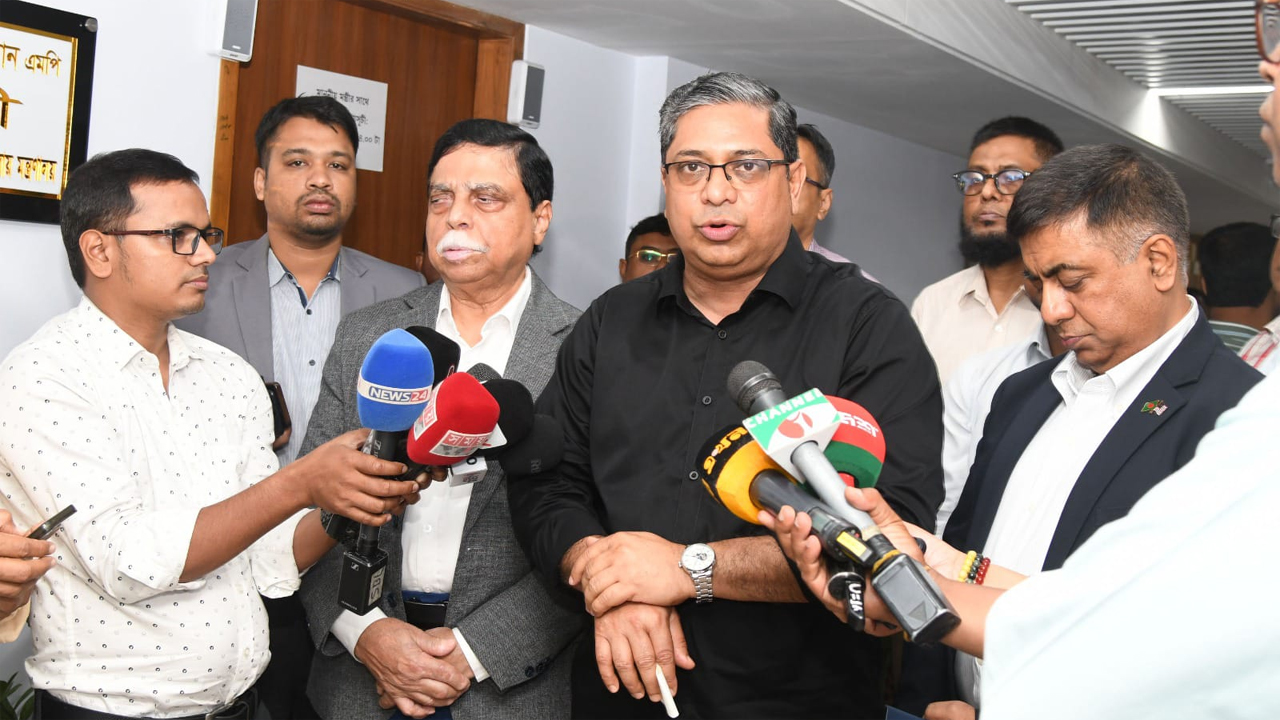
Malaysia will take roughly 200,000 workers from Bangladesh within the next six months. The recruitment process will be carried out through various agencies in the country, said State Minister for Local Government, Rural Development and Cooperatives Mir Shahe Alam.
The state minister also said preparations are under way for roughly $2 billion in investment in Bangladesh in electric vehicles, solar-based renewable power, and the halal food sector. He said these processes would begin very soon.
The state minister said discussions on taking workers from Bangladesh have progressed a long way. He said Malaysia will take roughly 200,000 workers, of whom 10,000 will be taken free of charge.
He said the export of manpower from Bangladesh would begin in phases from late September and would be completed within the next six months.
Malaysian High Commissioner to Bangladesh Mohammad Shuhada bin Osman met Sunday at the secretariat with Local Government, Rural Development and Cooperatives Minister Dr Abdul Moyeen Khan. State Minister Mir Shahe Alam and Secretary Md Shahidul Hasan were also present.
The state minister later briefed reporters on the meeting. He said the discussion covered aspects of Prime Minister Tareque Rahman’s visit to Malaysia, and ways to further advance the friendly relationship between the two countries. He said roughly 800,000 registered Bangladeshi workers are currently in Malaysia, along with some unregistered workers. He said the minister had requested the high commissioner’s help in getting those unregistered workers registered. Roughly 10,000 Bangladeshi students currently study in Malaysia.
He said roughly 1,000 Malaysian students also study at various medical colleges in Bangladesh, including Dhaka Medical College and Mymensingh Medical College.
Asked about the operation of e-rickshaws, or battery-run rickshaws, on the capital’s roads, the state minister said: “We will not allow e-rickshaws to operate on main roads. Arrangements will be made for them to operate on internal roads, divided into eight zones. This will be divided into three categories. The e-rickshaws we license or register in Dhaka city will have a passenger capacity of two or four. We will not bring any six-seat vehicle, meaning e-rickshaw, under Dhaka City Corporation registration. We have stated that in the policy. Two-, four- and six-seat registrations will be available for rural areas, for use on rural roads in district towns. And of course, only those built according to BUET and engineering-university-certified designs will be eligible for this registration.”
Asked when the policy would take effect, the state minister said: “The policy is at its very final stage. It will now go to the Ministry of Law for vetting. Once vetting is complete, we will issue it within a week or the following week, as soon as possible. Once this policy is issued in line with the law, e-rickshaws and electric rickshaws will come under a regulated system.”
The state minister said the meeting also discussed the rubber-carpeting technology used on Malaysian roads. He said Malaysia has agreed to provide technical assistance for using polymer-modified bitumen, or rubberized bitumen, in Bangladesh. This is typically used in road-carpeting work. He said Malaysia’s roads see heavy rainfall, yet their carpeted roads don’t wear out easily, because they use rubber in the carpeting mix.