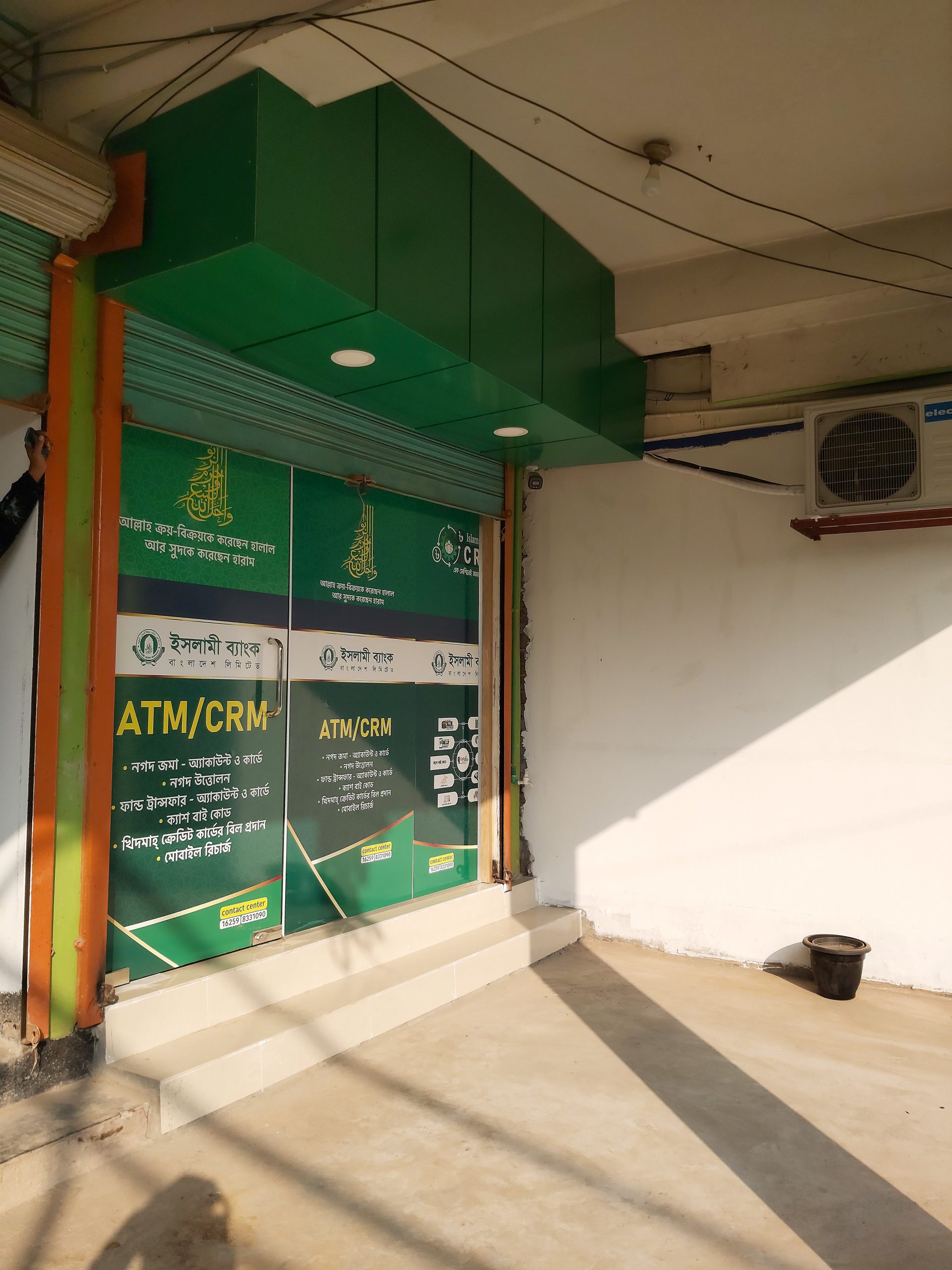
S Alam Group took control of Islami Bank, the country’s largest private bank, in 2017 with the help of an intelligence agency. The bank then recruited 10,832 employees, of whom 8,542 were hired in breach of the bank’s rules, without any advertisement or written test. Most of them come from Patiya in Chattogram, the birthplace of Saiful Alam (S Alam). The findings come from a recent Bangladesh Bank inspection, whose report has been presented to the governor.
Islami Bank had 21,551 employees in total as of August 31, 2024. Of these, 10,832 were recruited between 2017 and August 31, 2024, while the bank was controlled by S Alam, a beneficiary of the Sheikh Hasina government who is now a fugitive. Over that period 466 people were appointed through lateral entry (direct appointment to senior posts) and 10,336 through direct entry. Of those directly recruited, 6,375 were initially placed in entry-level posts and the remaining 3,991 in sub-staff and RDS posts.
Under Islami Bank’s recruitment rules, vacancies must be advertised in at least two national daily newspapers, followed by written and oral examinations. A score of at least 50 percent in both was treated as the minimum qualification.
After the change of ownership in 2017, however, 8,542 people were appointed in disregard of that rule, without any advertisement in a national daily.
The report says the bank amended its human resources policy at the time to legitimise the process. A new clause 7.04 was added saying that “in case of urgent need, the bank’s managing director and chief executive officer (MD and CEO) may recruit staff at entry-level and lateral-entry grades according to staffing needs, and the stated formalities of recruitment may be relaxed, except for appointments to the two tiers immediately below his own rank”.
Bangladesh Bank’s report says clause 7.01 of the same rules was breached. That clause says that for recruitment to the various grades, vacancies should normally be advertised in at least two national daily newspapers, giving eligible candidates at least 15 days to apply.
Bangladesh Bank said a clause of this kind is normally included in recruitment rules so that one or two lateral-entry or technical posts can be filled in an emergency to keep a bank functioning. But by adding the clause afresh, more than 6,000 employees were recruited to the bank’s probationary entry posts, which the central bank called highly unusual.
Although the newly added clause referred to “urgent need”, officials who worked at the bank at the time said there was never any major staffing shortage. Rather, the number hired without advertisement was far greater than required.
Half of those hired were from Patiya
Of those recruited under S Alam’s control, 8,099 were from Chattogram division, and 5,148 of them from Patiya, S Alam’s birthplace. The report says the large number of recruits from Chattogram was mainly the result of there being no advertisement. The high rate of recruitment from one district created a concentration risk, it says, while talented people from other regions were overlooked and denied the chance of a job.
CVs collected at S Alam’s home
A different route was used to recruit without advertisement or written test. Boxes were kept at the S Alam Group chairman’s home in Patiya and at the Asadganj office in Chattogram to collect the CVs of large numbers of candidates. The boxes were labelled ‘Patiya General’, ‘Patiya Cash’, ‘Male General — Satkania-Lohagara’, ‘Male Cash — Gondamara-Banshkhali’, ‘Female Cash’, ‘Women’, ‘Diploma’ and so on. Favoured candidates were then sent to the bank’s head office, which issued their appointment letters, the bank’s management told Bangladesh Bank.
Rules broken in hiring probationary officers
Bangladesh Bank found evidence of breaches of policy in the recruitment of Islami Bank’s 24th batch of probationary officers. Of the bank’s 26 probationary officer batches, only the 24th was recruited without any advertisement.
At the start of 2019 a list of 840 candidates from Chattogram was sent to the bank’s head office. The Department of Banking and Insurance at Dhaka University was then given the job of setting a written test for them, which 763 sat. The pass mark under the bank’s rules was 50 percent, but only 36 reached it. The pass mark was then lowered to 20 percent, and 552 were called for an oral examination, which 304 passed. Separately, 12 people were added to the list on the basis of an oral examination alone, without sitting the written test.
The top 178 on the list and the 12 who had not sat the written test, 190 in all, were then appointed to Islami Bank. The remaining 126 were sent to First Security Islami Bank. All the candidates were residents of Chattogram. Of the 190 appointed to Islami Bank, 184 took up their posts.
In addition, 2,232 trainee assistant officers (general) were appointed in breach of the rules between 2017 and 2024, without any newspaper advertisement. The same happened in recruitment to the posts of trainee assistant officer (cash) and trainee junior officer, where 2,828 and 501 people respectively were appointed without advertisement.
Recruitment policy was also breached in lateral-entry appointments. Of the 466 people appointed through lateral entry between 2017 and 2024, candidates from Chattogram were targeted, with 264 of them appointed from Chattogram district.
During the inspection, written statements were taken from 10 officials working in Dhaka who had been recruited over the 2017–2024 period, to understand the recruitment process. All said they had been appointed after submitting a CV and sitting only a viva, without a written test, and two said they had not even had a viva. Some said in writing that they had submitted their CVs to the boxes at Sugandha residential area in Panchlaish, the S Alam Group chairman’s own home, and at the Asadganj office in Chattogram, where they sat their viva and collected their joining letters.
Irregular promotions to deputy managing director
Appointment as a deputy managing director (DMD) requires two years’ experience in the previous post and 20 years’ experience in total before joining. But after S Alam took control of Islami Bank, his personal secretary Akij Uddin was promoted to DMD with only eight years’ banking experience. Although two years in the previous post were required, he became a DMD with only one year and four months.
Another DMD, Miftah Uddin, was appointed with 17 years’ experience against the required 20, and with only one year in the previous post against the required two.
What the central bank says
The inspection report says the policy changes after 2017 were added, revised and altered solely to give one group an unwarranted advantage. And although written and oral examinations and a qualifying score of 50 percent were mandatory for such recruitment, they were not applied in these cases.
Asked about it, the central bank’s spokesman, Arif Hossain Khan, said Bangladesh Bank is not directly involved in a bank’s internal recruitment, which is the bank’s own affair, but plays a role when needed as the guardian of the banking sector. If any irregularity is found on review of the investigation report, the necessary action and directions will be given accordingly.
4,685 dismissed
Islami Bank’s board appointed four audit firms to carry out a special audit into irregularities in various areas between 2016 and August 31, 2024. The audit brought to light the picture of irregular recruitment under S Alam. In the light of the Bangladesh Bank and external audit reports, the bank decided to hold a special competency test for officers recruited between 2017 and August 5, 2024.
Two employees filed a writ petition in the High Court seeking a stay of the test. The matter was later settled, and the central bank made clear there was no bar to holding it.
Islami Bank then held the test on September 27, 2025 through Dhaka University’s Institute of Business Administration (IBA).
According to the bank, only 402 of 5,373 officers sat the test. All passed and remain in their jobs.
The other 4,972 refused to take part in protest at the bank’s decision. According to the bank, some of them physically harassed, intimidated and threatened colleagues who wanted to sit the test, and staged work stoppages, street protests, human chains and press conferences spreading misleading information about the bank. They were also accused of damaging the bank’s image on social media.
The bank’s management described these activities as indiscipline and a breach of policy, and on the board’s advice it was decided to take disciplinary action against those involved. Under the human resources policy, 4,685 of them were then released from service with three months’ pay.
Asked about it, Islami Bank’s acting MD, Altaf Hossain, said: “They were not dismissed on the basis of whether their appointments were legal or illegal. The process by which they were recruited at the time did not follow the service rules, so they were given the chance to complete the formalities of appointment by sitting a test. But they did not sit it, and they did not let others sit it either. Their appointments were cancelled because they challenged the institution’s decision. Bangladesh Bank also said the matter was the institution’s own and that it could decide it. Action was taken accordingly.”
বাংলায় মূল প্রতিবেদন পড়ুন · Read the original Bengali report