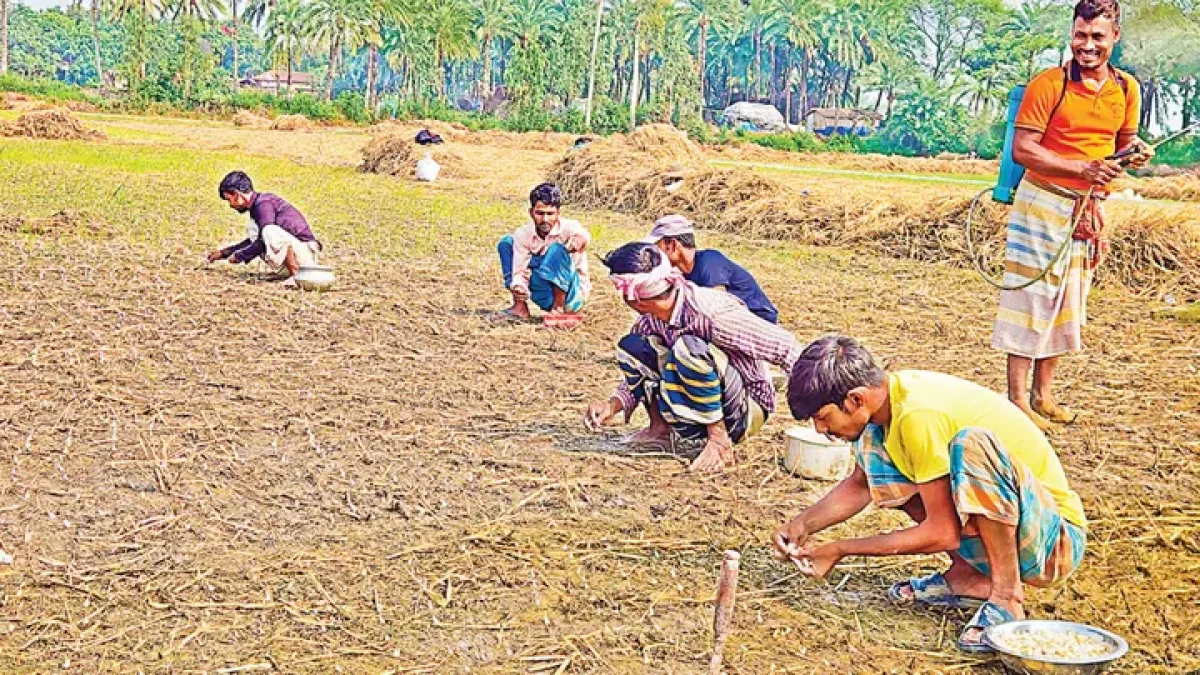
NATORE — The peak season for garlic, known locally as "white gold," has begun across the Chalan Beel wetland, which spans Natore, Sirajganj and Pabna districts, as monsoon water recedes. In the wide fields of Natore's Gurudaspur upazila, at the heart of the beel, farmers are busy planting garlic without tilling the soil. Alongside garlic, they are sowing onion, muskmelon, watermelon, cucumber and sweet pumpkin as companion crops. But at the very start of the season, local farmers are deeply worried because they cannot get the fertiliser they need and are being forced to pay more for it.
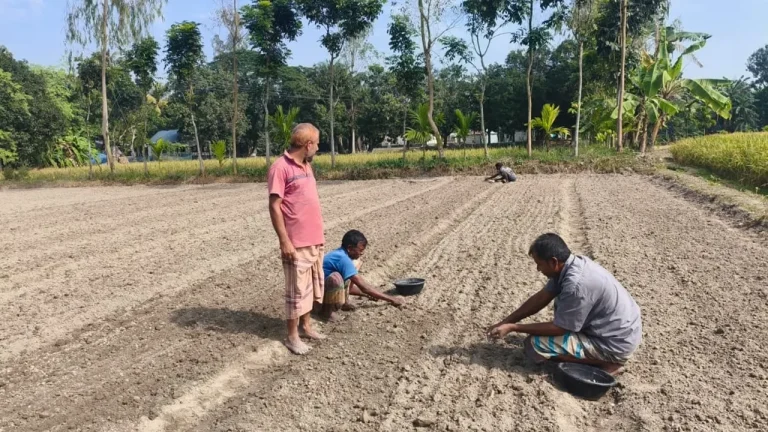
In fields around the upazila town and in Nazirpur, Biaghat, Khubjipur, Moshinda, Dharabarisha, Udbaria, Charkadah, Sonabaju and Chapila, farmers were seen planting garlic cloves in the mud from morning to evening. Women are working alongside men, separating seed cloves and planting them. Paddy straw and water hyacinth are spread over the planted cloves to shield them from the sun. This mulch rots into organic fertiliser and plays an important role in raising soil fertility.
About two-thirds of the garlic grown in Bangladesh comes from the silt-rich land of Chalan Beel. But farmers allege that they cannot get enough DAP, urea, TSP and MOP fertiliser from dealers when they need it. Some who stood in line and still went without said they were forced to buy from retail shops at Tk 300 to 400 more per sack.
Local farmers Siddiqur Rahman, Jobotullah, Kawsar Hossain and Ruhul Amin said garlic currently sells for Tk 4,000 a maund. Leasing one bigha of land costs Tk 25,000 to 30,000, planting it takes three and a half maunds of seed, and contract labor costs Tk 8,000 to 9,000. Male day laborers earn Tk 800 a day and female laborers Tk 500. Buying fertiliser at inflated prices on top of that is multiplying production costs, they said.
Farmers Jalal Uddin and Monirul Islam said several days of continuous rain had badly damaged newly planted garlic and onion seed.
The upazila office of the Department of Agricultural Extension (DAE), however, said there is no shortage of fertiliser in Gurudaspur and that it had received its full allocation. Fertilizer is being sold according to the rules through dealers approved by the Bangladesh Chemical Industries Corporation (BCIC), it said.
Upazila Agriculture Officer KM Rafiul Islam said the target for this season is to grow garlic on 7,375 hectares in Gurudaspur. Planting by the no-till and mulching method runs from October to November, after the Aman rice harvest. Garlic is likely to be grown on more land than the target, and the agriculture department is advising farmers regularly, he said.