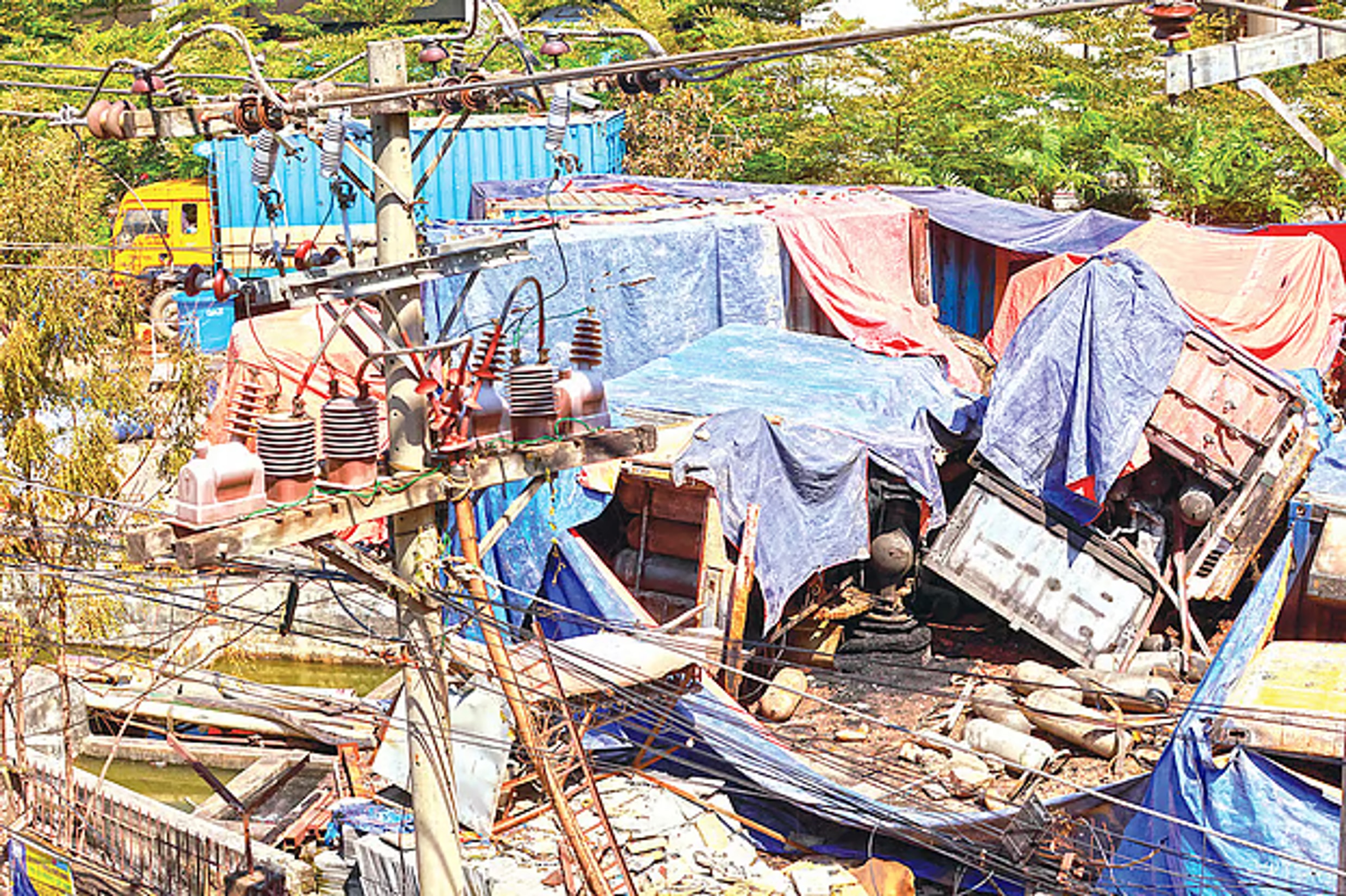
When pressure in the supply line is low, many owners of factories in the garment and textile, ceramics and other sectors take gas from CNG filling stations in cylinders to keep production running. Transporting gas in unsafe cylinders in this way is prohibited under the Gas Act 2010 and the Gas Distribution Rules 2016. The practice has nonetheless been going on openly for a long time, and grew during the recent gas crisis.
The incident at Ashulia in Dhaka proves that transporting gas in cylinders did not stop even after supply increased last week, at the end of a two-month crisis.
The management of Pretty Composite Textiles brought in compressed natural gas (CNG) cylinders by covered van on Sunday to run a boiler. Seven people were killed when those gas cylinders exploded, and 19 were injured. Five or six vehicles, including the cylinder-carrying van, were burnt out in the incident.
Although prohibited by law, cylinders are taken to factories in this hazardous way with the silent consent of the administration and of CNG filling station owners. A class of middlemen has grown up around the trade, supplying factories at 5 to 10 taka or more per cubic metre of CNG. The pockets of the CNG filling station owners concerned are also being lined by it.
Leaders on the garment industry owners’ side say many factory owners are taking gas from CNG filling stations in cylinders, hazardously, because they have no choice if production is to continue during the sector’s gas crisis. Labour leaders say, however, that there is no way to evade responsibility for industrial accidents of this kind by calling them mere accidents. If there is any irregularity or negligence in the transport, storage or use of gas cylinders, they say, legal action must be taken against those responsible after an investigation.
Asked about it, Petrobangla chairman Md Abdul Mannan told Prothom Alo: “Permission has never been given for gas to be supplied to factories in cylinders from CNG stations. But there are allegations that many factories do this at times of crisis. We have carried out operations at various times because of it.”
Expired cylinders
There were 10 to 12 covered vans at the scene at Pretty Composite Textiles in Ashulia at the time of the explosion. Several were moved away afterwards. Fire service personnel found nine cylinder-carrying covered vans at the scene. Each covered van held between 90 and 100 cylinders.
A visit to the scene on Monday afternoon found a cylinder lying inside the Rana Hotel food shop, about 200 yards from the factory. Engraved on that cylinder were the words “Approved PRD CNG only, do not use after 2021” — meaning the cylinder had expired.
A CNG filling station owner, speaking on condition of anonymity, said a class of middlemen had grown up around supplying gas to factories in cylinders because the practice is banned by law. A large share of them are locally influential. They bring substandard cylinders to the stations to take gas.
Two associations asked for permission and did not get it
When the severe gas crisis began in July, BGMEA, the garment industry owners’ association, and BKMEA, the knitwear industry owners’ association, wrote to the Bangladesh CNG Filling Station and Conversion Workshop Owners’ Association asking for gas to be supplied in cylinders to export-oriented garment factories. Rather than deciding themselves, the association sought guidance from Petrobangla. Petrobangla issued no guidance on the matter. Gas nonetheless continued to go to factories in cylinders.
BGMEA president Mahmud Hasan Khan told Prothom Alo on Monday night: “The tendency to take gas in cylinders existed before because of the energy crisis. It has increased lately. We asked for permission to use cylinder gas. Permission was not given. Nor was it firmly stopped.” He added: “We will write to owners to raise awareness about the use of gas cylinders. It would be good if LPG could be supplied during a crisis. But the main thing is that gas pressure to industry has to be increased.”
Farhan Noor, secretary general of the Bangladesh CNG Filling Station and Conversion Workshop Owners’ Association, believes a policy needs to be framed to allow factories to take gas from filling stations. He told Prothom Alo: “Our member firms are being forced to supply gas in cylinders, because locally influential people put pressure on them to supply gas for factories this way.”