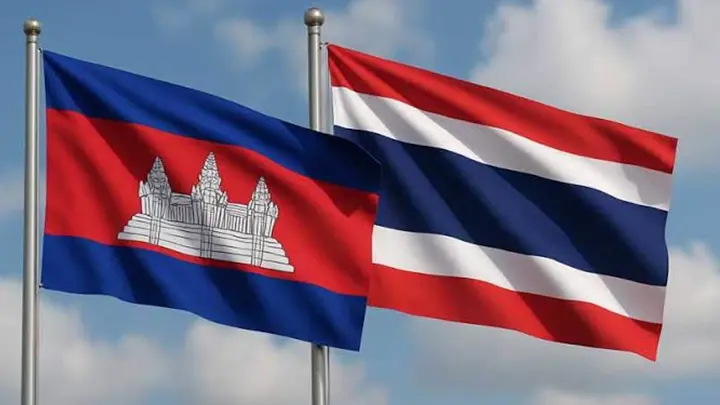
Cambodia and Thailand are set to face an international tribunal in Singapore this week to resolve their long-running maritime boundary dispute.
Phnom Penh turned to the Permanent Court of Arbitration (PCA) to begin a UN-backed conciliation process after Thailand withdrew from an agreement aimed at jointly developing marine-based energy resources in the Gulf of Bangkok.
A 2001 memorandum of understanding covers a vast area of around 27,000 square kilometres, over which both Cambodia and Thailand have claimed sovereignty.
Citing “no progress” in implementing the framework agreement known as “MOU 44,” Bangkok unilaterally withdrew from the deal last May.
Prime Minister Anutin Charnvirakul has said the decision has no connection to the ongoing border conflict with its Southeast Asian neighbour. Two rounds of clashes last year killed many people and displaced more than a million. The two countries later agreed to a ceasefire.
Cambodia said last week that it turned to the conciliation process “after Thailand unilaterally scrapped the agreed bilateral framework.”
Cambodian Prime Minister Hun Manet said in June that the step was also taken to “protect Cambodia’s sovereignty and maritime boundary rights” under international law.
Representatives of the two countries will address a conciliation panel of five international law experts on Tuesday at the offices of the world’s oldest arbitration court in Singapore.
Cambodian Foreign Minister Prak Sokhonn is expected to speak first, followed by his Thai counterpart, Sihasak Phuangketkeow.
Established in 1899, the PCA is the world’s oldest intergovernmental dispute-resolution body. It resolves disputes between states and private parties based on treaties, special agreements, and conventions such as the UN Convention on the Law of the Sea (UNCLOS).
The commission’s recommendations are not binding. A decision on the matter is expected to take around a year.