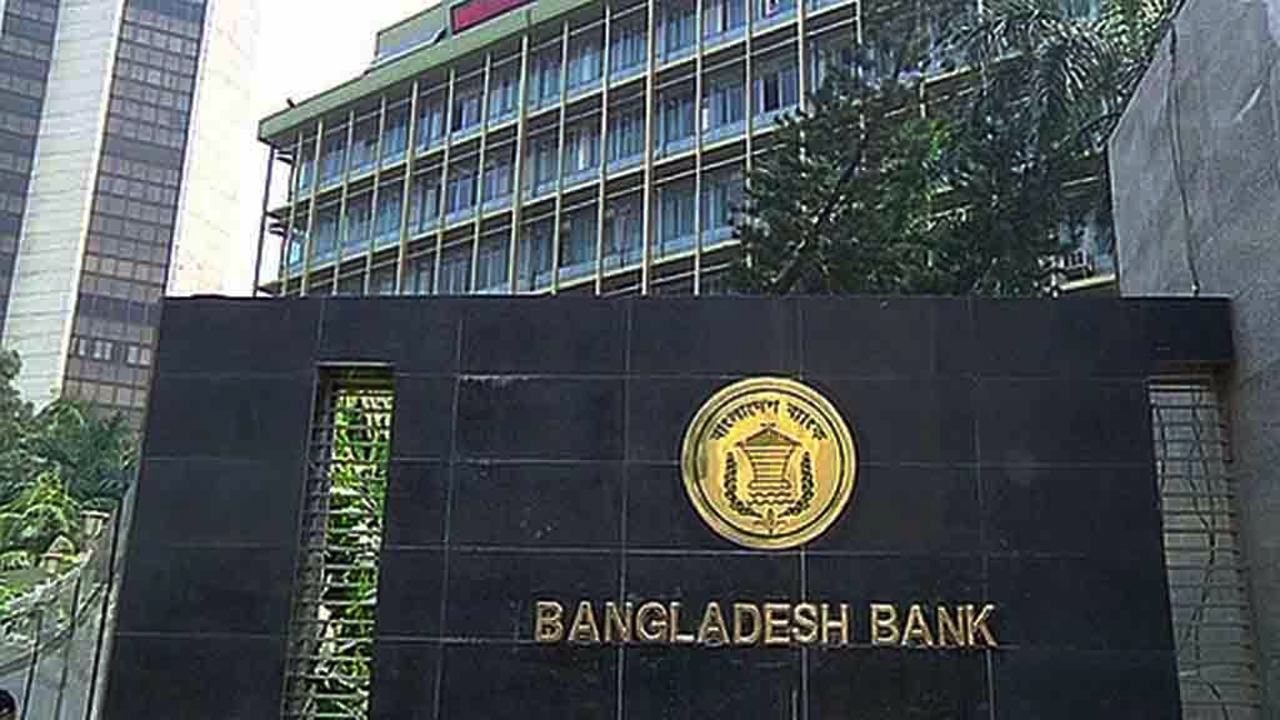
Take out a 200,000-taka bank loan and fall behind on an installment, and the SMS alerts, home notices and eventually lawsuits follow swiftly. Meanwhile, many big defaulters who have failed to repay thousands of crores of taka for years are instead granted policy relief — such complaints are heard constantly in Bangladesh.
Step by step, the volume of defaulted loans in Bangladesh has ballooned to a massive size, and it keeps growing larger.
In 2009, the country’s defaulted loans stood at 22,000 crore taka. By June 2024, that had risen to 201,000 crore taka.
By March 2026, the figure had reached 588,704 crore taka. In other words, in under two decades, Bangladesh’s defaulted loan burden has grown by more than 550,000 crore taka.
Despite various measures, including policy support from Bangladesh Bank, to manage the situation, the latest default figures are even more alarming.
By the end of June 2025, defaulted loans in the banking sector stood at 606,005 crore taka, or a claimed 32.78% of total disbursed loans. This figure, citing the central bank, has been published in several local media outlets in Bangladesh.
But instead of taking strict or punitive measures to resolve defaulted loans, the government and Bangladesh Bank are once again pursuing a policy of “relief.”
Essentially, Bangladesh Bank wants to recover money from defaulters through concessions. But how effective will this reasoning prove?
Many economists say that given the country’s fragile financial sector at present, Bangladesh Bank has few alternative strategies available to recover defaulted loan money.
But those in the financial sector believe the success of the strategy Bangladesh Bank has adopted depends on its implementation process and political will.
They believe that without strict monitoring of loan disbursement, the situation could worsen further.
Economists say that to save Bangladesh’s banking sector, along with policy support, examples of strictness are also essential — otherwise it won’t take long for 600,000 crore to become 800,000 crore next year.
Why isn’t there punishment?
Since the fall of the Awami League government amid protests in 2024, there has been ongoing discussion about the poor state of Bangladesh’s financial institutions.
Although various steps have been taken on paper since the change of government, the volume of defaulted loans has kept rising rather than falling.
Analysts believe three main factors are behind the rise in defaulted loans.
They say these are reckless lending under political influence, a lack of oversight, and loans taken out by bank directors in their own names or through proxies.
Over the past two decades, financial scandals involving several of the country’s industrial groups and banks are alleged to have driven up the volume of defaulted loans.
The situation has reached a point where many banks can no longer maintain the required provisioning against defaulted loans, deepening the liquidity crisis further.
Various countries around the world have practices of taking strict measures to control loan defaults.
In the United States, major defaulters’ credit scores drop to zero, barring them from obtaining new loans. In China, defaulters are placed on a “social credit blacklist.”
And in neighboring India, the assets of major defaulting companies are auctioned off under the Insolvency and Bankruptcy Code.
But in Bangladesh, despite having Money Loan Courts and laws for recovering defaulted loans, there are few examples of visible action taken against major defaulters.
Dr. Md. Ahsan Habib, a professor at the Bangladesh Institute of Bank Management (BIBM), said, “It is absolutely clear that under existing law, we still haven’t been able to take tough measures against willful defaulters — those who deliberately don’t repay their loans.”
Economists also say there are considerable legal complications in taking action in such situations.
They say resolving cases in Money Loan Courts takes five to seven years. As a result, banks themselves are not very keen to file cases. And filing a case also risks making their financial statements look worse.
Additionally, most large defaulters are industrial groups. Their factories employ hundreds of thousands of workers and contribute significantly to exports. The government and banks worry that pressuring them would shut down factories and increase unemployment.
As a result, a policy of “keeping alive” these institutions or borrower industrial groups is repeatedly adopted. Even when cases are filed, they remain pending for years. In the meantime, defaulters use political influence to create opportunities for rescheduling or write-offs.
Since loan default is a civil matter, banks must sue to recover the money, and big defaulters hire the best lawyers to prolong the litigation.
Another major problem with private banks is the tendency for the very guardians to become predators — meaning bank directors themselves sometimes take out loans in the names of relatives’ companies, creating a gap in accountability.
Bangladesh Bank on the relief measures
On Aug. 31, Bangladesh Bank issued a circular offering policy support to restructure the business and financial arrangements of affected borrower institutions.
Under it, defaulters owing more than 1,000 crore taka would be given 15 years to repay after loan rescheduling or renewal.
It also states that no installments would need to be paid for the first two years.
Those wishing to take advantage of this must apply by September, with banks required to settle applications by this December.
Bangladesh Bank had earlier issued a similar notification on Sept. 16, 2025, which stated that at least 2% of the outstanding balance on existing defaulted loans must be deposited in cash, based on the banker-customer relationship.
It was announced that if the loan became regular, it would be given 10 years to repay, including a two-year grace period (a pause in repayment).
At the same time, to boost economic momentum, a 60,000-crore-taka subsidized-interest incentive fund was announced for September through December.
The move to grant such relief to big loan defaulters has drawn extensive discussion and criticism.
Explaining its position, Bangladesh Bank recently issued a statement citing three main reasons.
First, global impact — Bangladesh Bank says the war in the Middle East and the energy crisis have disrupted production in export-oriented industries, reducing borrowers’ repayment capacity.
Second, interest-rate pressure — under market-based interest rates, businesses’ interest expenses have risen, but falling sales have made repayment difficult.
And third, the 18-month roadmap — the extra time being given to large borrowers is part of the roadmap Bangladesh Bank has announced to reduce defaults.
The central bank’s reasoning is that money that wouldn’t come in even after 10 years of litigation could instead yield 50% recovery immediately through negotiation, boosting bank liquidity. It also argues that keeping factories running would preserve jobs.
Criticism and reality
Bangladesh Bank’s policy of offering relief to big loan defaulters has drawn considerable criticism.
Many economists say that while rescheduling loans reduces the default figure on paper, there is doubt over how much money will actually return to banks’ vaults.
Many also believe this creates discrimination against good borrowers and could foster a culture of “getting away with wrongdoing.”
Mostafizur Rahman, distinguished fellow at the private research organization Centre for Policy Dialogue (CPD), said, “Taking advantage of these opportunities, defaulters could slide further into default. That’s why Bangladesh Bank has placed this matter on the bank-client relationship. Banks will also bear a significant responsibility here.”
Economists are also recommending several strict measures in this regard, including accountability for bank directors, a commission free of political influence, speedy trials in Money Loan Courts, and travel and new-business bans for defaulters.
Dr. Md. Ahsan Habib of BIBM said, “Breaking our culture of willful default is not easy. Very firm action is needed. But the central bank still hasn’t taken such a firm stance.”
He said, “These benefits shouldn’t be exploited by willful defaulters. And this should be given only for a short period, not the long term.”
This economist believes the central bank also needs to decide what punitive measures will be taken against those who still don’t repay their loans even after all these measures.
Mostafizur Rahman believes the success or failure of this plan depends on political will.
He said, “As long as banks are not politically influenced, these measures may help somewhat in returning things to a healthy track.”
In his words, “Some risky decisions will have to be made; there’s no quick way out of this. Bangladesh Bank is now trying to regularize the loans. Essentially, it is trying to clean up the balance sheets.”
But he believes it will take more time to bring the macroeconomy back to a normal trend through controlling inflation and attracting domestic and foreign investment.