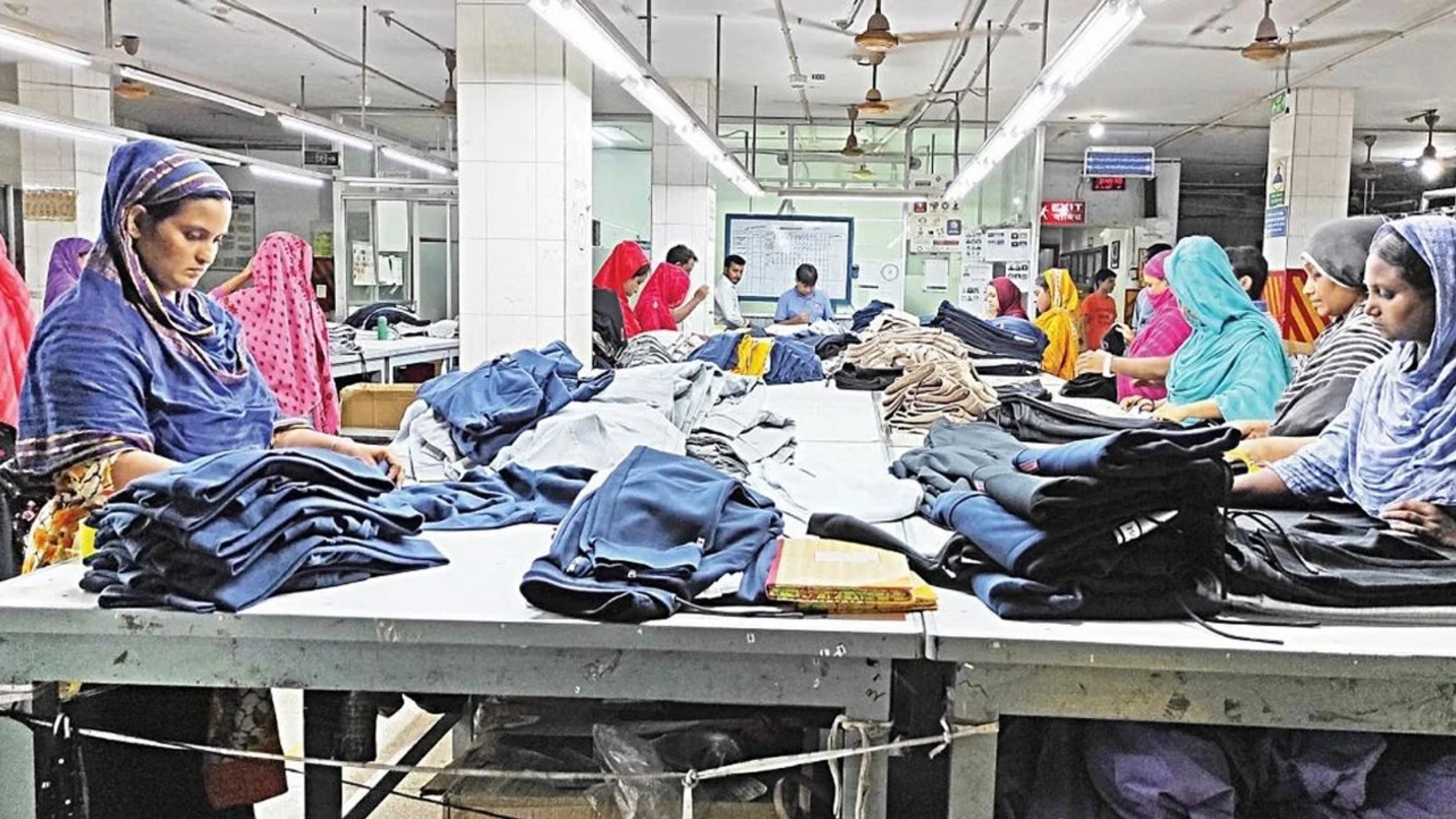
The August report of Bangladesh’s Purchasing Managers’ Index (PMI) has been released. According to the report, Bangladesh’s PMI fell 7.9 points from July to 49.9 in August, indicating a slight contraction in overall economic activity. The main reason for the decline was a slowdown in manufacturing and services-sector activity, with both sectors showing slight contraction. Manufacturing saw a particularly sharp decline. Meanwhile, the agriculture sector continued to expand, and the construction sector returned to expansion.
The Metropolitan Chamber of Commerce and Industry (MCCI), Dhaka, and Policy Exchange Bangladesh (PEB) released the report Tuesday. The PMI aims to provide timely, accurate information on the country’s economic conditions so businesses, investors and policymakers can make informed decisions.
According to the report, the agriculture sector recorded expansion for a 12th consecutive month in August, with its PMI rising 1.3 points to 56.5, driven by continued expansion in new business and business activity. Employment also rose. Input costs continued to rise sharply, though the rate of increase eased slightly. Meanwhile, the backlog of unfinished orders remained in contraction.
The manufacturing sector fell sharply by 18.0 points to 47.4, entering contraction. New orders, new export orders, production, input purchases, imports and employment all fell back into contraction. Input prices, meanwhile, continued to rise at a faster pace. Order backlogs remained in contraction, though the rate of contraction eased, and supplier delivery times were unchanged.
The construction sector rose to 52.4 in August, returning to expansion. Construction activity and employment returned to expansion, while the rate of contraction in new business eased. At the same time, input costs rose at a faster pace, and unfinished orders slipped into contraction.
The services sector entered contraction for the first time in 22 months, falling to 49.2 in August, down 6.8 points from July. While new business and business activity continued to expand, the rate of expansion slowed in both. Employment saw a significant contraction. Input costs continued to rise, though at a somewhat slower pace, and the rate of contraction in unfinished orders also eased.
Respondents’ views during the reporting period reflected cautious but positive expectations about business conditions. Many respondents described current business conditions as satisfactory and expressed hope for improvement in the coming months. At the same time, they also highlighted the need to reduce business costs, increase financial support and ensure a more supportive policy environment.
Manufacturing-sector respondents cited complications in obtaining necessary funds through banking channels, shortages in power and gas supply, and declining orders in the garment sector as reasons for the slowdown in business. They emphasized the need to reduce energy prices and production costs. Services-sector respondents called for financial support, lower electricity bills and operating costs, and reduced pressure from income tax and other taxes. Agriculture-sector respondents also highlighted the need to reduce the price of agricultural inputs, including pesticides.
Overall, respondents’ views reflected cautious but positive expectations for future business conditions. If energy supply improves, financing becomes easier, operating costs are controlled, and business-friendly tax and policy support is ensured, business confidence will strengthen further and the pace of economic recovery will pick up.
According to the Future Business Index, optimism about business conditions declined slightly across all sectors.
Dr. M. Masrur Riaz, chairman and CEO of Policy Exchange Bangladesh, said, “With the August PMI at 49.9, Bangladesh’s overall economic activity remained close to the neutral threshold, even as manufacturing and services faced temporary pressure. Agriculture’s expansion continued, and construction returned to a growth trajectory, signaling the economy’s underlying resilience.”
Masrur Riaz said the slowdown in manufacturing partly reflects a monthly decline in exports and temporary energy disruptions related to LNG infrastructure maintenance. Going forward, he said, improved energy supply conditions, rising export demand and steps to restore business confidence could help reinvigorate the economy and put it on a path toward stronger growth.