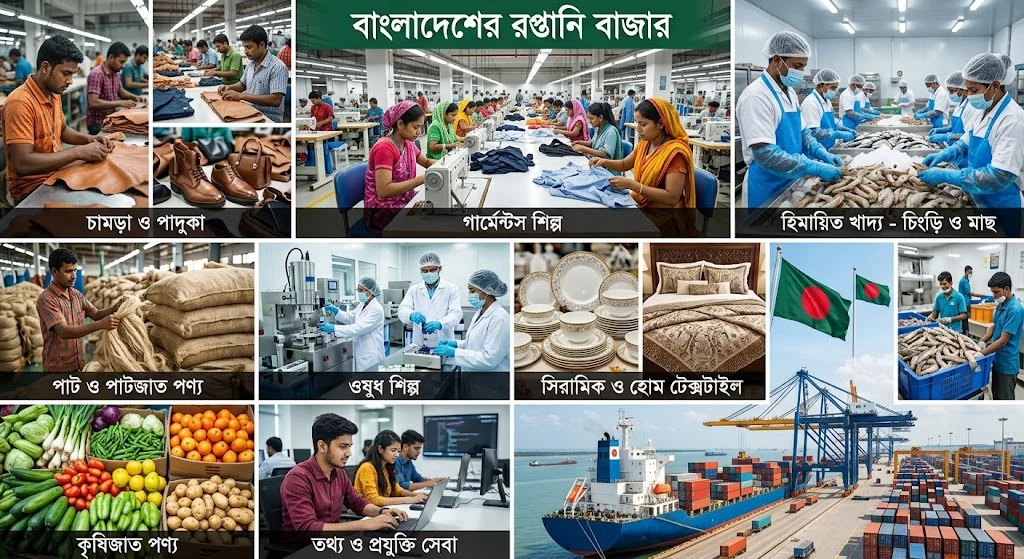
For a long time, the export market has remained stuck with just a handful of products. Export goods have seen no diversification. Overreliance on the garment sector has left the export sector exposed to risk. Ready-made garments account for 80 to 85 percent of export earnings, while the remaining five or six products bring in just 10 to 15 percent. Given this situation, the government has taken a special initiative to accelerate the country’s economic growth, diversify exports and attract foreign investment. At a second consultation meeting recently held with top private-sector entrepreneurs, chaired by Prime Minister Tareque Rahman, five specific, promising sectors of the country were identified, with a firm directive to prepare a concrete action plan to boost exports from them.
Working papers from the consultation meeting show that Invest Bangladesh Authority Chairman Chowdhury Ashiq Mahmud Bin Harun presented an overview of progress from the first meeting. He placed special emphasis on boosting investment in Bangladesh through greater coordination between the public and private sectors, ensuring a business-friendly environment, and necessary policy reforms.
The meeting was attended by the finance minister, the state minister for power, energy and mineral resources, the prime minister’s finance and planning adviser, and other senior government policymaking officials.
Analysts say export policy and structural problems have made goods exports increasingly concentrated year after year. They say that if the diversification initiatives the government is now discussing are properly implemented, the country’s overall export trade will grow. At the same time, this action plan will help build a sustainable, production-oriented and business-friendly economy over the long term.
On this, Commerce Ministry export wing joint secretary Firoz Uddin Ahmed said a high-level committee has already been formed, led by the director general of the Export Promotion Bureau (EPB). The committee has already held one meeting. An action plan will soon be prepared in line with the prime minister’s directive.
It is understood that the initiative aims to help the country stay competitive in the global market and enrich its export basket by reducing dependence on a limited set of products. The action plan will prioritize sectors with significant potential in the international market, particularly information technology, light engineering, agro-processing and leather goods. This is expected to create new jobs while further strengthening foreign currency reserves.
The meeting noted that special emphasis is being placed not just at the national level, but on boosting economic capacity and district-level production from the grassroots up. A special study has been ordered to thoroughly assess local product manufacturing, existing capacity and future export potential across the country’s various districts. Findings from this study will make it easier to develop cluster-based products in each region.
Additionally, to revitalize the rural economy and introduce local small and cottage industries to the global market, the directive calls for more vigorous implementation of the “One Village, One Product” concept. This would allow traditional, promising products from remote areas to be elevated to international standards and gain direct export opportunities, which would also play a major role in rural poverty reduction.
Bangladesh Knitwear Manufacturers and Exporters Association (BKMEA) president Mohammad Hatem said any policy support could play a major role in boosting exports. He said the industry has been making this demand for a long time, and that strengthening the One Village, One Product initiative could bring diversity to export markets and products.