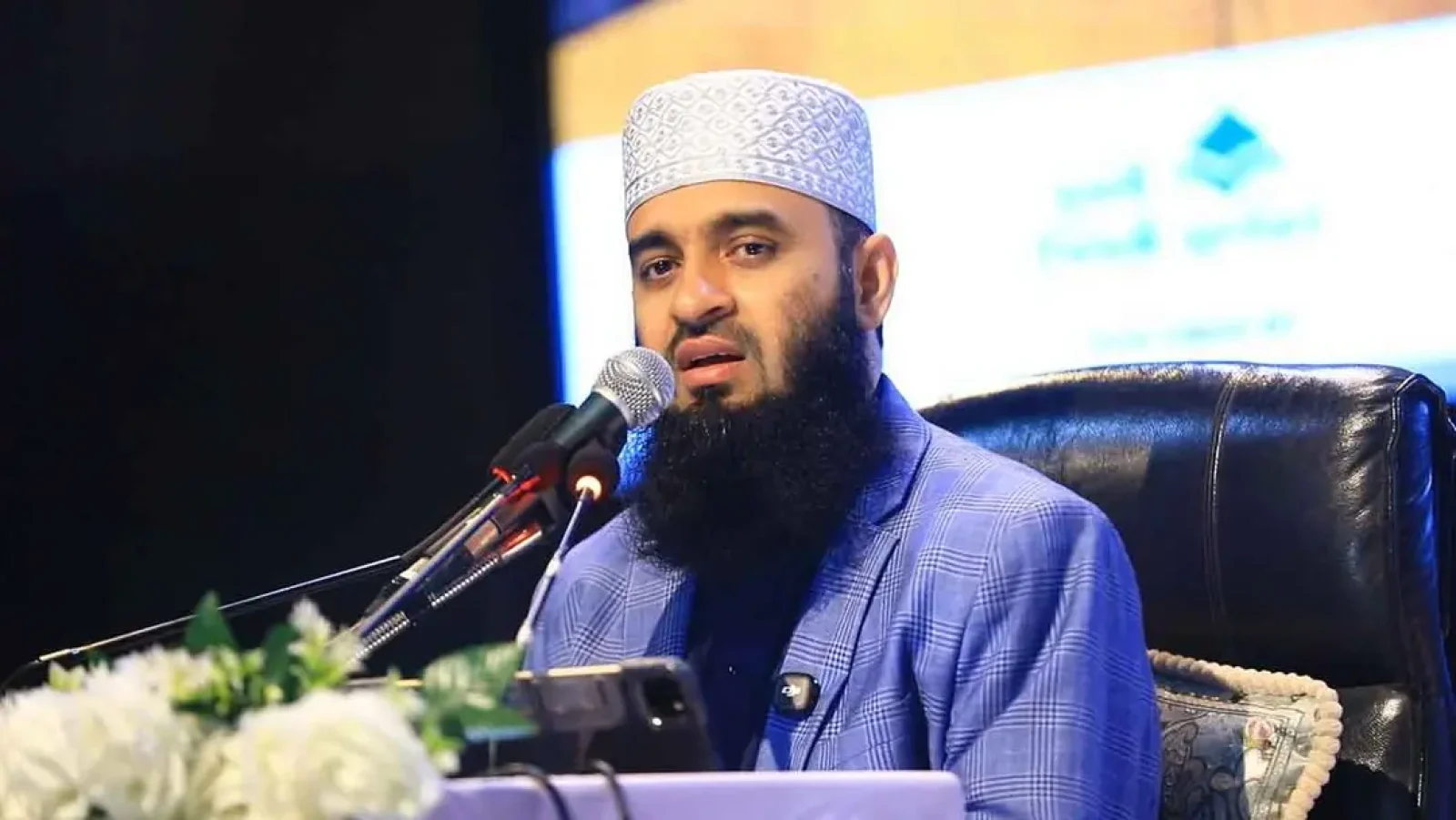
Popular Islamic speaker Maulana Mizanur Rahman Azhari has called for effective reforms to ensure children’s safety, raise the standard of teaching and establish accountability in the country’s madrasas. Transparency, good governance and accountability in madrasas are essential to protect the dignity of religious education and keep society’s trust, he said.
Azhari made the remarks in a recent post. He said many madrasas and hifz schools set up in unhealthy surroundings across the country lack CCTV cameras, proper supervision, a decent environment and good teaching.
Photos and videos of various disturbing incidents at these institutions are spreading on social media and damaging the image of madrasa education, he said.
Acknowledging the contribution of these institutions, he said madrasas have played an important part in raising thousands of male and female Islamic scholars and a religiously devoted generation. Efforts must therefore continue to make this system of education more modern, stronger, safer and more trustworthy.
Being a religious institution does not put a madrasa above accountability, good governance or improvement, Azhari said. Rather, transparency, ethics and accountability should be even more visible in religious institutions. Approval and registration, a proper curriculum, skilled teachers, safe buildings, transparent recruitment and regular supervision must all be ensured in running them.
He stressed that teachers’ conduct towards students and their teaching methods should rest on an understanding of children’s psychology. In his view, it is not enough for teachers to know their subjects; they must also understand children’s mental development, emotions and ways of learning, and be able to treat them humanely and in a manner suited to their age. Teachers need regular training for this, he said.
He called for effective policies to ensure students’ safety and a sound learning environment, particularly in residential madrasas. He also proposed teacher registration, an effective system for receiving and settling complaints, and measures such as blacklisting teachers and institutions involved in serious offences.
Excessive physical punishment, caning and abuse in madrasas in the name of discipline create a negative image of religious education in people’s minds, Azhari said. Behaviour that leaves children with fear, humiliation or lasting psychological harm is not consistent with the purpose of education, he said. Discipline must be built on wisdom, love and humanity.
Stressing that every madrasa should adopt and enforce a child-protection policy, he said such a policy must set out clearly what conduct towards students is acceptable and what is forbidden, how complaints are received and investigated, and how children at risk are protected. A safe channel must be built so students can complain without fear, and the identity and dignity of those who complain must be protected.
He urged that serious abuse not be covered up internally but reported to the proper authorities, with legal action taken where needed. He also underlined the need for clear boundaries in teachers’ conduct with students, including professional limits on meeting alone and on private messages.
Serious allegations require an impartial investigation, and where they are proven, proper disciplinary and legal action must follow, Azhari said. There should also be effective safeguards to stop people who pose a risk to children from being hired again for similar roles. At the same time, a fair process must keep the distinction between an allegation and a proven offence, he said.
He stressed coordinated efforts by Islamic scholars, management committees, parents, the relevant education authorities and child-protection organisations to improve madrasa education. He also called for support with training, infrastructure and child-protection measures for institutions with limited means.
This review is not against madrasas, Mizanur Rahman Azhari said, but in the interest of better madrasa education, students’ safety and the dignity of religious education. Admitting one’s own shortcomings and moving towards self-criticism, accountability and reform is not weakness but a sign of responsibility, he said. Effective and timely reform must begin now to protect the dignity of religious education and keep society’s trust.
বাংলায় মূল প্রতিবেদন পড়ুন · Read the original Bengali report