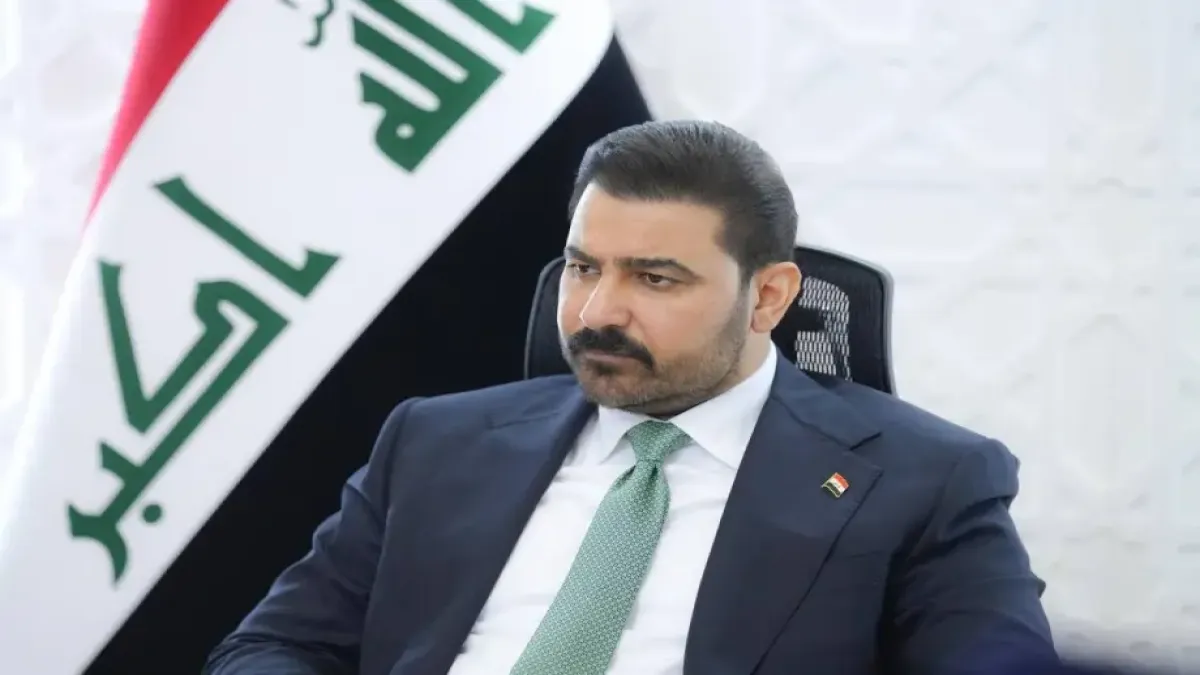
No US troops remain in Iraq, not even as advisers, Prime Minister Ali Falih al-Zaidi has said. He also announced that all weapons outside state control will be brought under it by June 30, 2027.
Al-Zaidi made the remarks in an interview with the Iraqi News Agency (INA), Anadolu Agency reported.
With no foreign troops in the country, the prime minister said, the old argument armed groups used for keeping their weapons no longer holds. The government’s decision that no weapons will remain outside state institutions is final and irreversible, he said.
“By June 30, 2027, there will be no weapons outside the control of the state,” he said.
Al-Zaidi said the government had reached agreement with three armed groups over the weapons they hold, and talks were under way with four more. The steps are meant to complete the process of bringing arms under state control.
“Iraq is a state in which there are armed groups, not a state owned by armed groups,” he said.
The prime minister said Iraq had at one point been at risk of international isolation. Things had reached the stage where foreign embassies might leave the country and restrictions might be imposed on Iraq, as Western countries believed some armed groups had in effect taken control of the Iraqi state. His government, he said, had managed to deal with that situation.
Plans to deepen strategic ties with the US
Although US troops have left Iraq, al-Zaidi said the country remains committed to strengthening its strategic partnership with Washington.
Iraq chose the United States as a strategic partner for its technological and economic strength, he said. US companies have already begun operating in Iraq and are carrying out projects in various areas of cooperation between the two countries.
In the prime minister’s view, the partnership with the United States and the development of the country’s energy sector will significantly increase Iraq’s regional and international influence.
The US withdrawal from Iraq
Iraq and the United States reached an agreement in September 2024 for the phased withdrawal of the US-led coalition’s troops from Iraq. The coalition’s military mission was due to end by September this year.
On September 30, Iraq announced the end of the US-led coalition’s military mission in the country. At the same time, the Pentagon confirmed that coalition troops and military equipment had been moved out of Erbil air base in Iraq.
The withdrawal replaced the coalition’s military campaign against the Islamic State (IS) militant group with a new phase of security cooperation, under which training and intelligence sharing are to continue.
Iraq will not join a regional war
On the regional situation, al-Zaidi said Iraq would not take part in any war. Instead, it wants to serve as a centre for dialogue and understanding between opposing sides.
Whichever way events turn, he said, the regional crisis will in the end have to be settled by an agreement. He also ruled out closing Iraq’s border with Iran, saying such a step would harm both countries.
“Closing the border with Iran would mean blockading ourselves economically,” al-Zaidi said.
Oil exports by routes other than Hormuz
With shipping disrupted in the strategically vital Strait of Hormuz, Iraq is building alternative pipeline networks to reduce its reliance on the route for oil exports. Al-Zaidi said steps had been taken to reopen the export route through Turkey’s port of Ceyhan and to add other export routes.
“Oil prices rose because of the Hormuz crisis, but Iraq could not benefit from it,” he said. Because of the regional situation, the country’s oil exports had at times stopped and at times resumed, he added. The prime minister also spoke of a plan to raise Iraq’s oil production capacity to 10 million barrels a day by 2032.
Al-Zaidi described the Development Road project, undertaken jointly with Turkey, as Iraq’s “third river”. Construction will begin once parliament approves the national budget, he said. The project aims to link the ports of southern Iraq by road and rail to Turkey, and from there to European markets.
বাংলায় মূল প্রতিবেদন পড়ুন · Read the original Bengali report