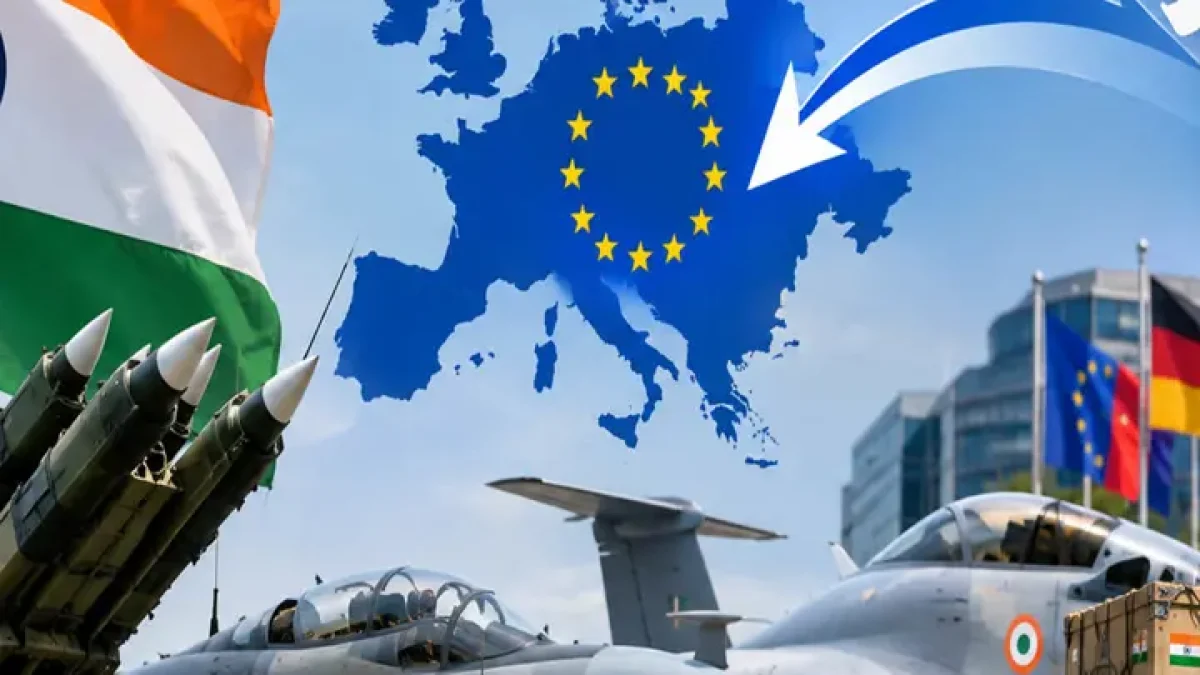
India has risen to third place among arms exporters to Europe. The country’s defence exports are expanding as European countries raise military spending and demand for weapons and ammunition grows, Indian Defence Secretary Rajesh Kumar Singh said.
Speaking to journalists at an event, he said the European Union’s ReArm Europe initiative had increased demand for Indian weapons and military equipment. Various kinds of ammunition, artillery shells, and small- and large-calibre ammunition in particular are being exported to Europe in significant quantities, he said.
India’s defence exports reached a record Rs 384.24 billion in the 2025-26 financial year, about 3.6 billion euros. Rising demand for ammunition and artillery shells has played a large part in strengthening India’s position in the European market.
Defence industry has grown in 10 years
India’s defence manufacturing sector has changed significantly over the past decade. It once depended mainly on 16 large state-owned companies. It now also includes about 840 large and medium private companies and about 17,000 small and medium enterprises, among them start-ups.
Wider participation by the private sector and small businesses alongside state companies has expanded India’s defence production capacity, and with it the scope to supply military equipment to international markets.
India now exports defence products to more than 80 countries. They include artillery and ammunition, small arms, helmets, bulletproof jackets and various kinds of military equipment.
European demand up since the Ukraine war
Since the Russia-Ukraine war, European countries have put a priority on building up their military capability and rebuilding weapons stockpiles. Against that background, the European Union has moved to strengthen defence readiness through its ReArm Europe initiative.
Higher European demand has created a new market for Indian manufacturers. Exports of conventional ammunition and artillery shells in particular have risen.
The claim that India has become the third-largest arms exporter to Europe rests on Rajesh Kumar Singh’s statement. Media reports did not give the period, product categories or full country-by-country export figures behind that ranking.
Focus on domestic production, joint ventures planned in Europe
India’s defence secretary said the government aims to spend 75 percent of its annual defence capital expenditure inside the country. Annual capital spending in the sector is estimated at 20 billion to 25 billion US dollars, and a large part of it is meant to go to domestic production and building capacity.
He said priority is being given to defence equipment designed, developed and made in India. The aim is to raise technological capability and reduce dependence on foreign supplies.
There are also plans for joint ventures between Indian and European companies to win a larger share of Europe’s defence market. European companies are likewise being invited to expand production in India under the Make in India programme.
In Rajesh Kumar Singh’s view, closer cooperation between Indian and European defence production would integrate supply chains further and make it easier to meet international demand.
Prospects of new markets for arms exports
Southeast Asia is another area where India’s defence market is expanding. The defence secretary said countries in the region are showing interest in Indian small arms, various components and artillery systems.
India once depended heavily on Russia for defence equipment, but in recent years it has tried to diversify its sources of supply. Its defence ties with several European countries, France among them, have also widened.
The rise in exports gives India’s defence industry room to expand further in international markets. To hold this position in the long run, however, product quality, timely delivery and the ability to compete internationally will be important.
বাংলায় মূল প্রতিবেদন পড়ুন · Read the original Bengali report