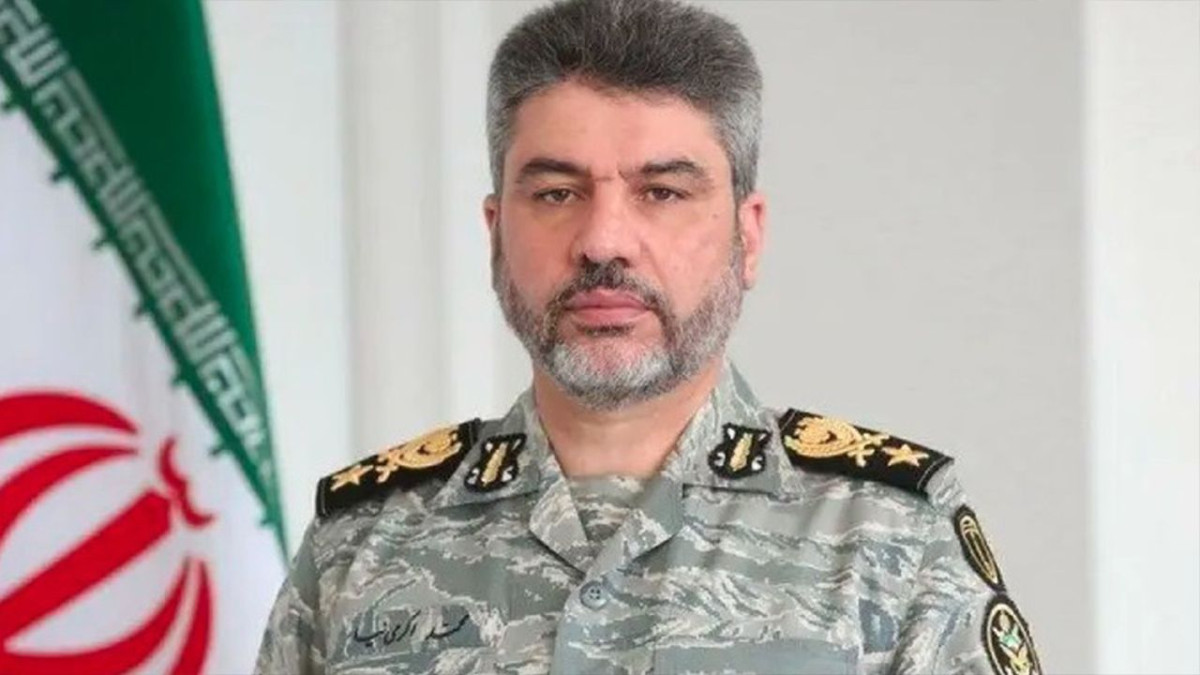
If Iran is attacked again, the war will have no borders, Iran’s army has warned. Its armed forces have the ability to strike US military installations, equipment, personnel and related interests beyond West Asia and the Middle East, and if the United States attacks Iran again the conflict will no longer be confined to West Asia, the army said.
Army spokesman Brigadier General Mohammad Akraminia gave the warning in remarks on Saturday, Iran’s English-language news channel reported on Sunday (1 November). He was describing the decisions and discussions of a meeting between Leader of the Islamic Revolution Ayatollah Seyed Mojtaba Khamenei and senior commanders of the armed forces. Akraminia said the Leader had warned at the meeting that any future conflict would not be confined to the earlier battlefields.
If the United States commits aggression again, he said, Iran’s response will be “more terrible and wider” than before, and harsher than the response given to the aggressors during the earlier unprovoked attacks by the United States and Israel.
Target list being updated
In the last war, Akraminia said, the Iranian armed forces’ counter-attacks reached from the territories occupied by Israel to US military bases in countries of the region. Since then the forces’ readiness for war has been stepped up. Alongside greater defensive and offensive capabilities, the list of targets is being updated regularly, with more US and Israeli installations and assets added to it.
If any new military operation begins, he said, US installations, military equipment, personnel and related interests anywhere within reach could be attacked.
Trump will not decide how long the war lasts
The Iranian spokesman warned that a new war could last much longer than the last one. US President Donald Trump will not have the power to decide alone how long a war lasts, or when and on what terms it ends, he said.
Iran’s armed forces are now far better prepared than when the last war began on 28 February, he said. Since the United States declared a unilateral ceasefire on 7 April, work has been under way to modernise weapons, add new equipment, and introduce advanced technology and tactics.
Offence as well as defence
Akraminia said Iran’s military doctrine has changed significantly. A doctrine that was once mainly limited to defence now also stresses building offensive capability. On the Leader’s instructions, “intelligent war readiness” is now one of the main pillars of Iran’s defence strategy, with emphasis on asymmetric warfare capability, quick development of tactics for new situations, and suitable methods of fighting.
Electronic warfare and radar capabilities have been increased, he said. Besides repairing damaged military equipment, new offensive and defensive systems have been added to the forces’ structure.
Ready for attacks from several directions
Akraminia said coordination between Iran’s army and the Islamic Revolutionary Guard Corps (IRGC) has been strengthened, and military plans are ready to meet possible attacks from several directions.
During the recent war, he said, there was an attempt to open a new ground front on Iran’s western border by arming anti-revolutionary and separatist groups based in Iraq’s Kurdistan region. Iran foiled that attempt by deploying troops backed by fighter jets, missiles and drones and by carrying out pre-emptive military operations, so the groups failed to achieve their aims.
বাংলায় মূল প্রতিবেদন পড়ুন · Read the original Bengali report