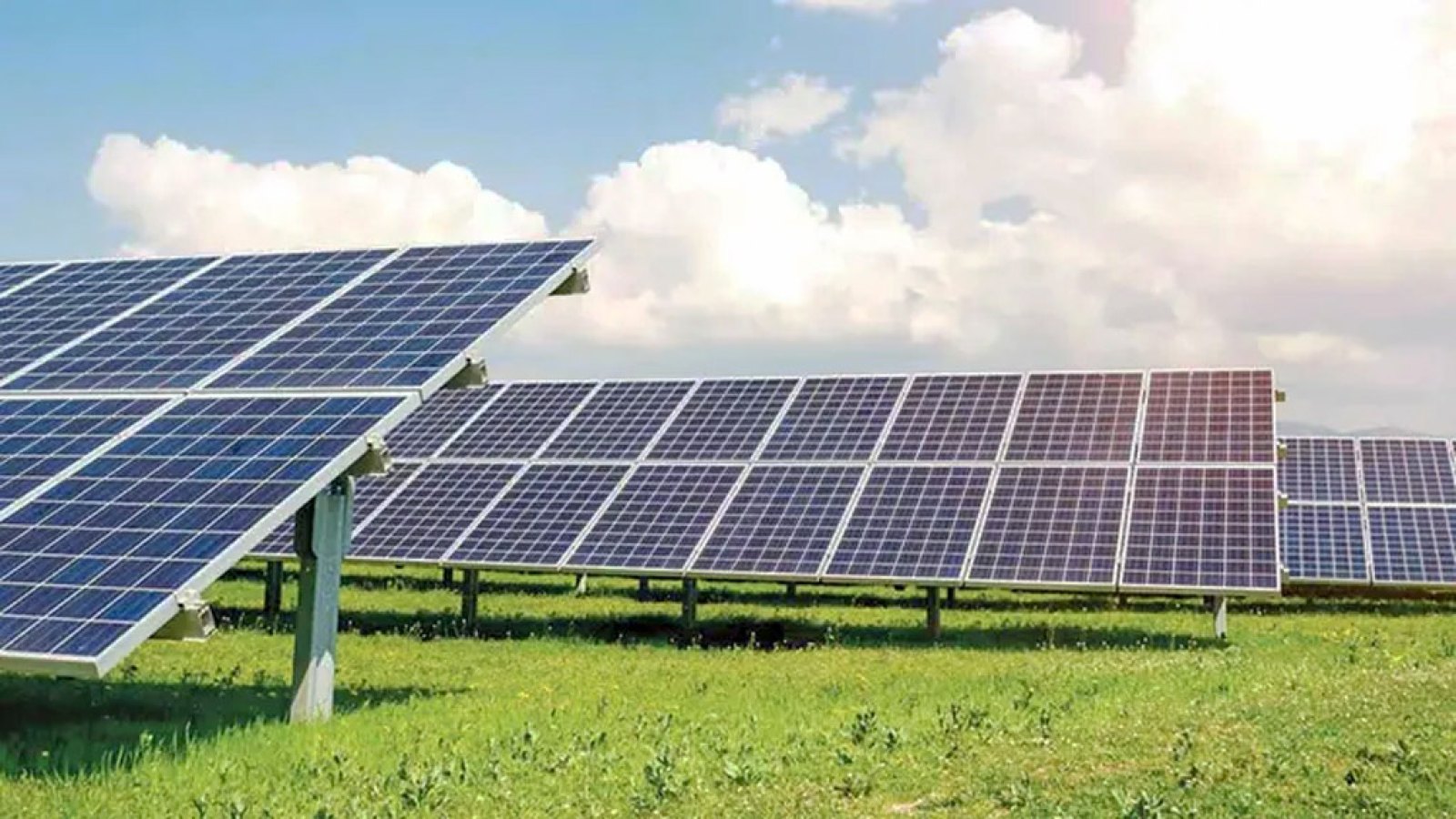
The parliamentary standing committee on the Ministry of Power, Energy and Mineral Resources has recommended that detailed information on how much electricity is being added to the national grid from rooftop solar be presented at its next meeting. It also asked for answers at the next meeting to various questions raised by its members.
The recommendations were made at the committee’s first meeting, held at the Jatiya Sangsad Bhaban on Saturday, 10 October, according to a press release from the Parliament Secretariat.
The meeting was told that the Power Division has 41 continuing development projects in the Annual Development Programme (ADP) for the 2026-27 financial year. They carry Tk 10,653 crore in project aid, Tk 4,071.39 crore in government funding and Tk 3,381.80 crore from the agencies’ own funds.
Figures on the country’s generating capacity and actual output were also presented. Gas-fired capacity is 12,022MW but actual generation is 4,000MW to 5,000MW. Coal-fired capacity is 6,927MW and actual generation 5,000MW to 6,000MW. Liquid fuel-based capacity is 6,409MW but actual generation is 2,500MW to 3,000MW.
The meeting was also told that customers who install rooftop solar systems by 28 February 2027 will receive Tk 10.50 for each unit of surplus electricity supplied to the national grid until 28 February 2030.
The meeting was chaired by the committee’s chairman, Mia Nuruddin Ahammed Apu. Also taking part were committee member and Power, Energy and Mineral Resources Minister Iqbal Hasan Mahmud, State Minister Anindya Islam Amit, Mohammad Kaysar Ahmed, Rafiqul Islam Hilali, SM Jahangir Hossain, Nayab Yusuf Ahmed, Momtaz Alo, Mohammad Nazibur Rahman and Md Abul Hasnat.
After the meeting Barrister Nazibur Rahman Momen told journalists that the ministry’s presentation had acknowledged mismanagement, corruption and a lack of planning behind the fuel and electricity crisis. The huge cost of capacity charges also came up. But progress in carrying out the recommendations of an earlier inquiry committee was not presented.
He said an inquiry committee headed by a judge had been formed after a High Court ruling on capacity charges. The ministry has been asked to say at the next meeting what that committee recommended and what steps it has taken to carry the recommendations out.
The committee also questioned progress in solar generation.
Nazibur Rahman said the ministry could not give specific information on the progress of the government’s incentive programme for rooftop solar. Officials said 2MW of solar power was being added to the national grid every day, but no details were available to support this. The energy minister gave an assurance that the information would be provided at the next meeting.
Nazibur Rahman, an MP from Pabna, also questioned the failure to frame regulations of the Bangladesh Energy Regulatory Commission (BERC) for setting fuel prices. He said section 34 of the 2003 act provides for fuel prices to be set through public hearings and for regulations to be made for the purpose, but this had not been put into effect in 23 years.
He said the ministry reported that a draft of the regulations had been prepared, but gave no satisfactory explanation of why it had not been approved. The committee also asked whether public hearings were held when LPG prices were set and when fuel oil prices were raised recently.
Nazibur Rahman said domestic mismanagement and lack of planning were making the situation more complicated on top of the global energy crisis. The tendency to use a global crisis as a business opportunity must stop, he said, and accountability was also needed for buying fuel on the spot market at high prices.
Stressing the need to step up domestic gas exploration, he said that although there was a plan to drill 150 wells, there was no specific plan showing which wells could yield gas within the next six months, one year or two years. Besides buying new rigs, the capacity to operate them and progress in offshore gas exploration must be ensured.
“There must be an answer to why there is no progress in drilling domestic wells and exploring for gas at sea. A coordinated plan and zero tolerance of corruption are needed to deal with the crisis,” he said.
Pointing to the payment of huge capacity charges despite existing generating capacity, he said the committee had asked what steps had been taken to stop such spending.
The Jamaat MP also questioned the cost of setting up an LNG terminal. He said that although one company had offered to set up a floating LNG terminal for $190,000 a day, the rate was finally fixed at $242,000 a day. He had raised the matter in parliament before.
Nazibur Rahman said that as it was the first meeting, the ministry’s officials were not prepared with the necessary data. Before the next meeting the committee’s members will send their questions to the ministry so that officials can come properly prepared.
He said the aim of the parliamentary committee was to ensure the ministry’s accountability and make parliament the centre of activity. The ministry must provide the necessary information so that committees are not confined to formalities and can play an effective role on the people’s behalf.
Hasnat Abdullah demanded a forensic audit of the Tk 289,000 crore paid in capacity charges in the power sector, a larger stock of diesel and stronger government oversight of the LPG market. He also stressed meeting the solar generation target and reducing dependence on imports in the energy sector.
Speaking to journalists after the meeting, Hasnat Abdullah said the country’s generating capacity is 29,000MW but about 14,125MW is being generated, yet Tk 289,000 crore has had to be paid in capacity charges so far. He said this spending under the Quick Enhancement of Electricity and Energy Supply (Special Provisions) Act of 2010 needs a forensic audit.
“Capacity charges must be paid on the basis of our actual generating capacity. Spending beyond capacity, subsidies and overhauling charges are putting pressure on the economy,” he said.
Noting that the diesel stock is enough for only 31 days, Hasnat said rural farming, transport and the economy depend on diesel, and a breakdown in supply would hurt the rural economy. The committee therefore asked how the stock could be increased.
Alleging a lack of government oversight of the LPG market, he said that although the government-set price is about Tk 1,800, a cylinder has to be bought for Tk 2,500 to Tk 2,600. “The LPG price of Tk 1,800 exists on paper, but in the market it is Tk 2,500. In effect the government is absent from the market,” he said.
Hasnat Abdullah also questioned the solar target. He said the aim is to add 4,000MW to the national grid from rooftop solar by February, but according to the ministry only 60MW was added in the past 30 days.
“Only 12% of the target has been achieved. At this rate 720MW will be obtained by February,” he said. The committee has therefore asked for monthly progress figures on solar generation and an account of the letters of credit (LCs) opened to import solar panels and inverters.
He also questioned the cost of solar projects. He claimed that a 50MW rooftop solar project should cost an estimated Tk 150 crore, but the ministry’s project puts the cost at more than Tk 350 crore. A detailed breakdown of the cost of each project has been requested for the next meeting.
He said that although there is talk of reducing dependence on imports in the energy sector, plans for new LNG and coal-fired power plants at Maheshkhali and Payra could obstruct that aim. The committee asked for the generating capacity and peak demand expected in 2030, the shares of gas, coal, solar and nuclear power, and a deadline for closing idle oil-fired plants.
Stressing domestic gas exploration, Hasnat Abdullah said the extraction of energy from domestic sources must be increased and dependence on imports reduced. He also sought an explanation of the publicised claim that 32 wells would be drilled in a short time, and asked that it be made clear which are exploration wells and which development wells.
Raising the matter of inflated and “ghost” electricity bills, he said some customers had received bills of Tk 3 crore to Tk 7 crore. These irregularities were also discussed in the committee.
Hasnat Abdullah alleged that the ministry’s officials did not come properly prepared to the meeting. “These committees should not be tea-and-singara committees; they should be effective committees,” he said.
Saying he would try to make the parliamentary committees, which are funded with public money, effective and to ensure the ministry’s accountability, he said service and management in the power sector would in the days ahead be one of the measures of whether the government is people-friendly.
বাংলায় মূল প্রতিবেদন পড়ুন · Read the original Bengali report