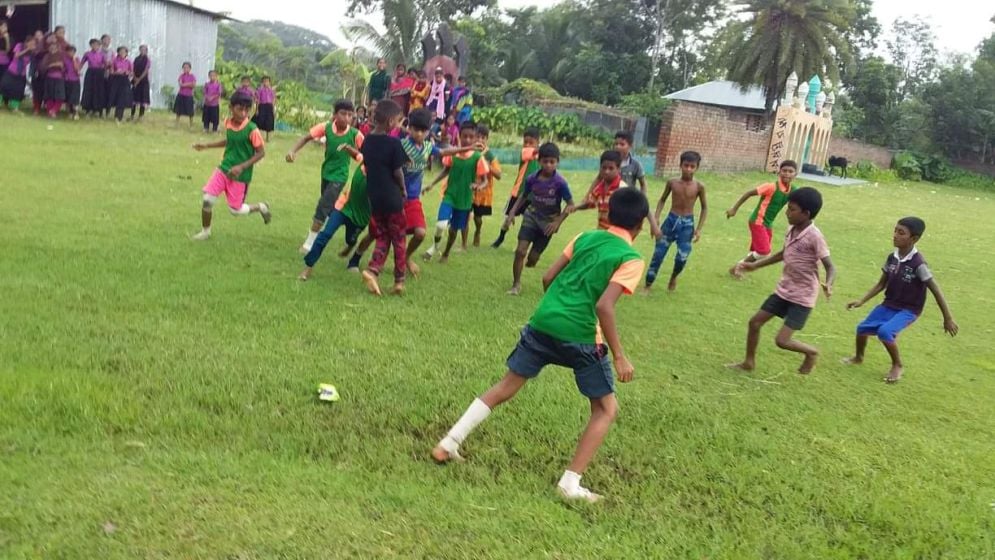
In urban life, contact with soil or nature has become a rare thing. Children spend much of their lives confined within four city walls. But you may be surprised to learn that contact with soil or trees can increase the diversity of microbes living on the skin.
Research shows there may be benefits beyond simply connecting with nature — getting hands muddy while gardening, touching tree bark, or playing on grass. Regular contact with a natural environment can increase the diversity of microorganisms living on the skin.
Scientists are studying whether contact with soil, plants and other natural elements can affect the balance of skin microbes, and whether this in turn offers any support to the immune system.
In a study conducted by Finnish researchers, participants rubbed soil, peat and moss on their hands for 20 seconds. The researchers observed that the number and diversity of microbes on participants’ skin increased significantly. Some trace of that change remained even after washing hands with tap water.
Why skin microbes matter
Many people assume the presence of bacteria on skin is inherently harmful. But that isn’t the case. Experts say a greater diversity of microorganisms on the skin can help maintain balance among different microbes, making it harder for any single potentially harmful bacterium to dominate the skin.
Finnish environmental expert Gronroos said that although participants’ hands looked clean, the change observed in the composition of skin microbes was significant. However, researchers found that just 20 seconds of contact produced no lasting change — suggesting that regular, sustained contact with nature matters more than brief exposure.
Studying children who play in soil
Researchers have also investigated what effect regular contact with nature has on children. At a day-care centre in central Finland, children spend several hours a day in a forest-like play environment, where they climb trees, play with soil and wood, build sand forts, and come into contact with various plants.
To examine how children’s microbiome and immune systems change over time, researchers are collecting samples from their skin, saliva and stool, as well as blood and hair.
This day-care centre is one of many participating in Finland’s ADELE research programme, which builds on earlier studies of the relationship between natural environments and children’s exposure to microbes.
Forest playgrounds linked to greater microbial diversity
In an earlier study conducted in 2016 and 2017, researchers redesigned a day-care centre’s playground by adding forest-like elements such as peat and planter boxes.
After children played regularly in that environment for 28 days, researchers observed greater microbial diversity on their skin, saliva and gut, compared with children using playgrounds paved with concrete or gravel. Re-examination a year later found that some of the differences in skin microbe diversity still persisted. Children who played in forest soil were also found to have fewer potentially disease-causing microbes on their skin. One possible explanation is that greater microbial diversity leaves harmful bacteria less room to dominate the skin’s microbial community.