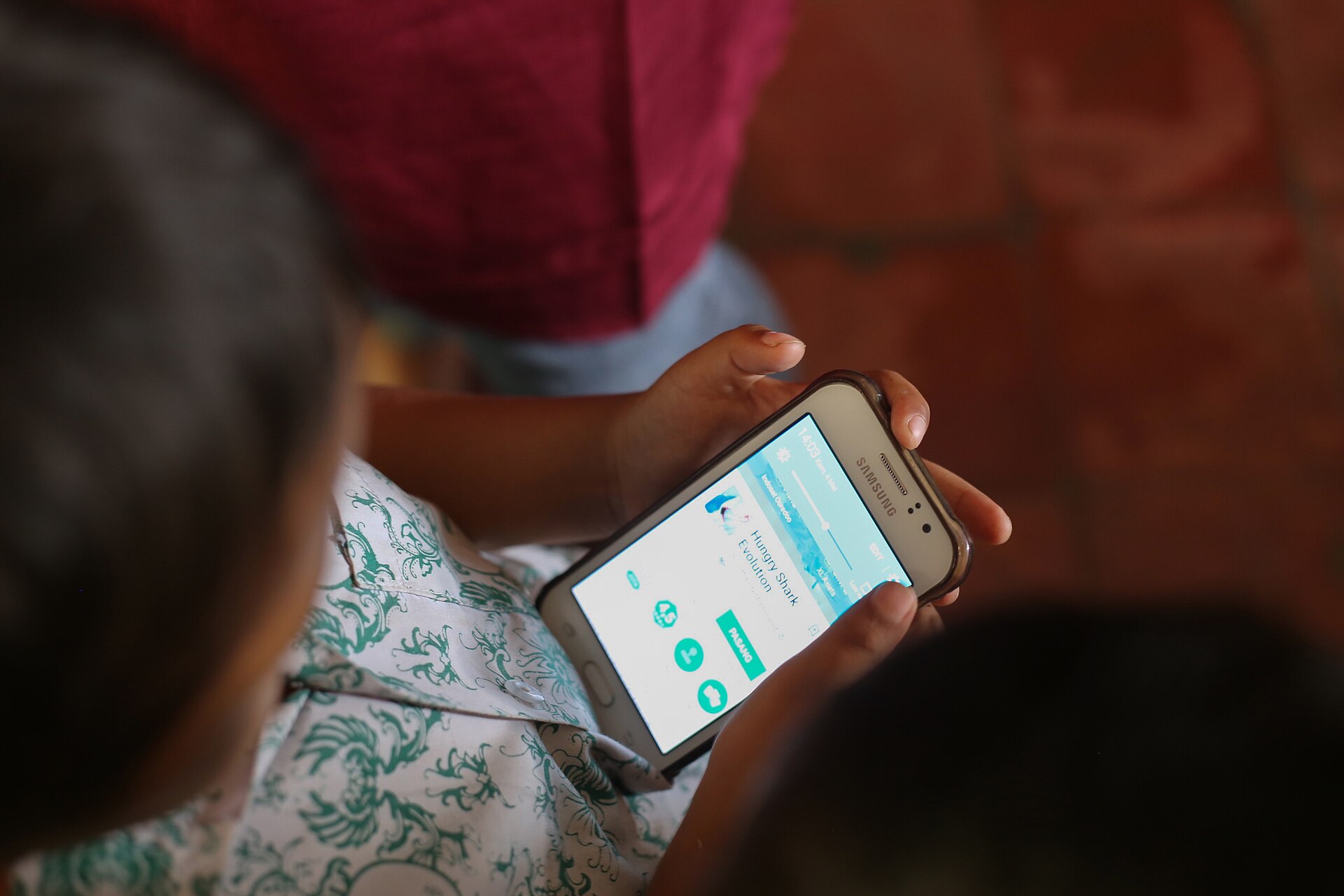
The night grows late. The house is quiet, but a smartphone screen is still lit. One video ends and the next begins. Messages and notifications arrive between reels. “Just a little more, then sleep,” and the night slips by unnoticed.
The next morning it is hard to get up. The mind wanders in class, and the day brings tiredness and irritability. Keeping focus on studies or other work becomes difficult. Many families know this experience.
Smartphones are now an important part of children’s and teenagers’ studies, entertainment and friendships. They have opened chances to learn technology, express creativity and stay in touch with people far away. But how excessive or unchecked use is affecting sleep, attention and social relationships is also an important question.
According to the Bangladesh Bureau of Statistics (BBS) ICT survey for fiscal year 2025-26, 59.2 percent of people aged five and above used the internet in April-June 2026, up from 55 percent in the same period a year earlier. The figures, published in a report by The Daily Star, do not show children separately, but they give a sense of how widely the internet is used in the country.
In a 2025 Pew Research Center survey of US teenagers aged 13 to 17, 40 percent said social media had hurt their productivity and 22 percent said it had hurt their grades. These are the respondents’ own assessments, however, and on their own they do not prove that social media causes these problems.
Relationships and friendship
Smartphones have made it easier to keep in touch with friends, meet new people and talk about shared interests. In the same Pew survey, 74 percent of US teenagers said social media helps them feel more connected to what is going on in their friends’ lives. On the other hand, 31 percent said they sometimes feel left out by their friends on these platforms. Online contact, in other words, can bring both connection and pressure.
In Bangladesh too, there is concern about negative experiences online. About 29,000 children and young people took part in UNICEF Bangladesh’s 2025 U-Report poll. Nearly two-thirds of them named excessive fake news and misinformation on social media as a major cause of stress. About one in seven cited bullying and negative comments, and another 14 percent named harmful or upsetting content as the main source of stress.
Child psychologist and play therapist Mostak Ahmed Imran said in a report in The Daily Star that if screens replace responsive, back-and-forth interaction with people in the early stages of a young child’s development, the risk of delayed speech and social withdrawal can rise. Not every child who uses screens develops such problems, however. The risk grows when devices become a substitute for direct conversation, play and family time.
Parents’ experience reflects this too. Fatema Akter Sweety, a mother of two, said in the same report that after he began using digital devices, her elder son lost interest in going out to play. When she tries to take him outside, she said, he makes excuses. On the other hand, he has learned the names of colours from videos. So she keeps an eye on how long he spends on screens and what he watches. Her experience shows that technology can have both positive and negative effects.
Sleep
Using a smartphone at bedtime can disrupt daily routines. If watching videos or answering messages before bed pushes back bedtime, tiredness and trouble concentrating can follow the next day. Night-time notifications and the habit of watching one video after another can also get in the way of going to sleep on time.
In Pew Research Center’s 2025 survey, 45 percent of US teenagers linked social media to a negative effect on their sleep.
According to the US Centers for Disease Control and Prevention (CDC), children aged 6 to 12 need 9 to 12 hours of sleep a day and those aged 13 to 18 need 8 to 10 hours. Enough sleep supports learning, attention, behaviour and emotional control.
To improve sleep habits, the CDC recommends going to bed and getting up at the same time every day. Guidance from the American Academy of Pediatrics also advises stopping screen use at least an hour before bed and keeping phones and other digital devices out of the bedroom at night.
Setting a fixed bedtime, keeping the phone away from the bed at night and applying the same rules to everyone in the family can help.
Attention
Checking notifications again and again or opening a new video in the middle of studying can break the flow of concentration. After looking at the phone for a while, it can take time to refocus on the book. That can make it harder to divide time between studies, play and other activities.
The US National Academies of Sciences, Engineering, and Medicine’s 2024 report Social Media and Adolescent Health says the distracting features of social media can make it harder for adolescents to sustain attention. But how large the effect is remains hard to determine, and differences between platforms, patterns of use and individuals also have to be taken into account.
There is not enough evidence to say that smartphone use permanently damages the brain’s ability to pay attention. What matters instead is whether phone use is regularly keeping a child from studying, sleep, physical activity or time with family.
Setting age-appropriate limits, turning off unnecessary notifications during study time and taking breaks at set intervals can help children stay focused. It is also important to make more room for reading, drawing, sport and hands-on activities.
Excessive use
How long a phone is used does not on its own show how serious a problem is. Not being able to control phone use, daily tasks being disrupted by it and other activities steadily being crowded out also have to be considered.
In Pew Research Center’s 2025 survey, 45 percent of US teenagers said they spend too much time on social media. In the same survey, 44 percent said they had cut back on social media, and the same share said they had cut back on their smartphone use. Many, in other words, are thinking about how they use these tools and trying to change.
A 2024 report by the World Health Organization’s European region analysed data on nearly 280,000 adolescents aged 11, 13 and 15 in 44 countries and regions across Europe, Central Asia and Canada. It found that the share of adolescents showing signs of problematic social media use rose from 7 percent in 2018 to 11 percent in 2022.
The signs of problematic use it lists are losing control over use, putting social media ahead of other activities, and negative effects on daily life. The data cover Europe, Central Asia and Canada.
Social psychologist Jonathan Haidt, in his book The Anxious Generation, discusses the decline of independent play and face-to-face contact and the spread of a phone-based childhood. In his view, comparing oneself with others, lack of sleep and constant interruptions to attention are concerns for children’s and teenagers’ wellbeing.
Researchers disagree on the subject, however. The National Academies’ 2024 review says existing research does not establish social media as the sole cause of changes in adolescents’ overall health. Some teenagers face harmful experiences online, while others find friendship, creativity and support there. Technology use, personal experience and the family and social environment all need to be considered.
What can parents do?
Speaking to BD Global Times, Taslima Chowdhury Sunna, a PhD researcher in Health Research Methodology at McMaster University, said excessive screen use can have a negative effect on children. To reduce the risk, she said, it is important to give children enough opportunity to play and spend time outdoors.
Parents need to play an active role, she said. They should keep a careful eye on what games their children play, whom they talk to online and what content they watch. It is also important to talk with children regularly, understand their experiences online and guide them with advice and, where needed, counselling.
Smartphones have a positive side too. Technology helps with online classes, educational videos, finding information, creative work and staying in touch with relatives far away. Keeping children and teenagers away from technology altogether is therefore not realistic. The aim should be healthy use.
Parents can take a few steps:
- Set rules for phone use that fit the child’s age, studies and daily routine.
- Build the habit of stopping screen use at least an hour before bed.
- Keep phones away during study time, family meals and time spent together.
- Make more room for outdoor play, reading, drawing and meeting friends in person.
- Talk openly, without blame, about what the child watches online and whom they talk to.
- Create an environment where the child can report any harmful experience or online harassment without fear.
- Adults in the family should keep their own phone use in balance too.
If everyone in the family sits together but is busy on their own phone, it is hard to expect children to behave differently. Keeping phones away at mealtimes, spending time together regularly and talking with children about their online experiences can be small but effective steps.
Schools and technology companies also have a responsibility. Age-appropriate digital education, a safe online environment and support in cases of harassment or harmful content need to be ensured.
Smartphones are now part of life, and children’s relationship with technology will only deepen. The goal should not be to do away with technology, but to use it in a way that keeps a balance between sleep, studies, play, friendship and time with family.
বাংলায় মূল প্রতিবেদন পড়ুন · Read the original Bengali report