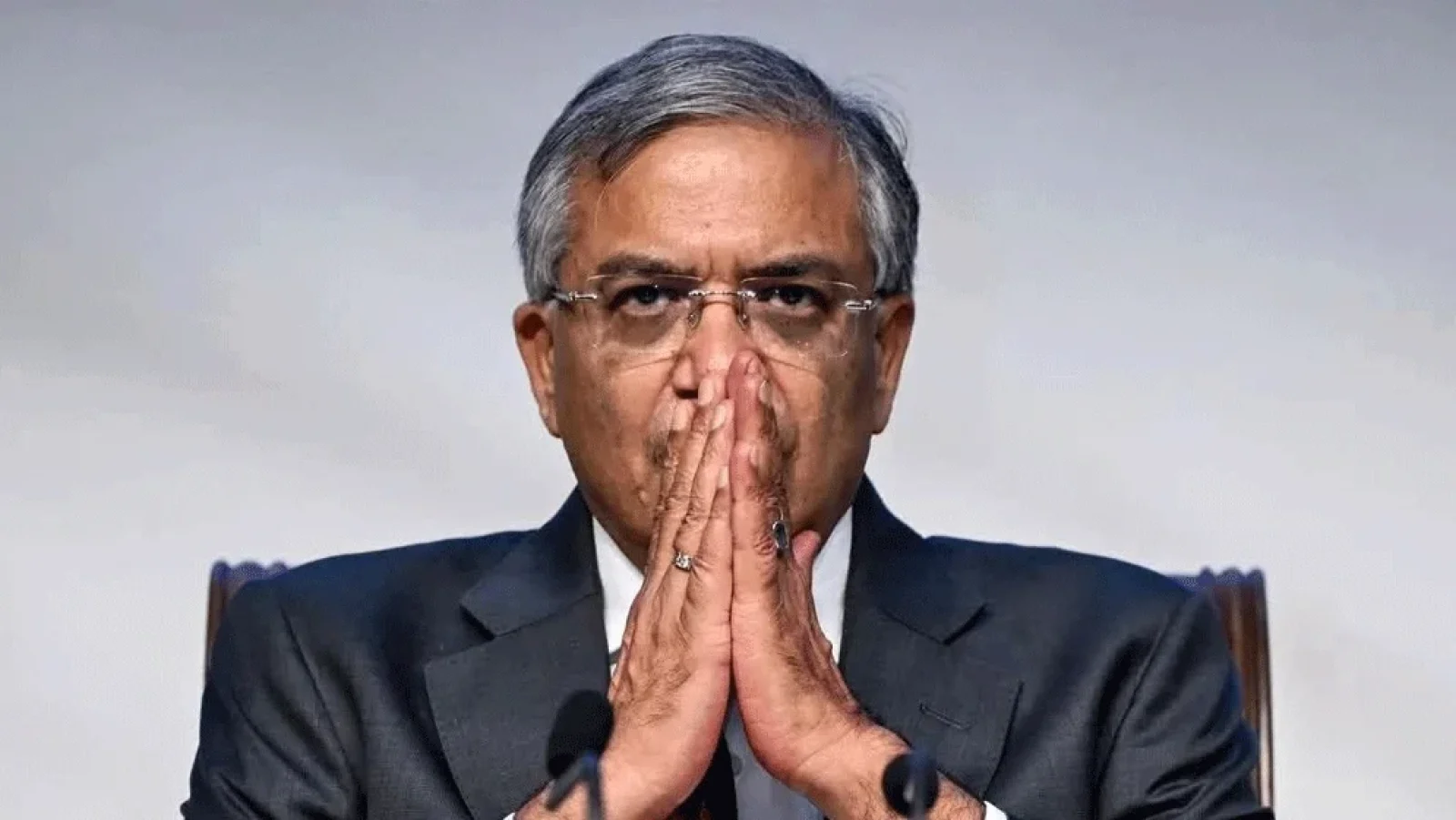
The way Prime Minister Narendra Modi’s government and the Bharatiya Janata Party (BJP) have shielded Chief Election Commissioner (CEC) Gyanesh Kumar and kept him out of the reach of the opposition and civil society means the nation must turn to new thinking and strategy to face this unprecedented crisis.
The unconstitutional protective ring has put Gyanesh Kumar at greater risk, yet it has made the path of struggle harder for the opposition parties. The unusual protests seen in various parts of the country over the past few days have to be considered in the light of this new reality.
The question is why the chief election commissioner does not want to meet the Modi government’s opponents. For the first time in the history of India’s Election Commission, protocol has been cited as a reason in the matter of meeting opposition leaders.
Gyanesh Kumar has directed the opposition leaders to send designated representatives and attached a number of conditions to a meeting. His reluctance to meet them strengthens the impression that the commission has become part of the authoritarian system led by Modi and Shah.
When about 300 members of parliament, among them the leader of the opposition and the presidents of the main political parties, took to the streets, the Election Commission did not hesitate to say that it was in contact with the police. Yet there can be no legitimacy in using the police as an intermediary in the commission’s relations with the main stakeholders of electoral democracy.
This attitude of the commission shows that the removal of the names of 130 million voters from the electoral rolls is not an isolated irregularity. The commission is, on the contrary, helping to carry out the authoritarian political project of Hindutva forces.
The extensive use of information technology to target Muslims, women and deprived communities indicates that an attempt is under way, through the Special Intensive Revision (SIR), to establish a technology-driven fascist state.
“Technofascism” means a fascist system of state in which the autocrats remain out of sight while technology runs the whole system. Authoritarian rulers thus stay hidden, and control of day-to-day operations passes to computers.
This is where the basic question arises: how is resistance to such a system of rule to be built? Is it possible to build enough resistance to it only by demanding Gyanesh Kumar’s resignation?
বাংলায় মূল প্রতিবেদন পড়ুন · Read the original Bengali report