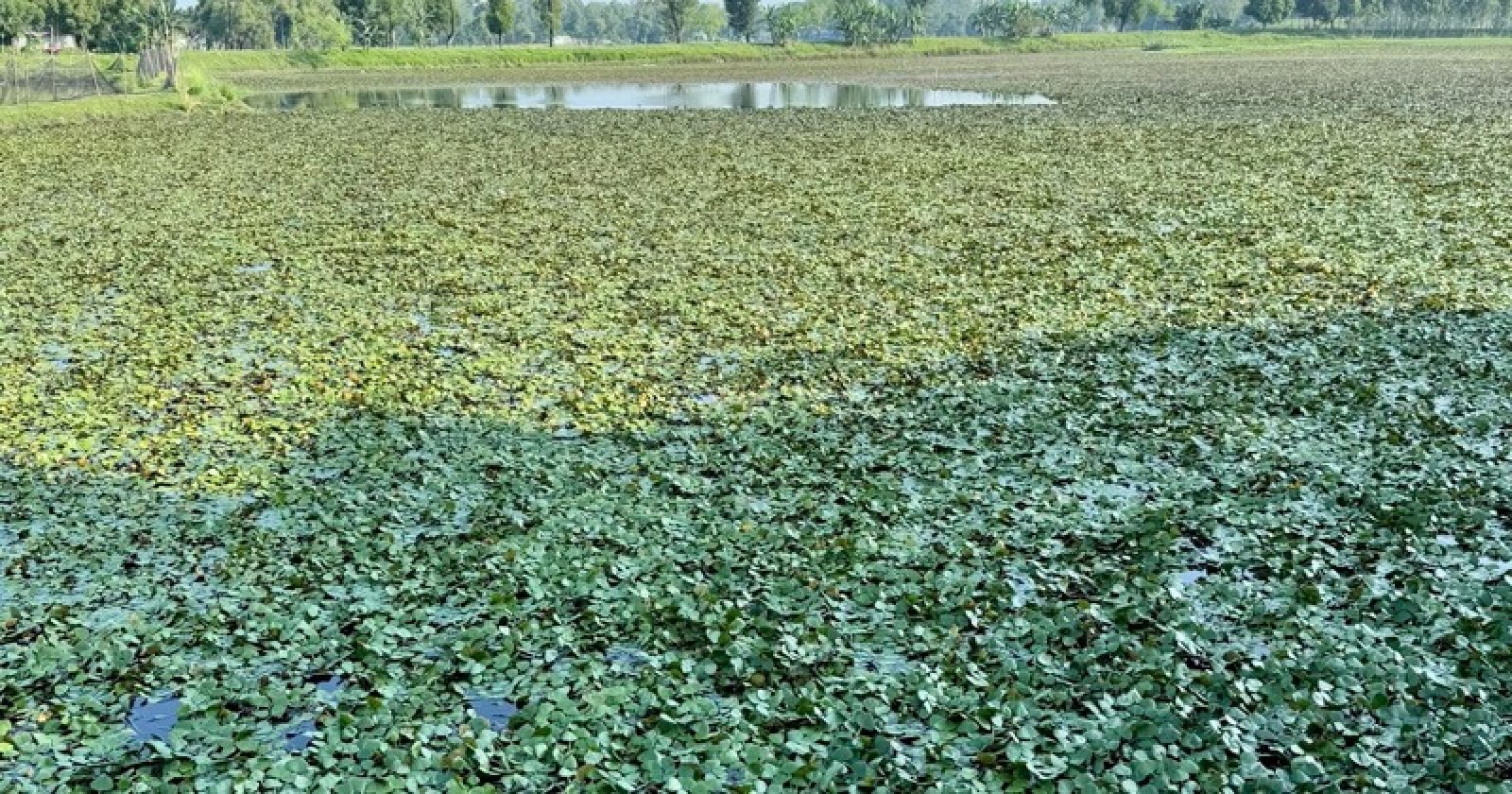
Low-lying land and wetlands in Dewanganj upazila, Jamalpur, that once lay fallow for most of the year are now being put to use for growing water chestnut. Local farmers have found a way to earn extra income by growing it on land that stays under water in the monsoon.
Green water chestnut plants are spread across wide stretches of low land and wetland in various parts of the upazila. From a distance the whole expanse of water looks as if it is covered by a sheet of green, with the plants showing among the leaves that float on the water.
Local farmers say that a large part of this land used to be under water in the monsoon, so it could not be farmed, and it lay largely uncultivated for a part of the year. Growing water chestnut on that fallow land has now created a chance of extra income for their families.
Water chestnut farming in the country first began in Dewanganj, Jamalpur. Growers have become very interested in it because it gives a good profit in a short time and at low cost. Seeing the success in the upazila, growers in other upazilas have learned the method and begun growing it on their own fallow land.
Its local name is “singara”, and many know it as “panifal”. It has various other names in different places, such as water caltrop, buffalo nut and devil pod. In English it is called water chestnut, and its scientific name is Trapa natans. It grows only in knee-deep or waist-deep water. Many know it as singara because it looks a little like the fried snack of that name.
Water chestnut needs little fertiliser or pesticide, so growers’ costs are low. Seedlings planted in a fallow water body give a good yield with nothing more than good care. An annual aquatic plant, it grows up to 5 metres long. Its roots are in the soil under the water and its leaves float on the surface. It can be grown in the shallow water of fallow ditches, canals and ponds, which is why growers are taking to it.
There is comparatively little trouble in preparing the land. When conditions are right on low, waterlogged land, the seedlings are spread out. The plants then extend over the water and begin to bear. The crop is becoming attractive to farmers because the fruit can be picked several times in a season. Farmers said water chestnut is sold in the local market and also supplied to various markets nearby. With demand in season, many are meeting their household needs and earning extra money by selling what they grow.
Local people say a great deal of low land in Dewanganj goes under water in the monsoon. If this land could be brought under aquatic farming, water chestnut included, in a planned way, the use of fallow land would rise and so would local farmers’ employment and income.
The upazila agriculture officer, agriculturist Ratan Mia, said water chestnut has been grown on 35 hectares in Dewanganj this year, and there are bright prospects for it on land that stays waterlogged for long periods. The agriculture office is encouraging farmers to grow it and giving them the technical support and advice they need.
Farmers say the crop could be expanded much more widely if improved seedlings were supplied, loans arranged on easy terms and a fair price ensured for the fruit. Bringing uncultivated land under cultivation is expected to raise farmers’ income and have a positive effect on the local economy.
বাংলায় মূল প্রতিবেদন পড়ুন · Read the original Bengali report