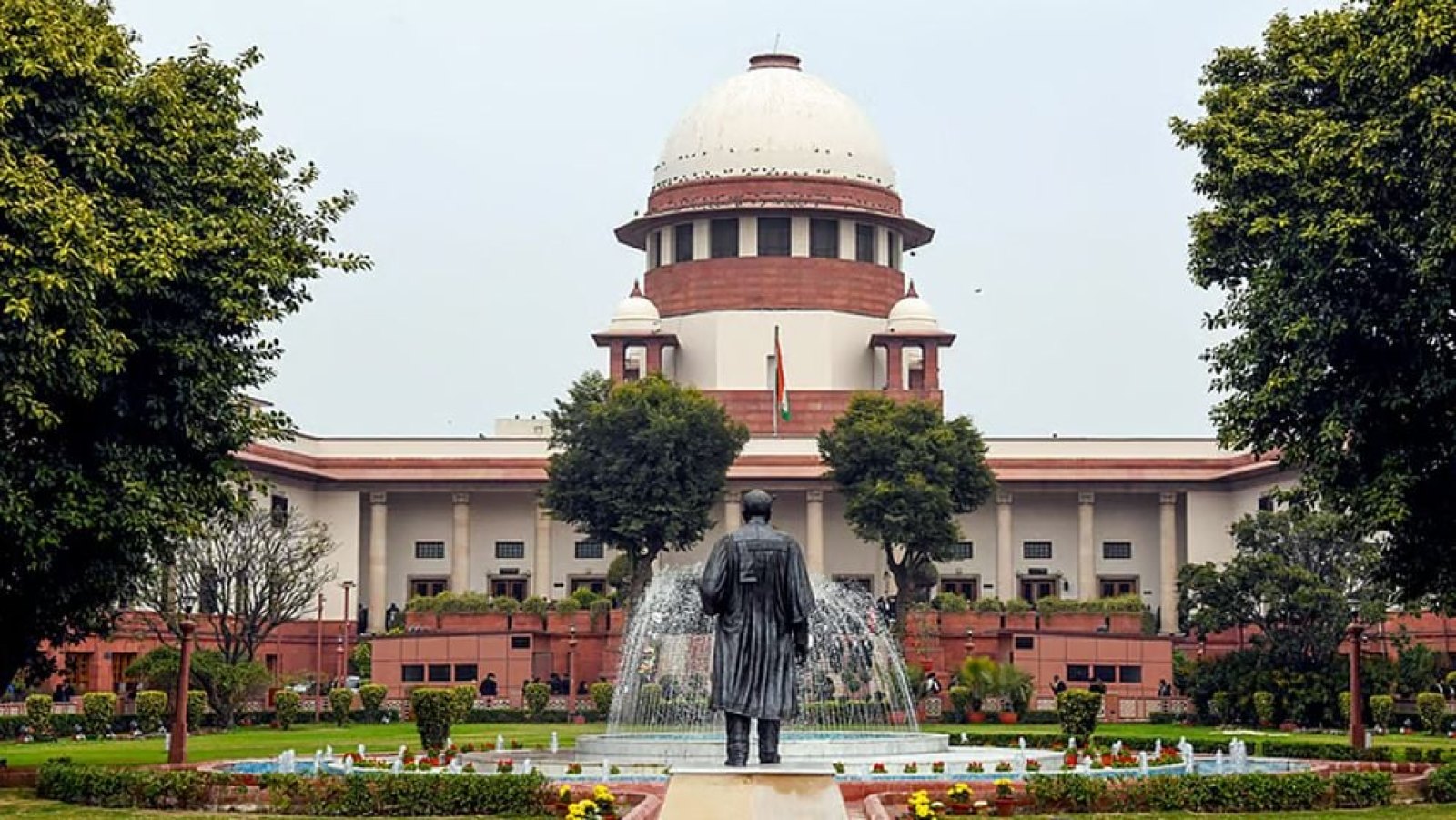
India’s Supreme Court has taken a firm position on allegations of harsh police measures, obstruction of movement and the shutting down of internet services in the capital, Delhi, in connection with the protests.
The court has directed that barricades at various places in the capital be removed so that ordinary people can move about normally, and that metro and internet services be restored at once. It also said it must be ensured that lawyers can carry out their professional duties freely.
The court gave the directions while hearing a number of petitions filed against the extensive security and police action in Delhi around the protest on Saturday 10 October.
At the hearing, senior advocate Kapil Sibal asked that trains coming from various parts of the country be allowed to run through to Delhi. He also opposed the imposition of section 163 of the Bharatiya Nagarik Suraksha Sanhita beyond a four-kilometre area around Jantar Mantar and called for peaceful protest to be allowed while law and order is maintained.
The court also asked how section 163 came to be imposed around the Supreme Court. When Solicitor General Tushar Mehta could not answer at once, the court directed him to gather the information quickly.
The association of Supreme Court lawyers complained that they had not been told of the prohibition in advance and that several lawyers had been taken away from their chambers.
On this, Justice Joymalya Bagchi said that if the lawyers had not been informed by notice, that could be a strong ground for questioning the validity of the order. Senior advocate Gopal Sankaranarayanan also raised before the court the prohibition notice for Bhagwan Das Road and the obstruction of access to the Delhi High Court.
The petitioners further alleged that political leaders, lawyers, journalists and ordinary people were detained indiscriminately during the protest. Serious allegations of assault, the shutting down of internet services and the closure of 57 metro stations were also placed before the court.
Advocate Menaka Guruswamy told the hearing that the matter is not limited to the detention of a few individuals; it is directly a question of fundamental rights under the constitution. The court has directed the Delhi Metro Rail Corporation to explain the specific reasons for closing the metro stations.
In all, the top court is now giving the highest importance to protecting ordinary people’s movement, communications and lawyers’ professional rights, alongside ensuring security during protests.
বাংলায় মূল প্রতিবেদন পড়ুন · Read the original Bengali report