The government has begun wide-ranging reforms to secure a smooth and lasting graduation of Bangladesh from the list of least developed countries (LDCs), involving the public, the private sector, the United Nations, development partners and multilateral lenders. The extra time won to prepare for graduation will not be treated as a delay or a suspension but used to transform the structure of the economy, raise productivity, open new markets and lay a firm base for long-term development.
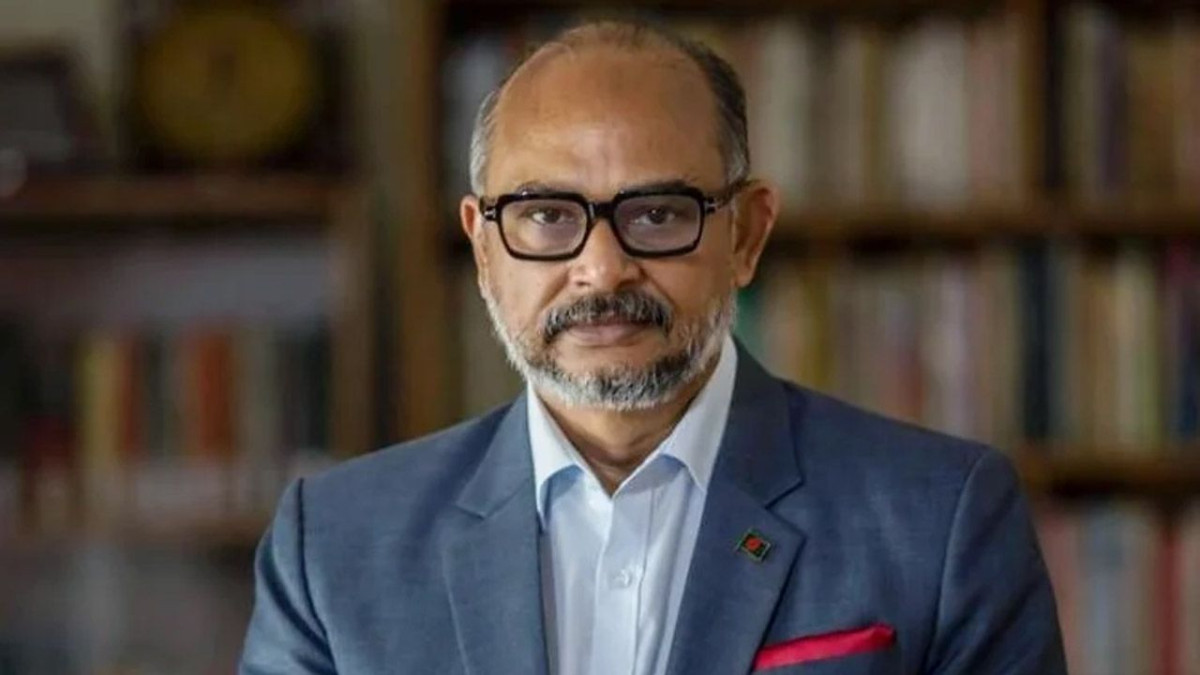
Dr Rashed Al Mahmud Titumir, the prime minister’s adviser on finance and planning, said this while talking to journalists at the Secretariat on Sunday.
He said the government sees LDC graduation as a lasting window to turn Bangladesh into a “trillion-dollar economy”, bearing in mind domestic and global challenges such as an inherited fragile economy, outside pressure from the Middle East crisis and a lack of earlier preparation. Work on the plan has begun on the strength of the people’s mandate, with five partners including the International Monetary Fund (IMF), the World Bank and the ADB, and this will build new confidence among foreign investors, he said.
Titumir said Bangladesh is the largest economy among the least developed countries, so major reforms are needed to diversify the economy, sharpen competitiveness and raise productivity. Explaining why the preparation period was extended, the adviser said the government sees the time as part of its overall economic strategy. Three things were taken into account: domestic fragility from the weak economy it inherited, outside pressure and economic uncertainty caused by the Middle East crisis, and the lack of adequate preparation in advance to deal with these. The government began work with these realities in mind, though it has backed LDC graduation from the start, he said.
On reform priorities, the adviser said one of the government’s main aims is to restore discipline in the banking sector and secure finance for investment. It will also work to strengthen energy security, look for new investment markets and widen the range of export goods. To cushion the expected loss of trade benefits after graduation, it will also seek free trade agreements (FTAs) with various countries.
Titumir said these goals would be easier to reach with an effective understanding, or compact, with the private sector. Private sector representatives have been included in every discussion on LDC graduation, and the plan is also part of the government’s “three R” strategy, he said.
On the role of the United Nations, he said a unanimously adopted resolution tasks the UN system with providing all kinds of support, including technical assistance, led by the UN resident coordinator.
The International Monetary Fund (IMF), the World Bank, the Asian Development Bank (ADB), the Asian Infrastructure Investment Bank (AIIB) and the Islamic Development Bank (IsDB) have pledged support for the priority reforms the government has identified.
Titumir said the various reform efforts, including the IMF’s ongoing programme, are coordinated. The reforms are being carried out on the basis of the people’s mandate, which is one of the defining features of the effort, he said, adding that people had never before been involved in a reform programme in this way. He said the participation of the five partners would also raise confidence among foreign investors.
To that end, there are plans to build energy infrastructure centred on Matarbari and to expand the necessary infrastructure in other regions as well, he said. The government is also working on land-based LNG terminals alongside floating ones to raise LNG import capacity, with emphasis on more solar power, less waste and system loss in energy supply, and more diverse sources of LNG imports.
The adviser said that if the necessary infrastructure can be built in the south-west and other parts of the country alongside the Matarbari energy hub, it will open the way for regionally balanced industrialisation.
After LDC graduation, Bangladesh risks losing duty-free and quota-free access to various markets. To meet that challenge, the government is looking for new export markets and putting weight on free trade agreements (FTAs) or comprehensive economic partnership agreements (CEPAs) with trading partners.
বাংলায় মূল প্রতিবেদন পড়ুন · Read the original Bengali report