Bangladesh’s economic structure has changed greatly in the five decades since independence. But the government’s revenue collection has not kept pace with that structural change. Although the economy has grown, the tax-to-GDP ratio still hovers between 6 and 10 percent, raising concern about weak revenue management and a narrow tax net.
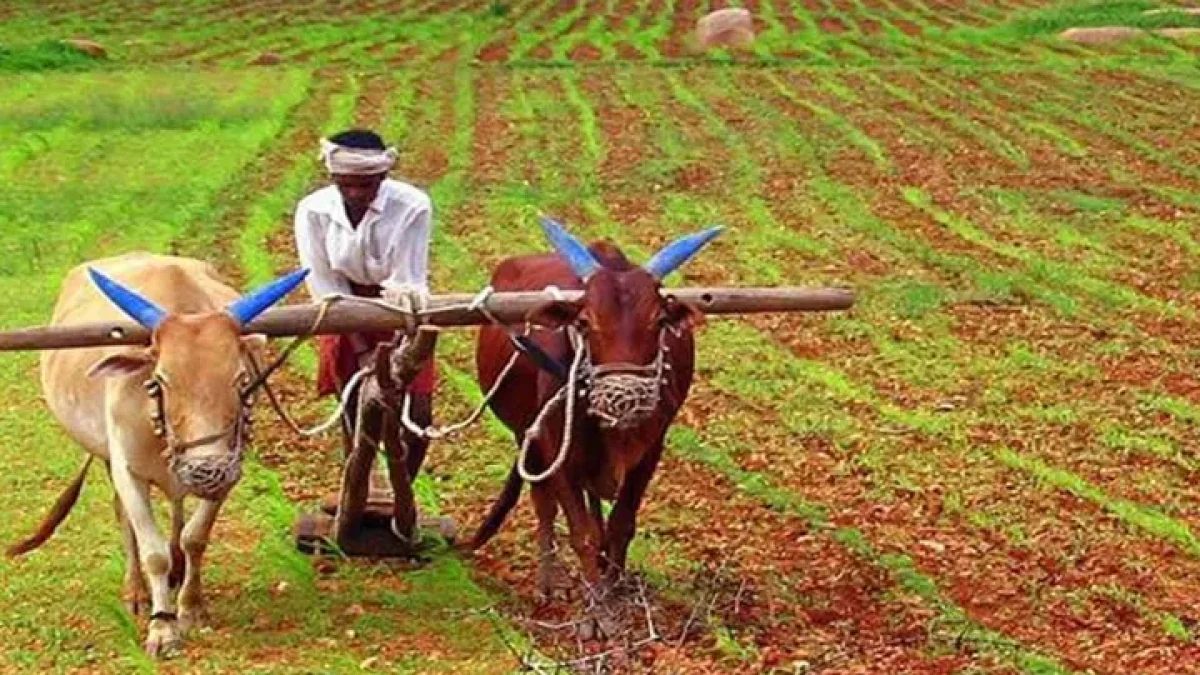
A review of the economy’s path shows a large fall in agriculture’s place in the economy. By its count, agriculture’s contribution to GDP as a single sector was 49.8 percent after independence and has now fallen to about 12 percent: a decline of more than 74 percent in five decades. Over the same period industry’s share has risen to 34 percent.
The figures were presented by Dr Muhammad Abdul Majid, a former secretary and former chairman of the National Board of Revenue (NBR), in a recently published Asiatic Society of Bangladesh report titled “Bangladesh’s Balance Sheet (1972-2025): The economy’s path over five decades”.
According to the report, agriculture accounted for 49.8 percent of Bangladesh’s GDP in 1972. That fell to 44.2 percent in 1980, 24.1 percent in 2000 and 12.8 percent in 2020. The projection for 2025 puts agriculture’s share at 11.42 percent.
Industry’s share rose over the same period, from 9 percent of GDP in 1972 to 25.2 percent in 2000 and 34.03 percent in 2025. The contribution of manufacturing also increased: from 3.1 percent in 1972 to 21.89 percent in 2021, with the 2025 projection showing 37.65 percent.
The Asiatic Society’s observations say that although agriculture’s share of GDP has fallen, the sector has not lost its importance. A large part of the country’s land is used for farming and a very large number of people depend on it for their living. Self-sufficiency in food grains, higher farm productivity and the growth of agro-based industry remain important for the economy. Majid stressed giving farmers capital on easy terms, supplying better seed and fertiliser, and ensuring fair market prices for what they produce.
Alongside the structural change, the report voices concern about weak revenue collection, saying Bangladesh’s tax-to-GDP ratio has hovered between about 8 and 10 percent for a long time. For 2025 the ratio is shown at 6.6 percent. By contrast, many countries collect at least 15 to 16 percent of GDP in tax. The reasons given are a narrow tax net, tax evasion, wide tax exemptions, complicated collection and a shortage of skilled staff. Slow automation and tax collected but not properly deposited in the treasury are also problems. Although the economy has grown, revenue is not rising as expected because not all eligible taxpayers and taxable sectors are within the net.
Noting that GDP growth has also fluctuated, the former NBR chairman said Bangladesh’s average annual growth was 2.96 percent in 1972-1980. It rose to 3.84 percent in 1981-1990, 4.79 percent in 1991-2000, 5.58 percent in 2001-2010 and 6.43 percent in 2011-2020. After the Covid pandemic, however, growth began to slow from 2021. GDP growth was 7.10 percent in 2021 and is projected at 3.49 percent for 2025. Over the same period per capita gross national income rose from $2,138 to $2,911. In other words, per capita income has risen while the pace of growth has weakened.
The analysis stresses judging economic growth not only by GDP or per capita income but also by income distribution, employment, productivity and living standards. Where income inequality is high, it explains, the benefits of growth do not reach every section of society equally, which can also slow the reduction of poverty.
In his overall observations, Dr Abdul Majid, who presented the paper, said that sustainable progress for Bangladesh’s economy needs higher revenue collection, fewer weaknesses in the financial sector and stronger policy coordination, alongside growth in productive sectors. Making revenue management more effective is also important so that the gains from a larger economy can be used for development and public services.
বাংলায় মূল প্রতিবেদন পড়ুন · Read the original Bengali report