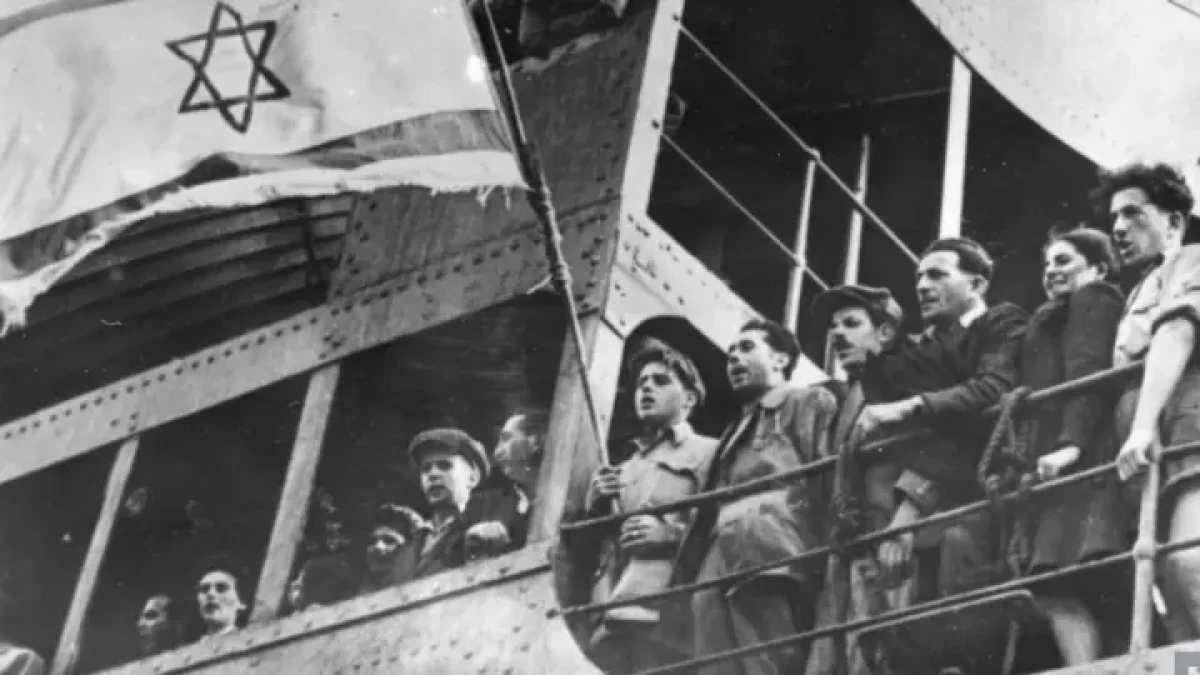
British authorities held detailed information about bombings, sabotage and killings by Zionist armed groups in Palestine before Israel’s establishment, according to previously secret records reviewed by The New Arab.
Intelligence agencies used the term Jewish terrorism in warnings about the activities, the records in Britain’s National Archives show.
Before 1948, groups including Haganah, Irgun and the Stern Gang carried out bombings, assassinations and sabotage targeting Palestinian civilians and British authorities. Officials also received reports about destroyed villages, killings of women and children and plans for territorial expansion.
On November 2, 1917, British Foreign Secretary Arthur James Balfour declared support for a national home for Jewish people in Palestine. The declaration did not promise an independent Jewish state and required protection of the civil and religious rights of the existing non-Jewish population.
Zionist movements later treated the declaration as a basis for statehood, an interpretation British intelligence officials disputed.
In a secret report dated September 2, 1946, MI5 Middle East chief James Robertson wrote that the declaration did not bind Britain to establish a Jewish state.
Robertson identified three methods used to pressure Britain and international opinion: mass propaganda, irregular immigration to Palestine and terrorist activity.
British documents also questioned cooperation from parts of the Jewish community. In February 1944, High Commissioner Sir Harold MacMichael reported that newspapers and organizations condemned attacks but showed little interest in helping police identify offenders.
In October that year, he reported growing sympathy for armed groups in Tel Aviv and other cities, while stopping short of saying the entire Jewish community supported them.
Irgun leaflets threatened renewed attacks on British troops, raising fears that violence would continue even after British rule ended.
Archives also cover the bombing of the Jewish Agency headquarters in Jerusalem on March 11, 1948. A total of 13 Jewish people were killed, 33 seriously injured and 51 slightly injured.
A secret report by High Commissioner Sir Alan Cunningham said a US consulate vehicle entered the compound shortly before the blast.
The driver, Palestinian Christian Anton Camilo Daoud, left the vehicle and departed by taxi. A security guard said he recognized the vehicle and driver, while the taxi driver said Daoud had been instructed to leave it at a set time.
British investigators alleged that the Jewish Agency did not cooperate and that Haganah members blocked a senior police officer from entering. The records did not reach a final conclusion about responsibility.
In March 1948, MI5 director Percy Sillitoe attended a secret meeting in Taunton on intelligence operations against Zionist armed groups.
British officials feared the Jewish Agency had built international networks that could gain diplomatic privileges and support overseas intelligence activity after statehood.
A 1948 report described the agency as resembling a future government, with military and political intelligence structures and Haganah surveillance of neighboring Arab countries.
By April 1948, British authorities were receiving detailed accounts of attacks on Palestinian villages.
Cunningham reported an April 9 assault on al-Qastal near Jerusalem using mortars and explosives, which forced Palestinian residents from their homes.
A later British message quoted a Jewish spokesperson claiming 200 Palestinians were killed, about half of them women and children, and another 200 injured. The figures were not independently verified.
The spokesperson said Haganah knew of the assault in advance and referred to ambitions extending beyond Palestine into Transjordan.
British records also describe an attack by about 200 Zionist fighters on Nasr al-Din near Lake Tiberias, where nine Palestinians were killed and five injured.
On April 14, a Palestinian market in Tiberias was attacked with mortars and automatic weapons, and three houses were destroyed by explosions.
Another record dated May 28, 1948, described the Jordanian Arab Legion’s treatment of Jewish civilians and prisoners after the Jewish Quarter in Jerusalem surrendered.
Spanish diplomat and UN representative Pablo de Azcarate said prisoners and civilians were not harassed and that Arab soldiers helped older people, women and children. The legion acted quickly when isolated looting occurred.
Azcarate praised commander Abdullah al-Tal for creating an atmosphere of mutual trust, and British officials sought to share the account with British and US journalists.
Taken together, the files show sustained British knowledge of Zionist armed activity, attacks on villages, civilian deaths, displacement and plans for a future state’s intelligence structure before the Nakba.
বাংলায় মূল প্রতিবেদন পড়ুন · Read the original Bengali report