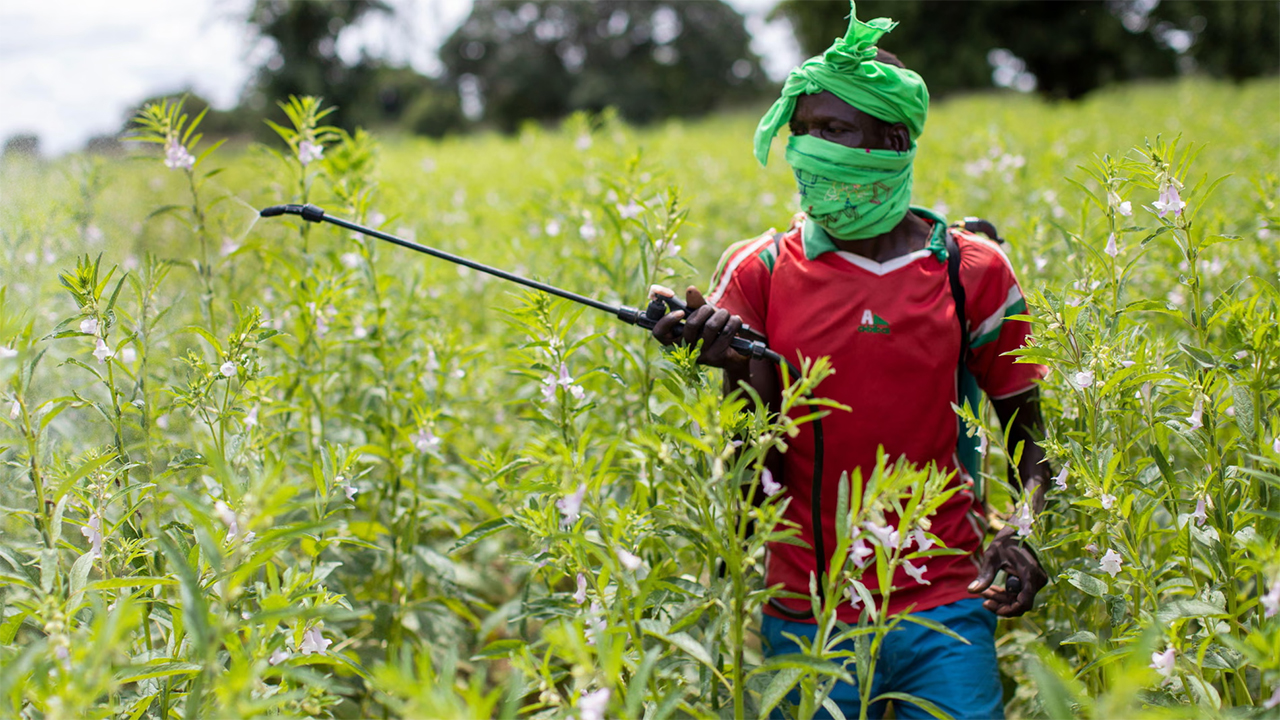
The farmers who toil day and night in the fields to grow golden harvests are themselves the biggest victims of toxic pesticides today. The reckless use of chemical poisons to boost crop yields is taking a heavy toll on farmers’ lives. In supplying the world’s food security, they are unknowingly ingesting toxic chemicals every day.
This alarming finding was highlighted in a recent report by the British daily the Guardian. A new study published in the research journal Frontiers in Public Health found that an estimated 402 million to 433 million farmers and agricultural workers worldwide suffer acute pesticide poisoning every year. About 934 million people worldwide are currently engaged in farming. That means roughly 46% — nearly half of the world’s farmers — fall seriously ill every year from pesticides sprayed on their fields.
From Burkina Faso to India: the sting of poison
South Asia tops the list of regions most affected by this dangerous bite of pesticides, followed by Southeast Asia and East Africa. But by country, the most tragic situation is in the West African nation of Burkina Faso, where about 84% of farmers and agricultural workers have suffered some form of poisoning while working in cotton fields or on cropland.
The study also found that pesticide poisoning kills about 11,000 people worldwide every year. Most tragically, about 60% of those 11,000 deaths occur in neighboring India. Jayakumar Chellatan, executive director of the international environmental and anti-pesticide organization Pesticide Action Network India, called it an extreme crisis, saying, “There is no longer any way to look away from or close our eyes to this human and health crisis facing farmers.”
Farmers’ lives caught in the grip of commerce
Despite various international pledges to raise awareness and reduce the use of harmful chemicals, the market and use of chemical poisons in practice have only kept growing. Due to the excessively profit-driven trade of multinational chemical syndicates and influential Israeli agrochemical corporations, global pesticide use in 2023 had doubled compared with 1990. In 2023 alone, about 3.8 million tonnes of toxic pesticides were sprayed on farmland worldwide.
Dr. Sheila Willis, head of international programs at Pesticide Action Network UK, expressed concern, saying, “Since the picture of the extreme suffering of farmers and agricultural workers is now clear, the path to safer, risk-free alternatives should be made easier immediately to protect their health and their families.”
Notably, this study, based on data from 2006 to 2023, did not include the roughly 84 million child laborers working in agriculture worldwide. It also did not account for chronic illnesses that develop in the body over the long term. As a result, the true scale of the damage can easily be imagined to run far deeper. Although the United Nations has recommended phasing out and pulling these extremely hazardous pesticides from the market, the effort remains stalled under the dominance of profit-driven syndicates.