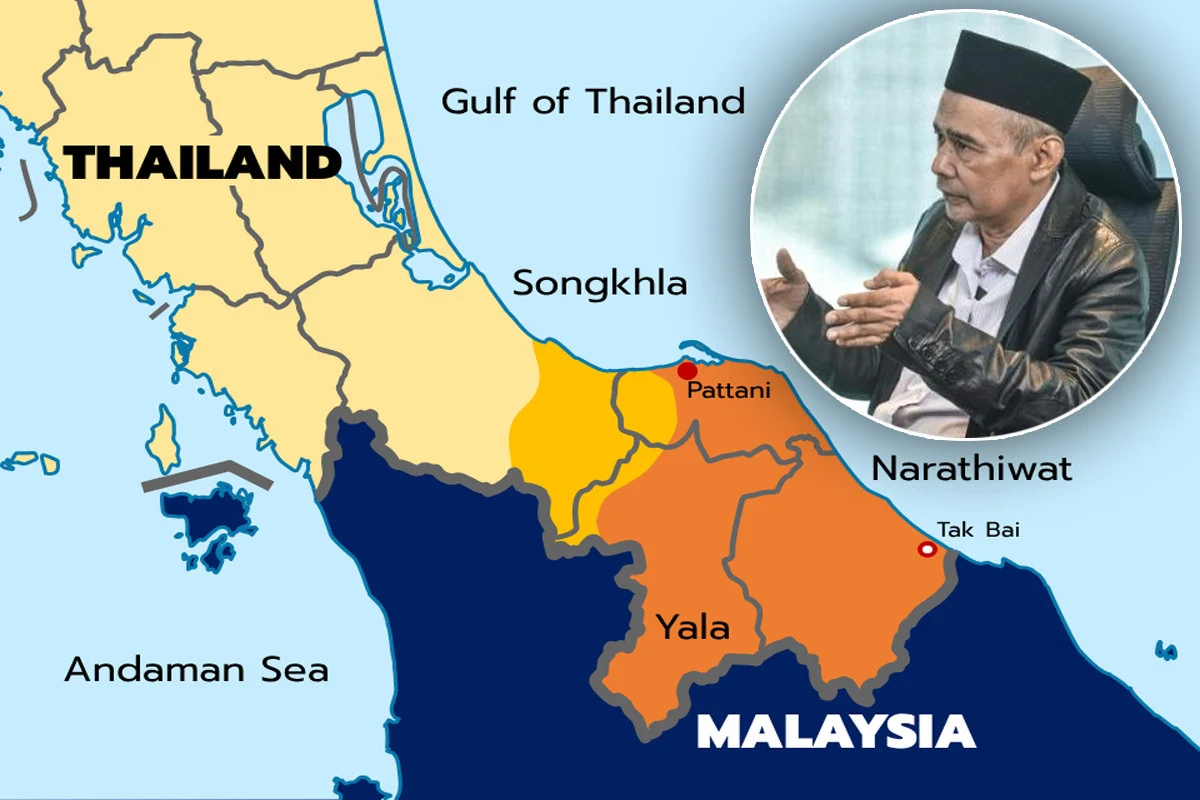
The long-running conflict in southern Thailand is back in the spotlight. The country’s main Malay-Muslim separatist group, Barisan Revolusi Nasional (BRN), has said it will keep fighting until it achieves its goal of an independent Islamic state in the region.
Nikmatullah Seri, spokesman for the BRN’s peace talks delegation, said so in a recent interview with the news agency AFP in Kuala Lumpur, Malaysia. The group’s struggle will continue until its goal is achieved, he said.
Historically, southern Thailand is a Malay-Muslim majority area. It was once part of the Patani Sultanate and was politically incorporated into the then kingdom of Siam in the early 1900s.
Since the 1960s, a section of the local Malay Muslims has demanded greater autonomy over language, culture, religious identity and political rights. The conflict flared again in 2004, and according to Deep South Watch, more than 7,000 people have been killed in conflict-related violence since then.
Peace talks between the Thai government and the BRN, mediated by Malaysia, have been under way since 2013 but have been disrupted at various times. Bangkok suspended the talks in July after five soldiers were killed in an attack.
Nikmatullah neither confirmed nor denied BRN involvement in recent violence. But he said the group’s aim is to establish political power in the south, and that the BRN has proposed a power-sharing framework to Bangkok.
Under the group’s proposal, it wants to govern the south for a transitional period of five to 10 years, during which a Sharia-based police and court system would be introduced for Muslims. After that, the people would decide the region’s future system of government through a democratic process, Nikmatullah said.
Malaysia also plays an important role in the conflict. Because it borders the region, the conflict in southern Thailand affects northern Malaysia too. The Thai government’s position is that the conflict can be resolved through political dialogue, but that no solution outside the country’s sovereignty and constitutional framework is acceptable.
বাংলায় মূল প্রতিবেদন পড়ুন · Read the original Bengali report