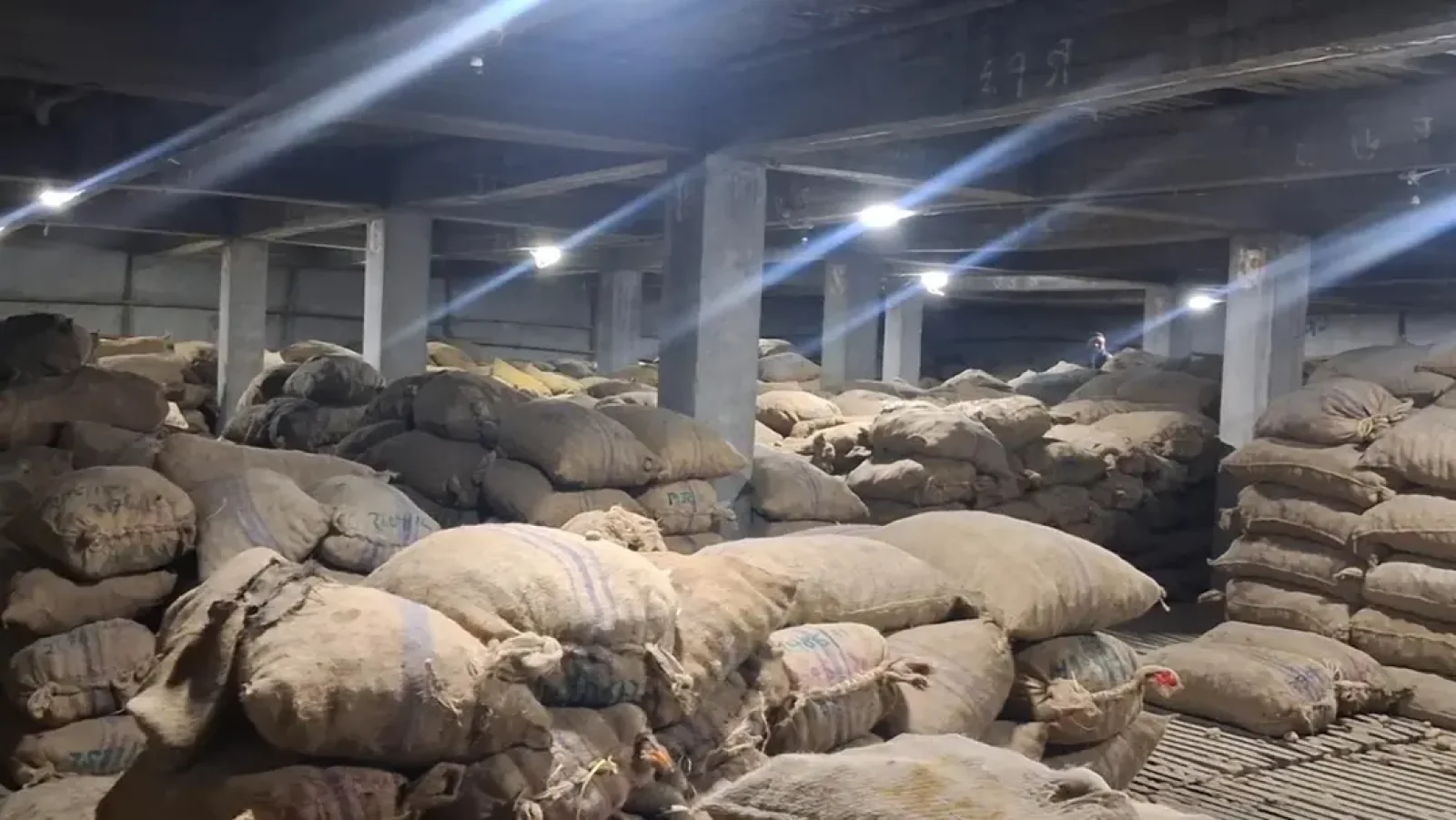
Farmers and traders stored their potatoes in cold storage hoping for a better price. But even near the end of the season, the market is not giving them the price they expected. Instead, with few buyers and falling prices, they are losing interest in taking their potatoes out of storage at all. Production, transport and storage together have cost Tk 23-24 for every kilogram of potatoes, yet they are now having to sell at Tk 10-12. That leaves farmers and traders losing Tk 11-14 on every kilogram.
Large quantities of potatoes still lie unsold in the cold stores of Pakundia upazila in Kishoreganj. There is also uncertainty over whether the potatoes can be cleared within the set deadline. Farmers stored potatoes this year hoping to recover last year’s losses, but now face losses again.
Traders said a sack is usually bought holding 65 kg of potatoes. After sorting, about 60 kg remain fit for sale. Including production, transport and cold storage rent, each kilogram costs Tk 23-24. Yet the market price of potatoes has now fallen to Tk 10-12.
There are two government and four private cold stores for potatoes at the district and upazila level. Pakundia has one government and two private cold stores, the district headquarters has one government cold store, and Bhairab has two private ones.
Thousands of sacks lying in storage
A recent visit to Purbachal Cold Storage and Egarosindur Cold Storage in Pakundia found little activity around clearing potatoes, even at the end of the season. Inside, sacks of potatoes were stacked in rows. Some people were opening sacks and taking potatoes out, others were tending to them. But with no buyers in the market, most farmers and traders were showing no interest in taking their potatoes out.
The cold store authorities said the potatoes were stored in March and April this year. The deadline for clearing potatoes is usually 15 November. But this year, because of heavy supply and falling prices in the market, large quantities of potatoes are still in storage. There is little chance that all of them will be cleared in time.
Rafiqul Islam, a potato trader from Hossainpur, said he had stored 2,200 sacks of potatoes at Egarosindur Cold Storage. Including purchase, transport and storage rent, each kilogram cost him Tk 23-24. The market price was Tk 16-17 at first and has now dropped to Tk 10-11, a loss of Tk 11-12 a kilogram, he said.
Ripon Mia, a potato farmer from Sukhia village in Pakundia, said the cost of farming had gone up. “We grew potatoes with a lot of effort and put them in cold storage hoping for a good price. Now, even at the height of the season, there are no buyers and prices have fallen. We are in trouble,” he said.
Abdul Kadir, a trader from Sreepur in Gazipur, said he had bought potatoes from Egarosindur Cold Storage two days ago at Tk 13 a kilogram. “I have not taken them out of storage yet, and the price has already fallen by Tk 2 a kilogram. Once transport and other costs to take them from the cold store to Gazipur are added, I will lose even more,” he said.
55,000 sacks waiting to be cleared
Delwar Hossain, manager of Purbachal Cold Storage, said 5,500 tonnes of potatoes had been stored there, of which 4,000 tonnes have been cleared. Most of the remaining potatoes are seed potatoes, he said.
Engineer Md Altaf Hossain, manager of Egarosindur Cold Storage, said 139,174 sacks of potatoes were stored there this year. By 7 November, 83,500 sacks had been cleared, leaving 55,674 sacks. Because of the fall in prices, farmers and traders have cut back on how much they take out, and there is no chance that all the potatoes will be cleared in time, he said.
More grown, prices down
According to the Pakundia Upazila Agriculture Office, potatoes are grown on an average of 1,300 hectares in the upazila every year. Last fiscal year, hoping for higher prices, farmers planted potatoes on 1,450 hectares. Favourable weather produced a yield of about 30 tonnes a hectare. But as potato production rose across the country, prices fell in the market, leaving farmers facing financial losses.
Pakundia Upazila Agriculture Officer Nure E Alam said farmers should diversify their crops rather than depend on a single one. In the rabi season, they should give importance to mustard and wheat alongside potatoes, and could also grow maize, onions and winter vegetables on small plots, he said. That way, a loss on one crop could be made up by profit on another. Crop diversification can reduce farmers’ financial risk, he said.
However, it is feared that unless arrangements are made to export the potatoes produced and without proper marketing, cultivation of this promising crop could fall at an alarming rate, as happened with jute and sugarcane.
বাংলায় মূল প্রতিবেদন পড়ুন · Read the original Bengali report