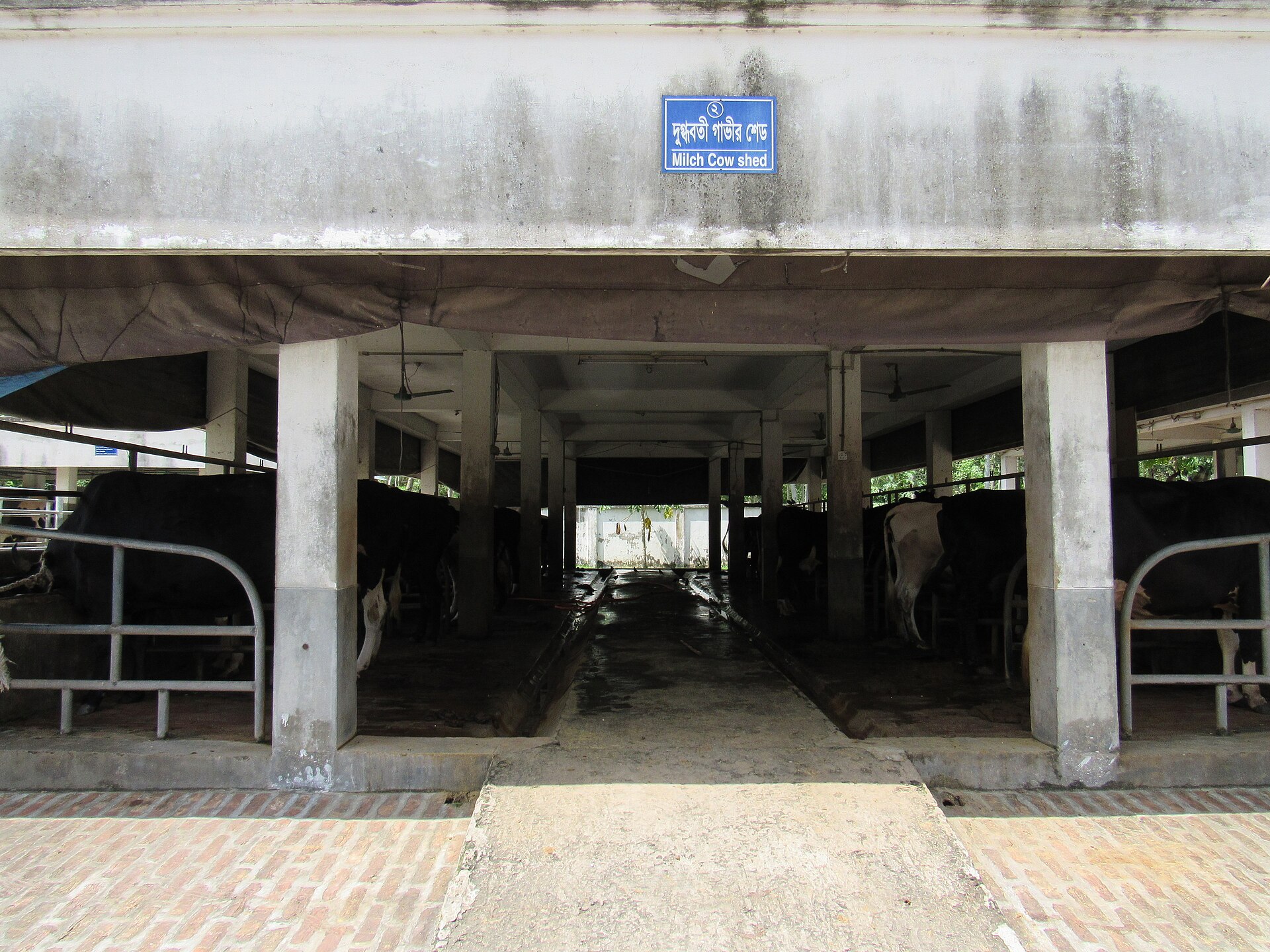
He studied textile engineering and might have been expected to work with fibre, yarn, fabric or garment technology. Instead of chasing a conventional job, he chose a different path, working with cows, milk, grass, dung, biogas, yoghurt and ghee, and has done remarkably well. He is Md Yasin Arafat, a young entrepreneur and farmer from Faridpur village in Faridpur union of Kuliarchar upazila, Kishoreganj. He now lives on Shaheed Ashuranjan Road in the river port town of Bhairab Bazar.
Behind his success are the skill, work and encouragement of his father, Md Fazlur Rahman, a well-known local industrialist and philanthropist whom people affectionately call “Boss Fazlu Bhai”. The father-and-son venture has brought a new wave of agro-industry to the Kuliarchar and Bhairab area. After completing a BSc in textile engineering at the National Institute of Textile Engineering and Research (NITER), Yasin Arafat set up a dairy farm called Boss Agro Farm in 2018 on three acres of family land in Faridpur, encouraged by his father, starting with just four cows. That small farm has since grown into a modern agro farm with more than 150 local and foreign-breed cattle in four large sheds.
About 70 percent of the cattle on the farm are now bred there. Among them are 30 to 35 dairy cows, which produce 500 to 550 litres of milk a day. At first the milk was sold wholesale to sweet shops. Later Yasin Arafat set up a modern yoghurt and ghee plant in the Jagannathpur area of Bhairab. With approval from BSTI and other government bodies, “Boss” yoghurt and ghee went on sale, and the brand quickly became popular in Bhairab, nearby districts and upazilas and other parts of the country.
Every year, more than 100 animals are also fattened on natural, local feed for Eid al-Adha. Local buyers pick animals straight from the farm, which brings in a good profit. The farm and the plant employ about 50 skilled and unskilled men and women, who look after the animals and make and pack yoghurt and ghee.
The integrated farm has several sources of income. Two ponds on one and a half acres inside the farm are used for mixed fish farming, with ducks on the water and local chickens in the yard. After meeting the family’s needs, fish, poultry and fruit from the banana, chilli, lemon, mango and black plum trees around the farm are sold for extra income. Organic fertiliser made from the farm’s dung is used on the family’s own 10 acres of rice and fodder grass. The dung also feeds a biogas plant; after cooking on four family stoves, surplus gas has to be released. He plans to install a large generator so that the plant can meet all of the farm’s electricity needs.
Yasin Arafat visits the farm every day, feeds and tends each animal himself and treats them on veterinary advice. A grand house and a decorative pond ghat have been built around the farm.
Md Fazlur Rahman, son of the late Md Shahid Mia of Faridpur village on the far south-western edge of Kuliarchar, did not study far, but has run one business after another since early in life, driven by a wish to stand on his own feet. In Bhairab he set up Arafat Chemical Works (Boss mosquito coils) Private Limited, named after his son, and is its chairman. He has built a name across the country in chemicals, mosquito coils and food products. Local people describe him as modest and approachable, willing to work alongside his workers, and widely respected for his donations to poor people, mosques, madrasas, schools, colleges and fathers struggling to pay for daughters’ weddings.
Yasin Arafat said: “Success needs not just experience but real skill, and care and love for the work. Anyone coming into this sector has to bring passion and compassion.”
Kuliarchar upazila livestock officer Dr Abdullah Al Mamun praised Boss Agro Farm. “Boss Agro Farm is registered with us, and its current work is highly commendable. We all have to work together to sustain this success,” he said.
He said the farm is making an important contribution to meeting the shortfall of milk, meat and protein in Kuliarchar and the surrounding area, and that the upazila livestock office regularly provides vaccines and advice.
Pointing to what sets it apart from other dairy farms in Kuliarchar, he said: “Besides dairy products, the farm also plays a distinctive role in producing milk products such as sweets, yoghurt and ghee.”
Bhairab upazila livestock officer Dr Md Shahinul Haque said the success of a highly educated textile engineer in farming was remarkable, and that if educated young people came forward like this, the country’s livestock sector would change greatly. His office is giving the farm every kind of support, he said.
Monowara Parvin, a lecturer in home economics at Bhairab Government Women’s College, said: “Good health needs protein and nutritious food. Though an engineer, Yasin Arafat has stepped outside the usual path and, by supplying safe milk, yoghurt, ghee and fish, is playing a commendable part in the national economy and public health.”
The father-and-son venture has become an inspiration for entrepreneurs beyond Kishoreganj.
বাংলায় মূল প্রতিবেদন পড়ুন · Read the original Bengali report