Jamaat-e-Islami has accused Bangladesh’s government of rejecting February’s reform referendum, and the National Citizen Party (NCP) has called a protest in Dhaka for October 30. The BNP is drafting constitutional amendments through a parliamentary committee, while its opponents demand the reform council that the interim government’s implementation order provided for. That council has never met.
Story in brief
- About 68 percent of valid referendum votes backed the July National Charter on February 12. The BNP won a two-thirds majority in parliament at the same election.
- The implementation order of November 2025 provided for a Constitution Reform Council drawn from the elected MPs to enact the charter’s 48 constitutional reforms. BNP MPs refused the council oath, and the council has never met.
- The government is preparing amendments through a twelve-member parliamentary committee without Jamaat or NCP representatives. Home Minister Salahuddin Ahmed has said it aims to report by December, and a bill may follow in January.
- The NCP has called a protest at Shahbagh in Dhaka on October 30 demanding the committee’s dissolution, the council’s formation and the resignation of the home and energy ministers.
- Salahuddin has said the government plans to require a referendum for any future change to the caretaker government system.
Two votes on one day
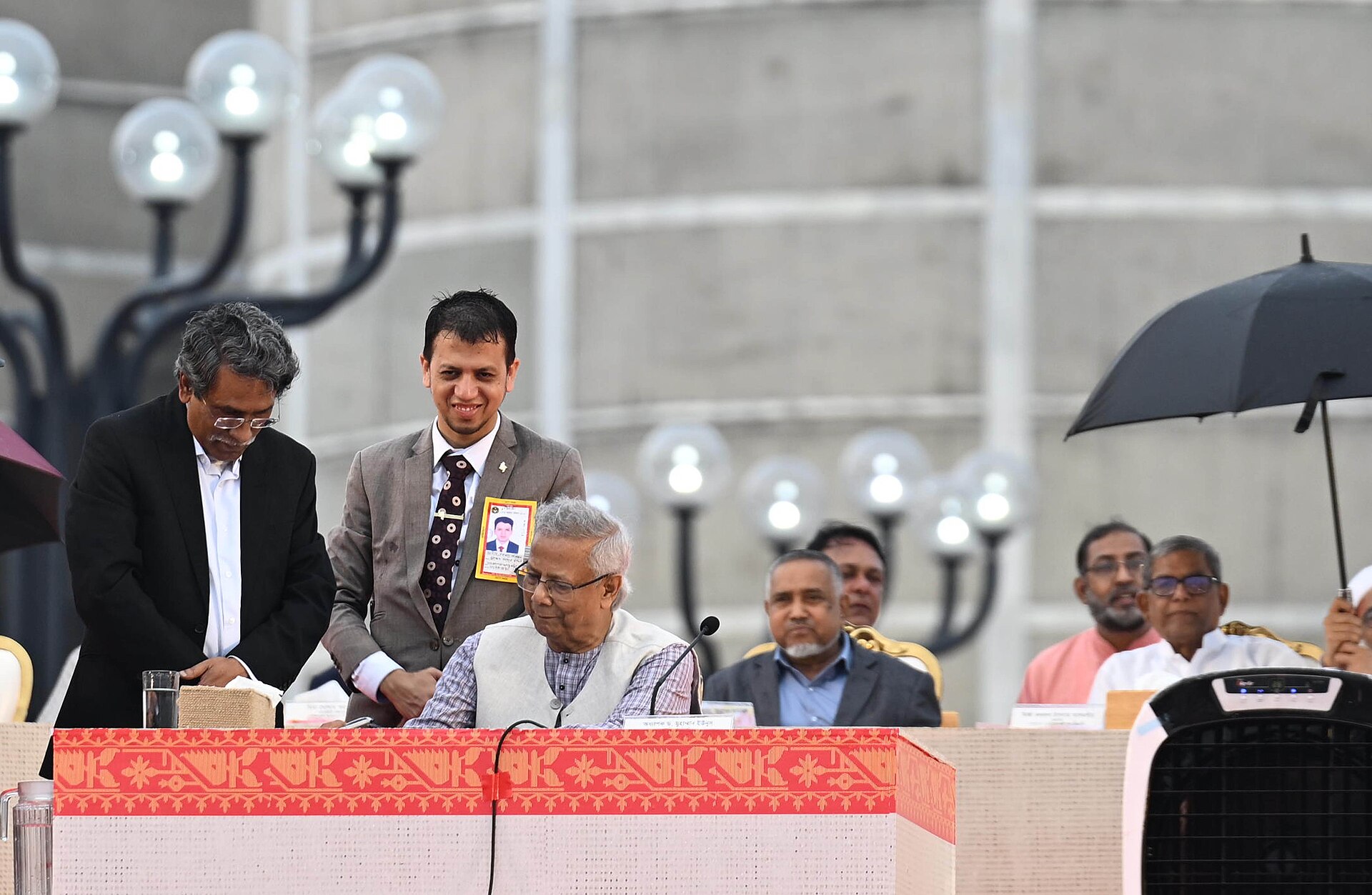
The charter was the product of the July 2024 uprising that ended Sheikh Hasina’s fifteen years in power, at a cost the UN has estimated at up to 1,400 lives. An interim government under its chief adviser, Muhammad Yunus, spent eight months negotiating it through a National Consensus Commission, and 25 political parties signed it at the South Plaza of Parliament on October 17, 2025. It holds 84 proposals, 48 of them constitutional: a bicameral parliament, term limits for prime ministers, a restored caretaker system for elections, a stronger presidency in appointments, and courts freed from partisan control.
On February 12, voters were asked two questions. They elected a parliament, giving the BNP 209 of the 300 elected seats. With its allies and its share of the 50 reserved women’s seats, the party commands more than two-thirds of the full house, the share the constitution’s Article 142 demands for an amendment. And they answered the referendum on the charter, which the implementation order had tied to a mechanism: the winning MPs would take a second oath and sit as a Constitution Reform Council to enact the 48 reforms. The Election Commission’s first gazette counted 48.2 million Yes votes and 22.1 million No votes. The corrected gazette, dated February 25 and reported the following day, counted 47.2 million Yes votes and 22.0 million No votes. The commission published the correction without a public explanation.
The NCP, the students’ party of the uprising, signed the charter on February 16, before the swearing-in. The next day the Jamaat-led alliance’s MPs took both oaths. The BNP’s took one. There was no constitutional basis for the council, the party said, and the constitution provides a single oath for a member of parliament.
Council that never sat
On March 31, Salahuddin told parliament the implementation order was void from the beginning. The prime minister promised in April that the charter would be implemented “every word, every line and every provision”, through parliament, under Article 142, which reserves amendment to a two-thirds vote of MPs. The referendum, the government’s lawyers point out, amended nothing by itself, and the council it described existed only in an order issued by an interim government.
The BNP recorded dissent on proportional representation for the upper house and on barring one person from serving as both prime minister and party chief. Tarique Rahman holds both posts. The BNP favours allocating upper-house seats by parliamentary strength rather than national vote share. The referendum question was drafted so that a Yes vote mandated proportional representation anyway, over the party’s recorded objection.
How long the council had is itself disputed. An October 17 editorial in Nutshell Today estimated that its mandate would expire around December 10 if counted from parliament’s first sitting on March 12. It also noted a competing reading: because the council never sat, its clock had not started.
Amendment by committee
In July, parliament constituted a twelve-member Special Committee on Constitutional Amendment, chaired by Salahuddin, who is both home minister and the government’s voice on the file. Jamaat-e-Islami and the NCP have refused to join it. Salahuddin has renewed the invitation since, saying opposition proposals would be considered. A notice listed the committee’s ninth meeting for October 24. At its October 13 meeting, the committee heard proposals to clarify the judiciary’s jurisdiction over constitutional amendments. Salahuddin has said its proposals may extend to manifesto commitments and public demands the charter never covered.
The NCP disputes the basis for including manifesto commitments in the committee’s work. Its member secretary, Akhter Hossen, said on October 17 that the note permitting manifesto-based measures was absent from the Consensus Commission’s final draft and was added by a representative of the government side on the day of the signing, without discussion.
Salahuddin has said the committee aims to report by December and that a bill may follow in January 2027, almost a year after the referendum.
The opposition’s answer has been the street. The Jamaat-led alliance has marched through the divisional cities since September and set time-bound ultimatums for the council to be formed. Its secretary general, Mia Golam Porwar, made the charge in its sharpest form on Monday: two votes were held on the same day, and the government has accepted the outcome of one while rejecting the verdict of the other. The prime minister, he said, was rejecting his own referendum vote. The NCP has called a protest outside the National Museum at Shahbagh at 3 p.m. on October 30, demanding the committee’s dissolution, the council’s formation and the resignation of the home and energy ministers.
Referendum kept for later
The government is not against referendums. Salahuddin has said it plans to require a referendum for future changes to the caretaker government system, the arrangement under which Bangladesh holds elections under a neutral administration. The previous government abolished it in 2011, and it has been restored by the courts since. Under the plan, no future majority would be able to abolish it on its own votes.
Salahuddin has also said a referendum would be needed before presidential assent to amendments affecting certain protected provisions of the constitution.
The government is drafting amendments through the parliamentary committee. The proposed reform council has never met.
What happens next
- The NCP’s protest is set for 3 p.m. on October 30 at Shahbagh in Dhaka.
- The Jamaat-led alliance continues its marches demanding that the Constitution Reform Council be formed.
- Salahuddin has said the committee aims to report in December. Jamaat and the NCP are boycotting it.
- A bill may follow in January 2027. Salahuddin has said amendments affecting certain protected provisions would need a referendum before presidential assent.
- An October 17 editorial estimated that the council’s mandate would expire around December 10 if counted from March 12; a competing reading holds that its clock never started.
বাংলায় মূল প্রতিবেদন পড়ুন · Read the original Bengali report