Luiz Inácio Lula da Silva has won an unprecedented fourth term as Brazil’s president, overturning a first-round deficit of 2.2 million votes, something no candidate had done since the country’s return to democracy in 1985. On Sunday night Flávio Bolsonaro said he would seek to have the election annulled. By Monday he had changed course: in a video he said he would ask the electoral court to strip Lula’s ticket of its mandate over alleged campaign abuses, and members of his campaign told CNN Brasil there would be no request to annul the vote.
Story in brief
- Lula took 64,256,232 votes (51.79 percent) to Flávio Bolsonaro’s 59,826,041 (48.21 percent), a margin of about 4.4 million, after trailing by 2.2 million in the first round.
- He is the first candidate since 1985 to win a runoff after losing the first round, and the first president elected four times. His vote total is the largest in Brazilian history.
- On Sunday Bolsonaro said a court-ordered two-hour extension of voting made the result impossible to recognize. On Monday he said he would instead seek to strip Lula’s ticket of its mandate over alleged campaign abuses; his campaign said it would not ask for the vote to be annulled.
- Lula will govern with a Congress in which Bolsonaro’s Liberal Party is the largest party in both houses.
- Brazilian markets fell hard on Monday. The dollar rose as much as 12 percent against the real and closed up 8.2 percent, at 5.40 reais. The Ibovespa stock index closed down 13.9 percent after trading was halted for 30 minutes, and the Treasury cancelled bond auctions planned for Tuesday and Thursday.
| Round | Lula | Flávio Bolsonaro |
|---|---|---|
| First round, 4 Oct (share of valid votes) | 45.16% (53,876,617) | 47.03% (56,104,268) |
| Runoff, 25 Oct (share of valid votes) | 51.79% (64,256,232) | 48.21% (59,826,041) |
Election night
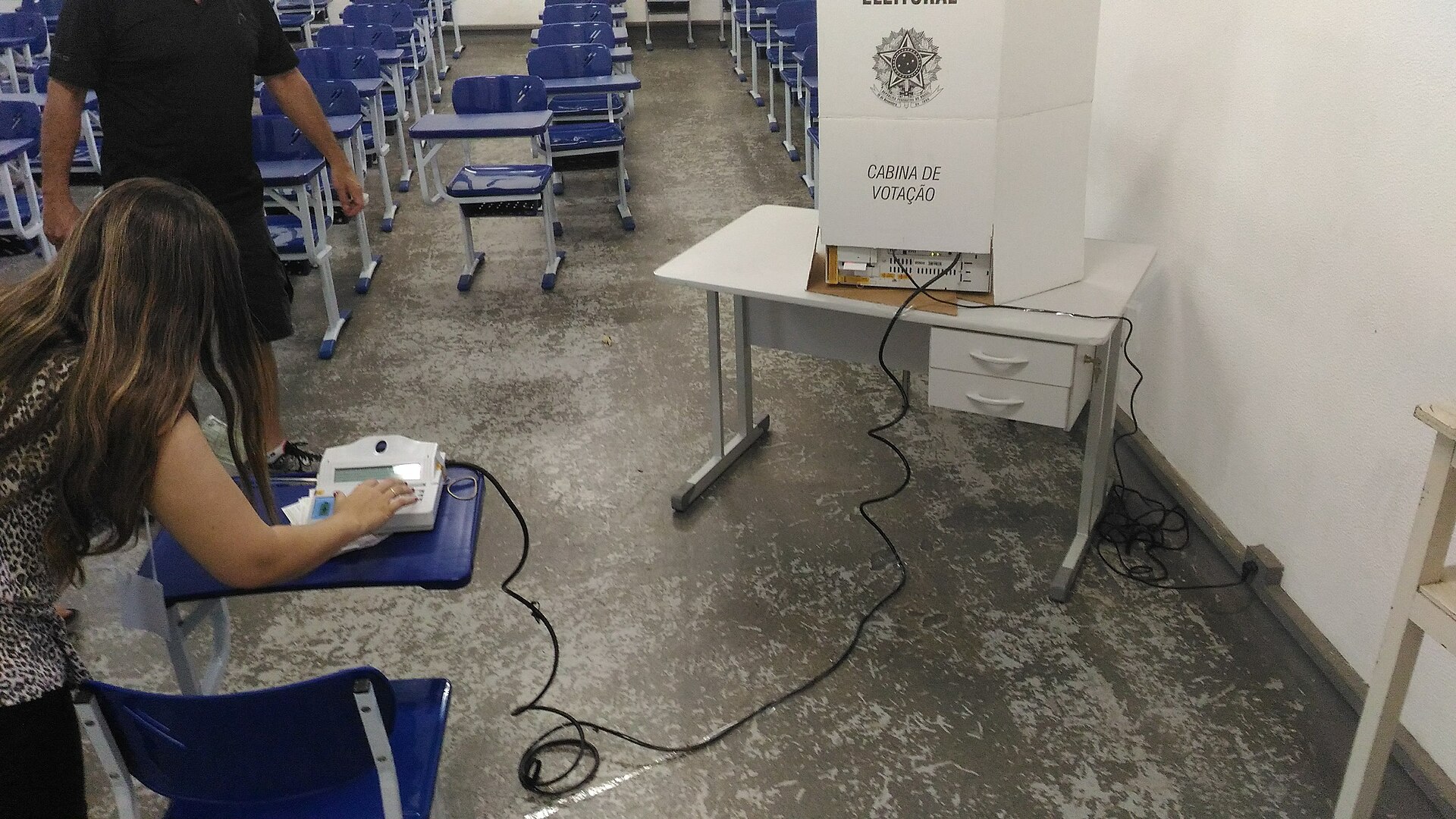
More than 128 million Brazilians voted on Sunday, a turnout of 80.78 percent from the largest electorate in the country’s history, 158.7 million people. Abstention fell to 19.2 percent, from 21.1 percent in the first round. Voting is compulsory for most adults. In Lago do Catalão, in Iranduba, Amazonas, riverside residents travelled by canoe and motorboat to reach their polling station. Queues formed early in Rio de Janeiro’s Rocinha favela.
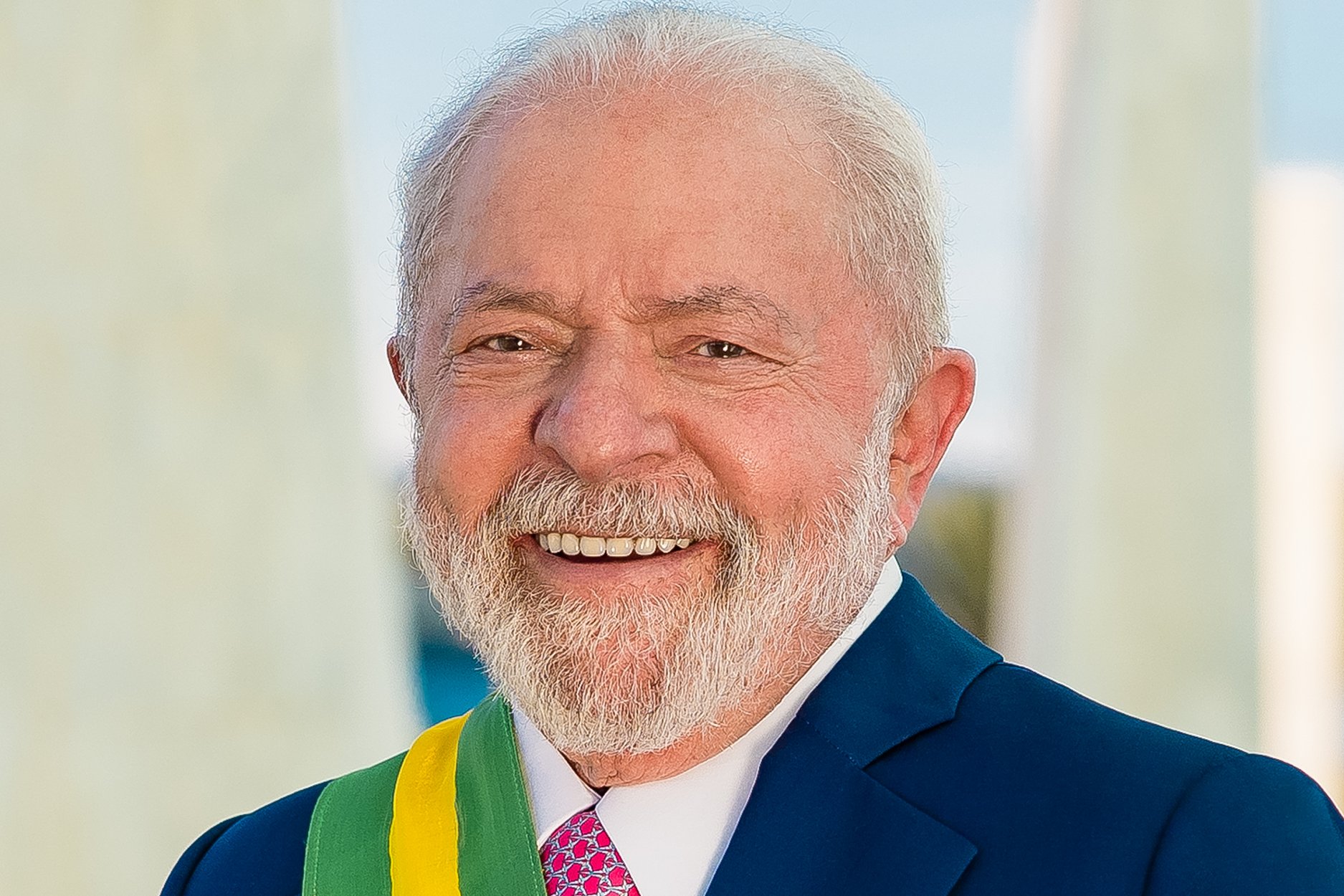
Three weeks earlier, Bolsonaro had won the first round by 2.2 million votes. Lula, now 80, added more than ten million votes between the two rounds, and his 64.3 million votes are a Brazilian record, 3.9 million more than he won in 2022. His margin of 4.43 million is more than double the 2.14 million of four years ago. The Northeast, his oldest stronghold, gave him about 1.9 million more votes than in 2022.
The lead changed hands once on Sunday night. Bolsonaro led for 38 minutes from 7:46 p.m., before returns from the big cities and the Northeast put Lula back in front at 8:24 p.m. The Superior Electoral Court (TSE) declared him reelected at 9:08 p.m., with 97.69 percent of stations counted.
Lula watched the count at a São Paulo hotel with his wife, Rosângela. In Rio, car horns and a roar went up from apartment blocks when the result was called, and a woman in red shouted at four men in the yellow and green of the national team: “You lost! Cry harder!”
Campaign between the rounds
Between the rounds Lula’s campaign held large street rallies and pushed hard on social media, aiming at voters who had stayed home or scattered their votes in the first round. Many observers doubted that the gap could close in three weeks.
Underneath the rallies ran a second operation. Federal deputy André Janones built a WhatsApp network called Exército de Lula, the Army of Lula, with about 10.9 million participants, according to Gazeta do Povo.
Ballot dispute and change of legal strategy
Sunday also produced a dispute about the vote itself, and it began with buses. Public transport failed in several states. In Bahia, an electoral judge reported that at least 75 city buses never left their garages, and ordered the arrest of Salvador’s mobility secretary, Pablo Souza, who was in Paris at the time. On Monday the Bahia electoral court revoked the arrest order because voting had ended; the investigation continues. Inspectors from Procon-BA, Bahia’s consumer protection agency, counted 944 buses held in company yards in Salvador on Sunday morning. The Federal Police are investigating transport failures in five states.
Supreme Court justice Cristiano Zanin then ordered voting extended by two hours where transport had failed. AP reported that the order came three minutes before polls were due to close; it reached many stations after 5 p.m., when most had already shut. Zanin clarified that closed stations would stay closed. According to TSE data, 34,330 votes were cast after 5 p.m.; the figure does not count people who could not reach a polling station.
Bolsonaro announced his position on Sunday night, before the count had finished. “It is impossible to recognize the result of this election in the context in which these things happened,” he said, and said he would ask for the election to be annulled. He called the extension a “sacanagem”, a dirty trick, and “unacceptable”.
He made two further charges the same night. Justice Zanin, he said, was Lula’s former lawyer and had “changed the rules of the game in the middle of the game”. He also said Liberal Party (PL) monitors had been kept out of the court’s vault room. The TSE answered within hours that the claim was false: two PL monitors had been in the tallying room throughout, with attendance records and filming.
Bolsonaro’s own campaign had asked the court for more voting time in several states, including São Paulo, Paraná and Santa Catarina, citing rain, flooding and power cuts. The extension that was granted came on a petition from Lula’s coalition over the Bahia buses. Bolsonaro’s campaign had also sought more voting time and had not received it.
The president of the electoral court, Kassio Nunes Marques, was appointed to the Supreme Court by Jair Bolsonaro. He said the court had “absolute confidence in the entire electoral process” and that the extension had changed nothing in the result. The Prosecutor General, Paulo Gonet, called for respect for the result. José Miguel Insulza, head of the Organization of American States’ observer mission, said Brazil has a “very solid” electoral system.
Election-law specialists told Gazeta do Povo and BBC News Brasil that annulment is very unlikely. They point to the 4.4-million margin, to the fact that both campaigns sought extensions, and to a constitution that fixes election dates, leaving a court little room to order a new vote even where it finds fault.
The break has also come from inside his own camp. Felício Ramuth, vice-governor of São Paulo, whose governor backed Bolsonaro, recognized the result: “We worked to offer Brazil a change we considered necessary, but the majority of voters chose another path, and I respect the result of the ballot boxes.” He noted that the Liberal Party itself had asked for longer voting hours in places.
On Monday Flávio changed course. In a video he accused Lula’s campaign of abuses, including what he called an industrial complex of fake news, and said: “I will ask for the cassação of Lula’s ticket for all the abuses he committed,” meaning that the electoral court strip it of its mandate. Members of his campaign told CNN Brasil, on condition of anonymity, that there would be no request to annul the vote; people close to the legal team said 20 such requests had already been filed and more would follow. Those cases also go to the electoral court.
Congress elected on 4 October
The presidency was decided on Sunday. Congress was decided three weeks earlier, at the first round, and it went the other way. Bolsonaro’s Liberal Party won 121 of the Chamber of Deputies’ 513 seats, the largest single-party bench since 1998, and is projected to hold 28 of the Senate’s 81 seats. By one count, right and centre-right parties together hold 51 Senate seats and 294 in the Chamber; other counts are slightly lower. The Senate president, Davi Alcolumbre, recognized Lula’s victory on Sunday, citing the margin of more than four million votes.
Four members of the Bolsonaro family won seats in Congress. Michelle Bolsonaro and Carlos Bolsonaro were elected senators, and Jair Renan and Renato Bolsonaro were elected deputies. They take their seats in February.
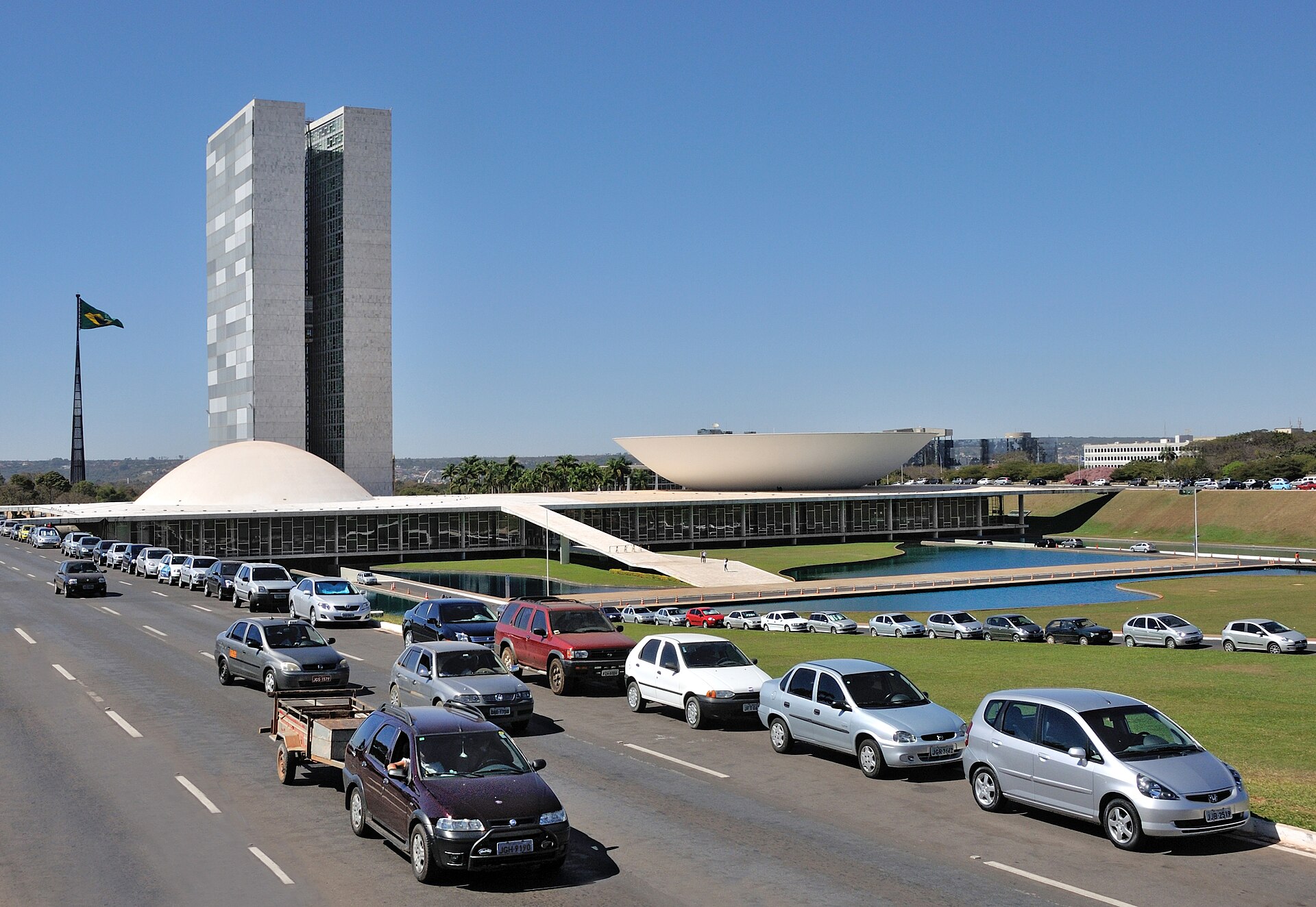
Lula named the problem in his victory speech. “I will not speak of national unity, because that word does not always fit this country,” he said. “I did not choose Congress. The people chose it, and it is with it that I will work.”
Congratulations abroad, a sell-off at home
Congratulations came in from abroad. Canada’s prime minister, Mark Carney, said he wanted to work with Lula “to create major new trade opportunities, protect the environment, and build greater prosperity for both our peoples,” Reuters reported. Mexico’s president, Claudia Sheinbaum, wrote: “Long live democracy, the people of Brazil won.” Leaders on the right also offered congratulations, among them Chile’s José Antonio Kast, who telephoned Lula, and Peru’s Keiko Fujimori.
Investors sold Brazilian assets on Monday as analysts weighed fiscal policy and political uncertainty. The dollar rose as much as 12 percent against the real, to about 5.60 reais against Friday’s close of 4.993. The dollar closed at 5.40 reais, up 8.2 percent on the day. The Ibovespa fell as much as 17 percent, after a 10 percent drop triggered a 30-minute halt, the first since 2020, and closed down 13.9 percent. The prediction market Kalshi had priced a Bolsonaro win above 75 percent as late as Friday. Brazil’s Treasury cancelled the bond auctions scheduled for Tuesday and Thursday.
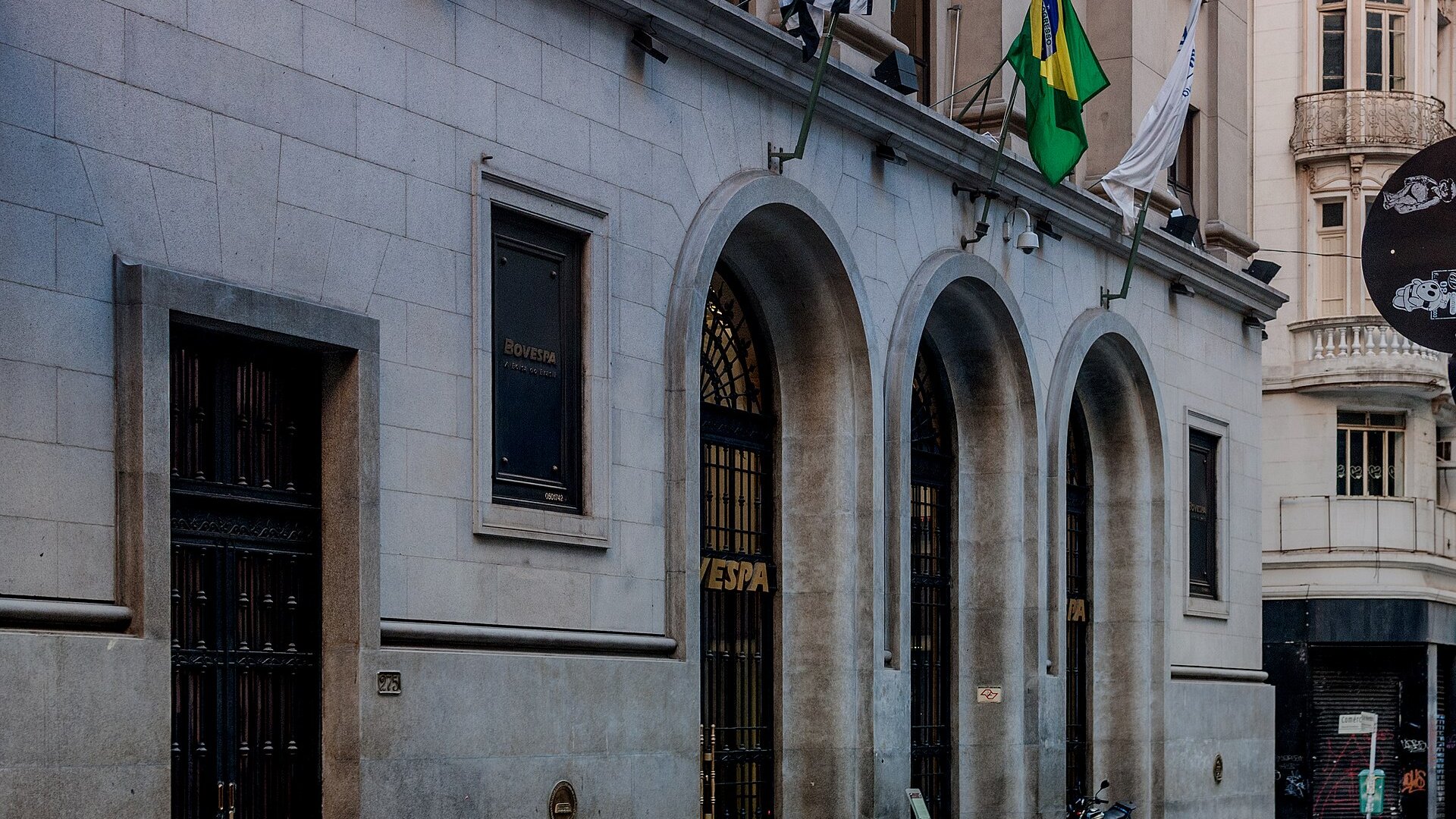
Analysts pointed first to the prospect of continued public spending under a fourth Lula term. Chris Turner of ING said the market’s question was “how quickly Bolsonaro accepts the result,” since a quick acceptance would remove the uncertainty premium. Mauricio Monge of Oxford Economics pointed to the fiscal outlook, and investors are now watching Lula’s choice of finance minister.
“I don’t understand how people can vote for Lula. The country is collapsing,” Rodrigo Valentim, 51, a businessman who backed Bolsonaro, told the Associated Press. Paulo Sotero, former director of the Brazil Institute at the Wilson Center, told CNN the extension “was not an irregularity,” and put the chances of a recount or a new election at “very very slim.”
The 2022 precedent
Brazil has lived this before, the other way round. In 2022 Jair Bolsonaro lost to Lula and spent weeks questioning the count without conceding. He is now serving a 27-year sentence for attempting a coup after that defeat. His son now takes his case to the same electoral court that dismissed his father’s party’s challenge to the 2022 result.
Lula takes office in January against a Congress where his opponents hold the largest party in both houses. The man he beat has, by his campaign’s account, dropped the request to annul the vote and is pursuing Lula’s mandate through the courts instead, while in São Paulo the losing camp has begun to accept the result.
What happens next
- The result is certified by 18 December. Lula’s fourth term begins on 5 January 2027.
- Flávio Bolsonaro’s lawyers are filing cases asking the electoral court to strip Lula’s ticket of its mandate. His campaign says no request to annul the vote will be made.
- Brazil’s central bank holds its next rate meeting on 3 and 4 November, the first since the vote.
- The Congress elected on 4 October convenes on 1 February 2027.
বাংলায় মূল প্রতিবেদন পড়ুন · Read the original Bengali report