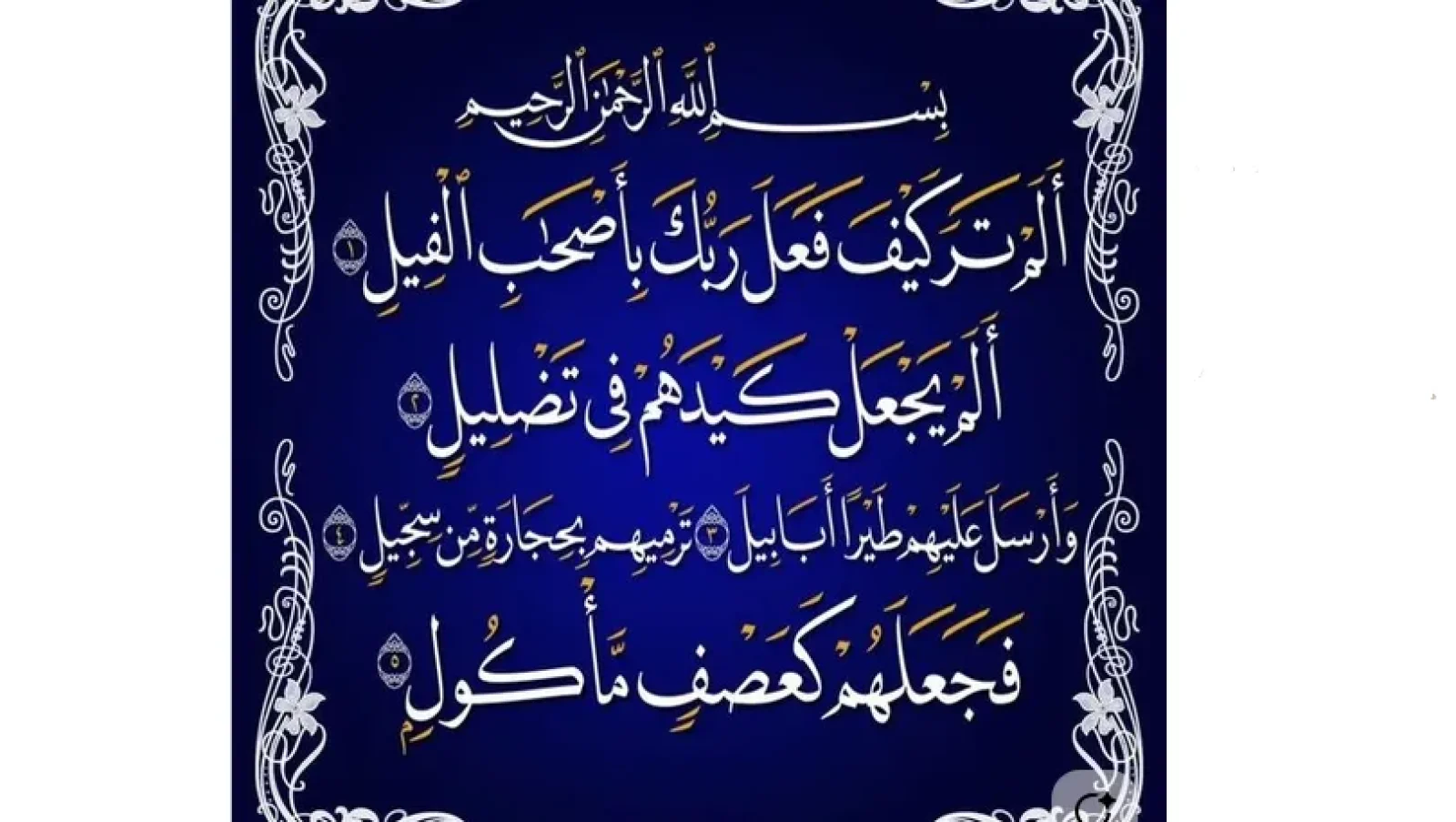
Al-Fil
The Arabic text of Surah Al-Fil and its meaning
بِسْمِ اللَّهِ الرَّحْمَٰنِ الرَّحِيمِ
In the name of Allah, the Most Gracious, the Most Merciful.
أَلَمْ تَرَ كَيْفَ فَعَلَ رَبُّكَ بِأَصْحَابِ الْفِيلِ
Have you not seen how your Lord dealt with the people of the elephant?
أَلَمْ يَجْعَلْ كَيْدَهُمْ فِي تَضْلِيلٍ
Did He not make their plot go astray?
وَأَرْسَلَ عَلَيْهِمْ طَيْرًا أَبَابِيلَ
And He sent against them birds in flocks,
تَرْمِيهِمْ بِحِجَارَةٍ مِنْ سِجِّيلٍ
Striking them with stones of baked clay,
فَجَعَلَهُمْ كَعَصْفٍ مَأْكُولٍ
And He made them like eaten straw (chewed-up stubble).
In brief
Surah Al-Fil (الفيل) is the 105th surah of the Holy Quran. It was revealed in Mecca and has five verses.
Main theme: the attempt by Abraha, ruler of Yemen, to destroy the Kaaba with an army of elephants, and how Allah defeated it.
Background
When: in 570 or 571 CE, known to historians as the year of the Prophet’s birth, or the Year of the Elephant.
The attacker: Abraha, the Christian ruler of Yemen, built a vast church in Sanaa to draw importance away from the Kaaba. When Arabs desecrated it, he marched on Mecca with a large army of elephants to destroy the holy Kaaba.
The power of Allah: as Abraha’s army moved to attack the Kaaba, Allah sent flocks of birds, the ababil, which pelted it with small stones of baked clay and destroyed the entire army.
বাংলায় মূল প্রতিবেদন পড়ুন · Read the original Bengali report