Study permits issued to Bangladeshi students in Canada fell by about 15 percent in a year, while the money applicants must show for living costs rose 13.6 percent. Scholarships are stretched, and jobs after graduation are uncertain.
In 2019 a Bangladeshi student moved to Canada on a university scholarship. After a master’s degree, the student enrolled in a PhD programme and, to ease years of separation, eventually brought the family over. That changed everything financially. The scholarship was enough for one person but not for a household, and the pressure of research, family costs and an uncertain future in time took a toll on the student’s mental health. The PhD student, who lives in Newfoundland, asked not to be named.
Many Bangladeshi students who come to Canada for its education, research and career prospects face the same hard realities. Data from Immigration, Refugees and Citizenship Canada (IRCC), the country’s immigration department, show that 6,505 Bangladeshis received study permits in 2024, falling to 5,535 in 2025. Over the same period, the minimum funds international students must show for living costs in a study permit application rose by about 13.6 percent compared with 2024.
Scholarships and jobs as research assistants and teaching assistants draw international students to Canadian universities, along with modern laboratories, the chance to work with internationally recognised researchers and research grants. But high tuition, housing and living costs, competition for jobs and changes to immigration policy are creating new challenges.
IRCC figures show that 3,500 Bangladeshi nationals received study permits from January to August 2026. Because that covers eight months, it cannot be compared directly with the full-year totals for the previous two years.
“The scholarship is enough to live on alone, but it is very hard with a family,” said the PhD student. “Leaving the family in Bangladesh and living alone for years is hard on the mind too. Between family responsibilities on one side and research pressure on the other, it has been a very difficult time.”
Full-time research left little time for extra work, and years of financial uncertainty affected the research itself. The student said scholarships and research funding should be increased to ease the financial pressure on international students.
The student said they received regular counselling at the university by appointment and were satisfied with it, but that academic and career counselling for international students is not always sufficient.
A Bangladeshi master’s student in Saskatoon, who also asked not to be named, described a more positive experience. After the scholarship covers tuition, what is left pays for housing and other essentials, so there has been no serious financial trouble so far.
The student said Canada’s research environment, well-equipped laboratories and the chance to work with international researchers help students build their skills. In some cases the university or a research supervisor covers the cost of attending conferences and giving presentations.
Even so, the student worries about being able to settle permanently in Canada after graduating. Recent changes to immigration policy have made those plans uncertain.
Another Bangladeshi student, who is self-funded, said annual tuition is 18,000 Canadian dollars, on top of rent, food, transport and other daily expenses.
Under IRCC rules, eligible international students may work off campus for up to 24 hours a week during regular academic sessions. For many, that income does not cover tuition and living costs.
This student tries to save some money by working full time over the summer break, and said that worrying about paying their way on top of classes, assignments and exams is a major challenge.
The financial requirement for international students has also risen. Under IRCC’s proof of financial support guidance, a student going to any province other than Quebec had to show at least 20,635 Canadian dollars for living costs in January 2024. That rose to 22,895 dollars in 2025 and was set at 23,448 dollars in September 2026, an increase of about 13.6 percent on 2024.
For a family of two, the required amount is 29,192 Canadian dollars. Tuition and travel costs are calculated separately.
The IRCC figure is not what students actually spend on average; it is the minimum a study permit applicant must show. Real costs vary from city to city with rent, food and transport.
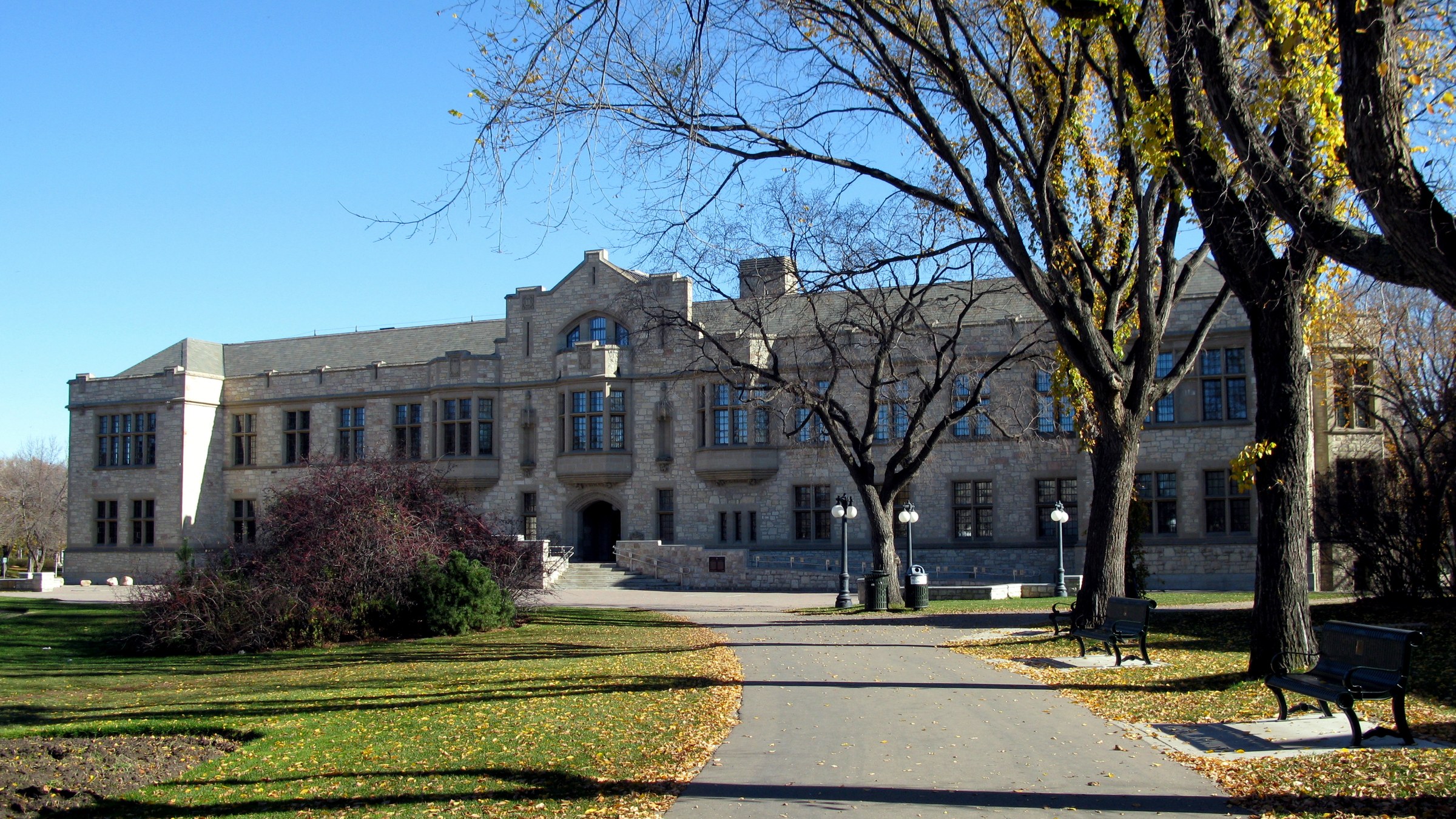
Abdullah Sakib Maruf, a Bangladeshi student who completed a Certificate in Business Administration at the University of Saskatchewan, said funding for course-based master’s programmes is relatively limited. Thesis-based master’s and PhD students, especially in science, technology, engineering and mathematics (STEM), have more chances of funding through research and teaching assistantships.
Funding of 30,000 to 40,000 Canadian dollars a year may be available at master’s or PhD level, Maruf said, but much of it can go on tuition, leaving students without enough for day-to-day costs.
Students should look beyond the headline funding figure, Maruf said, and work out in advance how much will be left after tuition and whether that is enough to live on in the city where they will study.
Dr. Salah Uddin Khan, who teaches in the biology department at Thompson Rivers University, first came to Canada as an international student and went on through study and research to a teaching post.
“To understand the financial reality of higher education in Canada, you have to look at undergraduates and master’s and PhD students separately,” Khan said of the financial challenges international students face. “In my experience, undergraduates face the greatest financial challenges. Substantial scholarships for them are limited, and scholarships that cover full tuition and living costs are extremely rare.”
According to Statistics Canada’s tuition data, international undergraduates pay an average of about 41,700 Canadian dollars a year in tuition in the 2025-26 academic year, before housing, food, transport and other costs.
“Getting a job as soon as you arrive in Canada is not easy, especially in smaller cities where opportunities are limited,” Khan said. “Many students struggle to find a first job because they lack local experience, language skills or contacts. Covering tuition and other costs with part-time work alone is almost impossible.”
Science students have regular labs, assignments and research, which makes it hard to balance study and work, Khan said. Some find teaching or research assistant jobs, but those are limited. Research-based master’s and PhD students have better access to funding, but meeting costs can still be hard for those with a spouse or children.
The Canadian government’s doctoral award, the Canada Graduate Research Scholarship – Doctoral (CGRS-D), pays 40,000 Canadian dollars a year for up to three years. International students enrolled in a Canadian doctoral programme may apply, and up to 15 percent of the awards are set aside for them. The scholarships are highly competitive.
“In my view, getting admitted to a university and being able to afford the studies are two different things,” Khan said. “So before coming to Canada, a realistic plan for funding, likely costs and your own financial means is essential.”
What to work out before coming to Canada
- Look not at the total funding offered but at how much will be left after tuition.
- Calculate rent, food and transport in the city where you will study; IRCC’s minimum is not the real cost.
- If you bring family, work out in advance how much more it will cost; IRCC’s minimum for two people is 29,192 dollars.
- Do not plan to cover tuition and living costs from part-time work alone.
- The post-graduation work permit (PGWP) lasts up to three years; not everyone gets the full term.
Financial uncertainty, academic pressure and the difficulty of adjusting to a new environment are affecting the mental health of many international students.
“Mental health is taken seriously in Canada,” Khan said. “Most universities offer counselling and mental health support, in many cases free of charge.”
For social and cultural reasons, Khan said, many students see stress as a normal part of life abroad, and some regard counselling as a sign of weakness.
Moving from Bangladesh’s education system to Canada’s research-driven one is also hard for many, Khan said. More weight is placed on independent thinking, framing research questions, analysing scientific literature and making an argument.
Finishing a degree in Canada does not guarantee a job that matches one’s qualifications. Local work experience, professional networks, employer demands and competition in the job market can make it harder for international graduates to start a career.
Research published by Statistics Canada in February 2025 found that 88.6 percent of international graduates who finished their studies in 2020 and stayed in Canada were employed in 2023, against 91.0 percent of Canadian graduates. International graduates earned 19.6 percent less on average. Only 33.8 percent of international graduates with a bachelor’s degree said their job was closely related to their field of study, compared with 62.4 percent of Canadian graduates. The figures are for the 2020 graduating class, not the employment rate in 2026.
A Bangladeshi international graduate, who asked not to be named, said that nearly two years after finishing their studies they have still not found a job that matches their qualifications, and the strain is taking its toll.
A post-graduation work permit (PGWP) in Canada can last up to three years, depending on the qualification and other conditions. Not every graduate receives three years.
The graduate fears having to leave the country if a suitable job or another legal way to stay in Canada cannot be secured in the time left.
বাংলায় মূল প্রতিবেদন পড়ুন · Read the original Bengali report