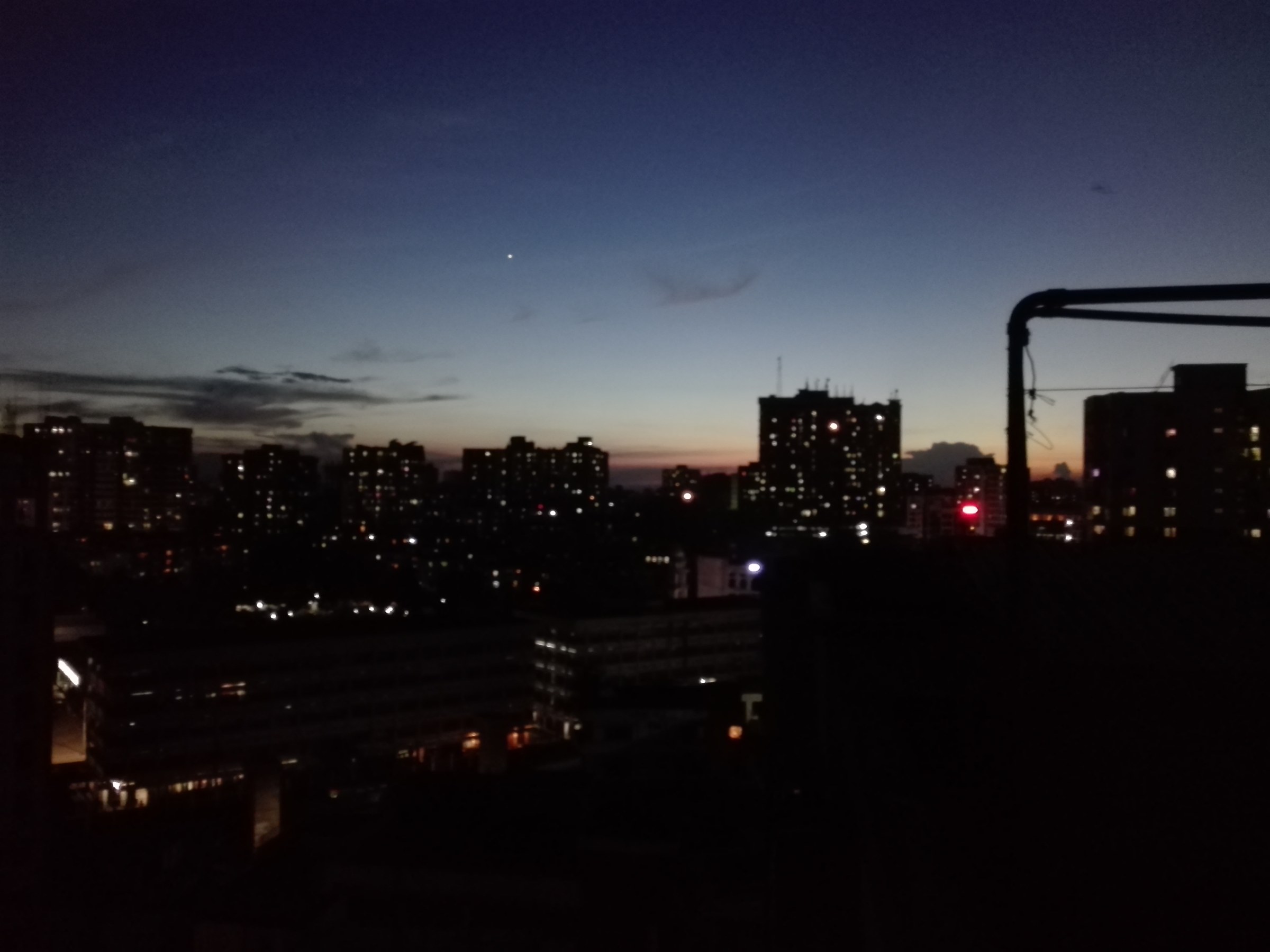
A failure in the eastern grid at about 12:43 p.m. on Tuesday, October 27 cut power across eastern Dhaka and parts of Chattogram, darkening the Bangladesh Secretariat, the central bank, and a war crimes tribunal in mid-session. Within the same hour, national generation fell by 5,370 megawatts, more than a third of what the system was producing at noon. The cause has not been established.
Story in brief
- Power Grid Bangladesh PLC reported supply cut across eastern Dhaka, including Motijheel, Gulshan, Rampura, and Moghbazar, and in parts of Chattogram, from about 12:43 p.m. The Secretariat, Bangladesh Bank, and the International Crimes Tribunal-2 lost power.
- Generation fell from 14,719 megawatts at noon to 9,349 at 1 p.m. Gas-fired output dropped by about 60 percent and coal-fired by about 39 percent in the hour. By 3 p.m. generation stood at 10,825 megawatts.
- The tribunal waited half an hour, then suspended its proceedings for the day. A prosecutor said he could not recall the tribunal ever before being stopped by a power cut.
- The Power Division called the failure a technical fault and said power had been restored in most affected areas by mid-afternoon, with work continuing elsewhere. A Power Development Board member said he hoped the situation would reach a comfortable level by 10 p.m.
Outage stops tribunal proceedings
Power Grid Bangladesh PLC reported that electricity supply was cut across eastern Dhaka, in Bhulta, Haripur, Siddhirganj, Gulshan, Rampura, Ulon, Motijheel, Moghbazar, Banasree, and Khilgaon, as well as parts of Chattogram. The institutions on that list of the darkened include the seats of the state itself: the Bangladesh Secretariat, Bangladesh Bank, and the International Crimes Tribunal-2 were left without electricity. Operations of the national grid remain under the control of the National Load Despatch Centre, the operator said, and supply in the northern region and other areas of the country remained active and normal.
At the tribunal, the failure entered the judicial record. The court waited for half an hour without power returning, then suspended its proceedings and decided not to sit for the rest of the day. Gazi Monawar Hossain Tamim, a prosecutor at the tribunal, told the media he could not recall any previous instance of tribunal proceedings being stopped by a power outage.
Generation fell by a third
The scale sits in the operator’s own hourly figures, reported by The Business Standard. Generation fell to 9,349 megawatts at 1 p.m. from 14,719 at noon, a plunge of 5,370 megawatts within an hour, as several major coal- and gas-fired plants suddenly went offline. Gas-fired generation fell to 1,734 megawatts from 4,382, a decline of 2,648 megawatts, or about 60 percent. Coal-fired output fell to 2,947 from 4,863, a reduction of 1,916 megawatts, about 39 percent. Together the two fuels account for 4,564 megawatts of the hour’s loss. By 3 p.m. generation had recovered to 10,825 megawatts, and the operator’s hourly data had not been updated beyond that hour.
An early report named the Meghnaghat power hub as the trigger, but its account did not establish the full technical sequence. The Power Development Board said a complete, confirmed list of affected plants was not yet available. A decline in generation measures lost output; it does not by itself identify the failed component or prove the cause.
At 11 a.m. the Power Development Board put demand at 14,601 megawatts and generation at 14,303, a shortfall of 298 megawatts. Officials did not establish any connection between that earlier shortfall and the later failure. These figures do not measure the system’s full reserve margin or prove a causal link.
Minister’s morning
Earlier that morning Iqbal Hasan Mahmud Tuku, the minister for power, energy and mineral resources, addressed the Renewable Energy Fest at BUET. He described high procurement costs and subsidised electricity sales, and warned that changing payments to idle plants could create banking risks. He also said the grid needed modernisation to integrate different sources of generation. Those policy concerns do not establish the cause of the afternoon outage.
What happens next
The Power Division described the incident as a technical fault and said electricity had returned in most affected areas while restoration continued elsewhere. Later reports of the operator’s statement said grid restoration was completed at 2:30 p.m. Restoration of transmission connections and recovery of generation are different measures; neither alone establishes normal service for every customer.
Md Zahurul Islam, the Power Development Board member responsible for production, had earlier told The Business Standard that plants including Bibiyana-3 and RNPL Unit-1 were returning and that he hoped supply would reach a comfortable level by 10 p.m. That was an expectation, not a confirmed recovery time. Subsequent output and customer-service data are needed to assess it.
Bangladesh also suffered major grid failures on October 4, 2022, and November 1, 2014. Those precedents do not establish that the latest incident had the same cause. The technical sequence must be determined by Power Grid Bangladesh PLC, the transmission operator, through its investigation.
বাংলায় মূল প্রতিবেদন পড়ুন · Read the original Bengali report