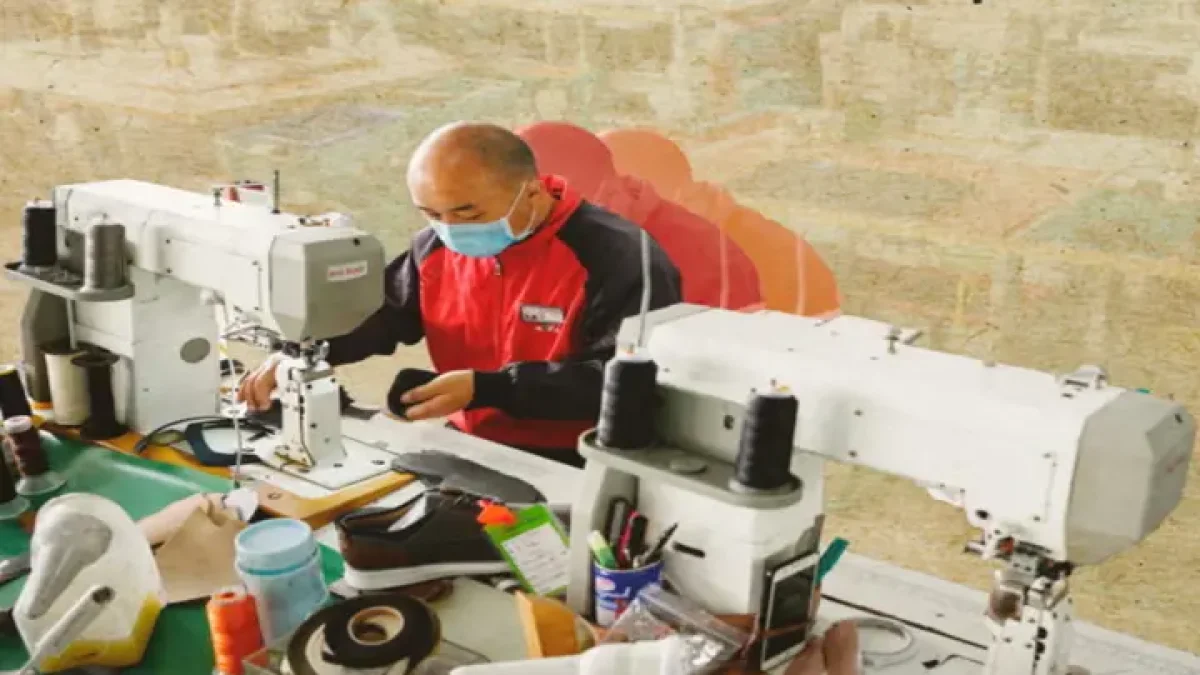
The family-owned small and medium-sized industrial firms that became one of the foundations of China’s economic rise now face a new kind of crisis. The founding generation has reached retirement age, but a large share of their children are not ready or not willing to take charge of the family business. The result is a crisis of leadership between generations in the country’s private industrial sector.
Small family factories and businesses played an important part in China’s economic success. In particular the “Wenzhou model”, which grew up around the city of Wenzhou in Zhejiang province, once opened a path to rapid growth in output through family connections, self-financing and small factories. These firms later became large factories and helped turn China into one of the world’s main manufacturing centres.
Ayu is an entrepreneur with a shoe factory in Wenzhou. He said that in the 1980s he watched his parents make leather shoes by hand on the ground floor of a three-storey house. Within a few decades that small family workshop had become a factory of about 700 workers. But for his generation the question of keeping the business going has become much harder.
Hanqing Fang, an associate professor at Missouri University of Science and Technology, said a company’s shares can be transferred to a son or daughter overnight. But what they actually take on is an organisation that is a company on paper yet in many cases depends on the founder’s personal relationships and experience. That network is hard to inherit.
Research findings help show the scale of the crisis. According to a study by HSBC Life, two-thirds of China’s wealthy people have no succession plan. And in a study led by Ningbo University, second-generation members were in management in only 10 of 114 private companies.
Many of China’s young business heirs voice concern about taking over the family business. One young marketing worker said his family has a food processing factory in the city of Shanwei and several dozen shops in Shenzhen and Hong Kong. Even so he does not want to join the family business yet. He feels he is not yet prepared to handle the countless personal relationships, financial matters and administrative responsibilities that come with it.
It is not that all of the younger generation want to walk away from the family business. Many do not rule out taking charge in future. But they say inheritance does not only mean receiving wealth: it comes with huge responsibility, complicated relationships and the need to be able to keep the business alive.
So the central question now facing China’s family industries is whether the second generation can also inherit the invisible assets, the labour, relationships and experience, on which the first generation built its business empires. Given the importance of these firms to the economy, the answer matters for future growth too.
বাংলায় মূল প্রতিবেদন পড়ুন · Read the original Bengali report