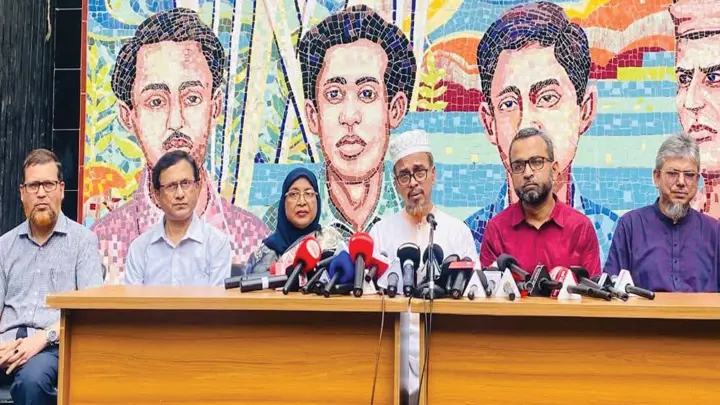
The University Teachers Link (UTL) has demanded a neutral investigation into the vandalism at the Dhaka University Central Students’ Union (DUCSU) museum, to uncover what actually happened and take appropriate action against those responsible. The organisation has also called for stronger security at the museum, guaranteed safety for students, teachers and journalists on campus, and effective steps to stop what it called “mob culture.”
On Tuesday afternoon, a seven-member delegation led by UTL central committee general secretary and Dhaka University chapter convener Professor Dr Zubair Muhammad Ehsanul Haque visited the damaged DUCSU museum.
During the visit, UTL leaders said DUCSU is an important institution in the country’s student movement, democratic practice and national history, tied to many significant chapters of Bangladesh’s education, culture, self-determination movements, democratic struggles and national history. They said damage to the historical photographs, documents and artefacts preserved at the DUCSU museum was deeply regrettable and condemnable.
Professor Dr Zubair Muhammad Ehsanul Haque said he thanked the Dhaka University vice-chancellor, DUCSU’s president and its leaders for the initiative to modernise the DUCSU museum. However, he said, no form of vandalism, damage or disrespect toward this historical museum is acceptable under any circumstances. He said they had learned, through various media and social media reports, that a student who enrolled at Dhaka University in 2001 had entered the DUCSU museum and vandalised some of the photographs and artefacts preserved there — something they viewed with deep concern.
Noting that differences of opinion are a normal part of a democratic society, he said a culture of vandalism, occupation, intimidation or taking the law into one’s own hands can never be allowed at a university under any circumstances. He said a form of “mob culture,” in place of law and rules, has recently been observed on campus. A university, he said, is a space for scholarship, reason, tolerance and open debate; if such a culture takes hold there instead, it threatens not just the academic environment but also the safety of students, teachers, journalists and ordinary people.
UTL demanded a neutral investigation into the DUCSU museum vandalism to establish the real facts and take appropriate action against those responsible, alongside calls for stronger museum security and proper preservation and protection of the historical photographs, documents, artefacts and other items kept there. The organisation also demanded effective measures to ensure the safety of students, teachers, staff and working journalists on campus, and called for visible, accountable steps from the university administration over incidents of violence and attacks on campus. UTL leaders also raised demands for an effective investigation and action over allegations of an attack on students and journalists in front of Shahbagh police station.
Professor Zubair said it is essential to establish a culture of rule of law, academic freedom, mutual respect and tolerance at an institution of Dhaka University’s historic and national importance. Any complaint or offence, he said, must be addressed through proper legal process, not through vandalism or the use of force. He also stressed the importance of holding regular, credible DUCSU elections to restore the union’s historic standing and ensure students’ democratic rights, calling for effective initiatives from the university administration and the government on this front.
UTL leaders said DUCSU is a historic institution born of Bangladesh’s long democratic student struggle, and that protecting its heritage and standing is not only Dhaka University’s responsibility but a national one. Holding regular DUCSU elections, they said, would further strengthen student representation and democratic practice.
Also present were UTL central committee vice-president Professor Dr Munira Ahsan, joint general secretaries Professor Dr Muhammad Didare Alam Muhsin and Professor Dr Abu Sayem, organising secretary Professor Dr Mohammad Bilal Hossain, office secretary Muhammad Omar Faruk, and Professor Dr Muhammad Zahirul Islam.