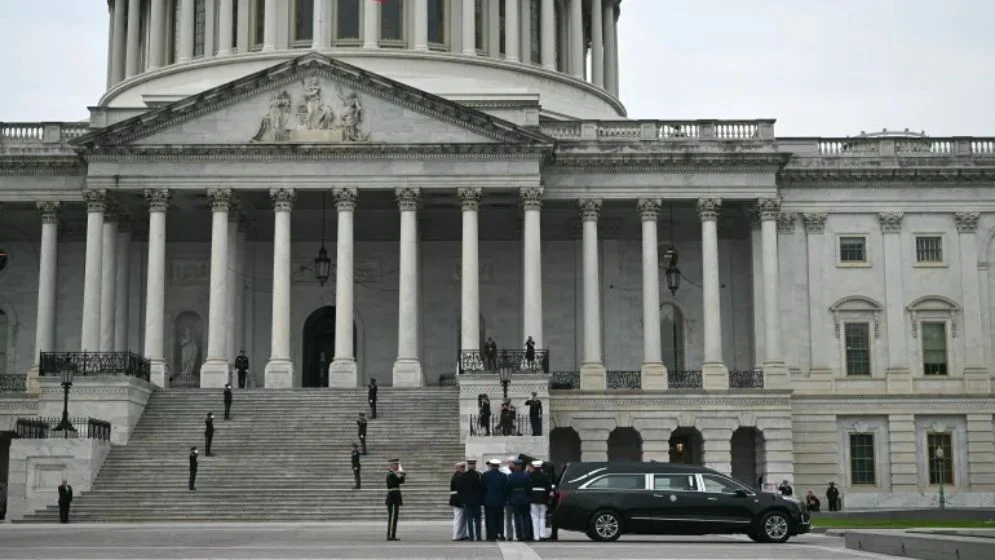
The US House of Representatives has voted for a third time to end the ongoing war with Iran. All voting Democrats backed the resolution, joined by seven Republican members. Three of those Republicans voted in favour of such a resolution for the first time. The war-powers resolution was approved 220-204 on Tuesday (September 15) night. It seeks to limit President Donald Trump’s ability to continue military operations without Congress’s approval.
Iowa Republican Congressman Jack Nunn said that with the window for negotiation now closed, Congress’s approval is needed for any long-term military campaign. “I will not support another open-ended war,” he said. However, no such resolution passed by the House has previously reached the president. If this one does reach Trump, he is expected to veto it.
Florida Republican congressman and House Foreign Affairs Committee chairman Brian Mast questioned which US military assets Democrats want withdrawn from the region if Iran is still considered a threat. He said Trump stands against “endless war” and is bringing an end to decades of conflict with Iran. This could be the last House vote on the Iran war before the upcoming midterm elections, with the war abroad having become a significant issue in campaigning.
The conflict has been ongoing for roughly seven months since the war against Iran began on February 28. During this period, there have been exchanges of missile strikes, creating instability across the region. US lawmakers will head back to their home districts at the end of the week to campaign, with fewer than 50 days remaining before the midterm elections that will determine control of Congress.
Meanwhile, a report from the non-partisan Congressional Budget Office (CBO) says the Iran war is adding pressure on US inflation and straining the country’s weapons and ammunition stockpiles. The report, released Tuesday, said around $38 billion has been spent so far in the six-month conflict, with roughly another $3 billion a month expected if the war continues. It also said the war could push inflation up by 0.5 percentage points in the first quarter of 2027.
Congress has made several previous attempts to end the Iran war. The House approved two war-powers resolutions in June and July. The Senate also approved a similar resolution on its tenth attempt, but Republican senators reversed their position the following day after criticism from Trump. Under the US Constitution, the power to declare war rests with Congress, though the president, as commander-in-chief of the armed forces, retains the power to take certain military actions. The War Powers Resolution, enacted after the Vietnam War, places time limits on the president’s military authority — generally requiring Congress’s approval for military action to continue beyond 60 days, with an additional 30-day window allowed for troop withdrawal under specific circumstances.