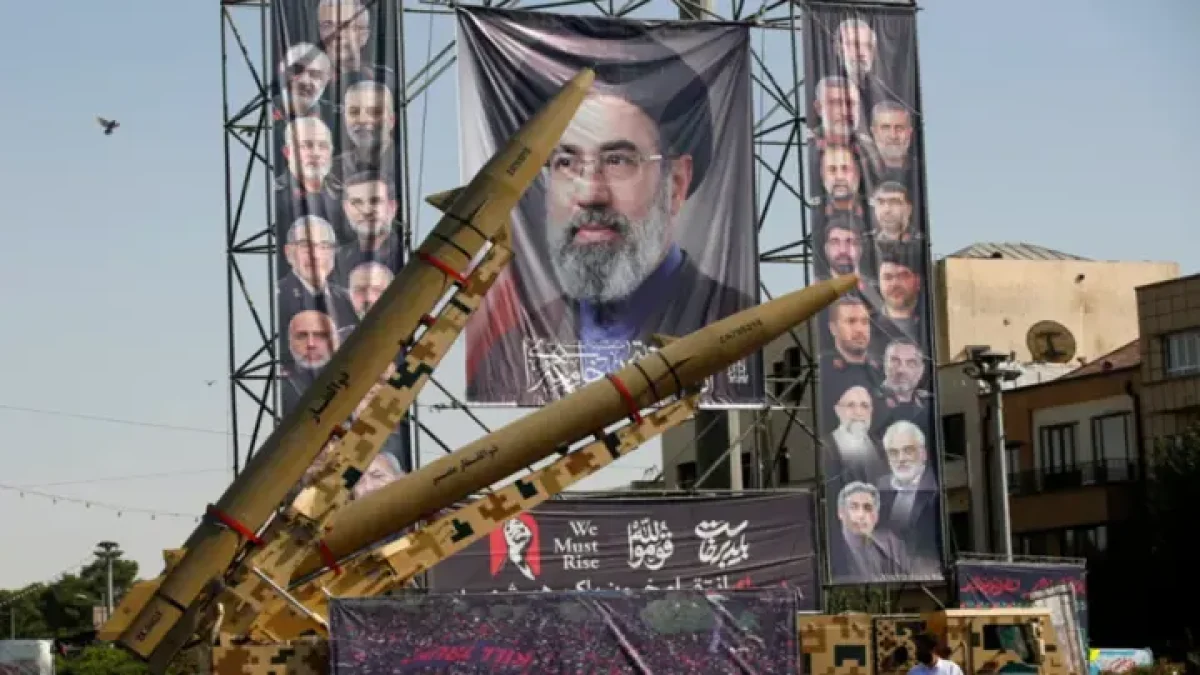
In trying to preserve its global dominance and the credibility of its military power, the United States could be drawn into a major new war with Iran. But such a conflict may not deliver the result Washington expects. It could instead make Iran more interested in acquiring nuclear weapons.
A third round of major military strikes on Iran risks strengthening the political and military groups inside the country that favour nuclear weapons.
An analysis by Mahdi Niksefat Motlagh and Kiavash Kalhor argues that the most dangerous moment for a dominant power comes when continuing a war is seen as essential to proving that the decision to start it was right. In that situation, failure to achieve the desired result is used to justify an even bigger military campaign, even though the higher the cost of the war, the harder the hoped-for victory becomes.
The authors say the same situation has arisen in the ongoing US conflict with Iran. The goal Washington set out with, establishing its dominance through a show of military force, has now become a test of the credibility of American power and influence.
A report in The Atlantic published on 22 October described a belief in US President Donald Trump’s inner circle that Iran has been badly weakened by economic pressure, so a new attack could open the way to a change of government there. The United States has not made a final decision on attacking Iran again. But the expectation that renewed pressure will this time bring a decisive result has surfaced once more.
According to the authors, this thinking rests on an old miscalculation: that weakening an adversary makes it possible to control its behaviour at will. A country can suffer military losses and still refuse to accept its opponent’s political terms. They argue this reality is being ignored in Iran’s case.
The US mistake of the ‘manageable enemy’
The analysis highlights the idea of a ‘manageable enemy’. For a dominant power, a familiar adversary often serves as a reason to organise military alliances, keep forces abroad and hold allies close in the name of security. But it also comes with the expectation that the enemy’s threat, the cost of conflict with it and the end of that conflict can all be kept under control.
US policy in the Middle East has treated Iran as such an adversary: important enough that a conflict with it can shape the security of the whole region, yet weak enough that it cannot change the rules or course of that conflict.
The authors point to the German jurist and political theorist Carl Schmitt’s theory of protection and obedience. When a powerful state takes on the role of protecting others, it also shapes how threats to that security are defined and how political loyalty is built. The same applies to US leadership in the region. But if a military campaign against an adversary puts allies’ security at greater risk, the legitimacy of that leadership is called into question.
The ability to destroy a country militarily is not the same as the ability to control the consequences of a conflict. If prolonged instability, economic damage and the threat of retaliation follow, questions can arise about Washington’s capacity to manage the crisis even with its military strength intact.
Has Washington not learned from Iraq?
The authors believe the Iraq war should have been an important lesson for the United States. It was able to topple Saddam Hussein’s government in 2003, but establishing a stable political order favourable to the United States proved far from easy. In Iran, too, there is a large gap between weakening the government through military strikes and bringing about the collapse of its political system.
Iran’s political and administrative structure, the several foundations of its national identity and its long experience of running the state under pressure have given it the capacity to survive. There is no basis for assuming that removing certain individuals or military commanders would make the whole state stop functioning. Even a weakened government can keep its ability to make decisions and to keep resisting.
The 12-day war of June 2025 and the US-Israeli military campaign that began on 28 February 2026 have brought this reality into sharper focus. Iran suffered significant damage in these attacks. But the political result Washington and Tel Aviv wanted in return for that damage, forcing Iran to accept a future they had set for it, has not been achieved.
Trump initially suggested a military campaign against Iran could last four to five weeks. Six months on, the United States finds itself weighing more pressure on one hand while looking for an honourable way out of the conflict on the other.
A long war also changes the calculation of how a conflict ends. If a US president ties his own political credibility to forcing Iran to back down, then reaching any agreement that recognises Iran’s right to make its own decisions may look to him like defeat. Protecting a personal political image then becomes bound up with the credibility of US military threats and the confidence of allies.
Why the risk of a third round is growing
The end of the war would not mean the end of US dominance around the world. The danger lies in how the end of the war is viewed. If Washington decides that no outcome short of Iran’s unconditional surrender is acceptable, it will narrow its own possible routes out of the conflict.
In that case a third round of major strikes could be presented as a chance to restore the US credibility damaged by the two previous campaigns.
The same argument is made each time: this round of pressure will be the last. But when the expected political result does not come, the demand grows for more pressure to justify the earlier attacks. Even with the need to turn attention to America’s bigger rivals, breaking out of this cycle may be hard, because a leader who sees withdrawal from a conflict as defeat may instead go deeper into the war to avoid it.
Iran, for its part, is no longer where it was at the start of the conflict. The experience of being attacked has changed how it responds to threats and how it runs the state. Its ability to produce new leaders to replace military commanders, keep decision-making going and impose costs on its adversaries in various ways has given it room to adapt.
Adapting to war does not mean Iran is protected from all harm. Even if its military and administrative structures survive, its people may suffer from economic pressure, damaged infrastructure and shortages. The United States, likewise, may change its military strategy. So there is no guarantee, based on past experience, that any future attack will fail.
The case for nuclear weapons grows
Iran’s biggest problem is that its ability to withstand war does not stop new attacks from starting. Iran may not let its adversaries win easily, but the risk remains that it will be stuck in a cycle of repeated strikes, rebuilding and fresh military threats.
If economic pressure continues after a ceasefire and the threat of new strikes remains, Iran’s reconstruction will also be uncertain. The state may plan for the future, but carrying out those plans will depend on its adversaries’ next decisions.
In that situation, if Iran’s policymakers conclude that conventional military capability can raise the cost of war but cannot prevent new attacks, the argument of those who favour acquiring nuclear weapons could grow stronger.
Signs of such a debate are already visible inside Iran. Citing a Financial Times report, a piece published by the Carnegie Endowment for International Peace on 20 October said that several hardline Iranian politicians, lawmakers and analysts are calling for the country to drop its opposition to nuclear weapons and to leave the Treaty on the Non-Proliferation of Nuclear Weapons (NPT).
The Iranian government has not made a formal decision on this. Rather, the piece suggests that discussion of a change in nuclear policy is growing in part of the country’s political arena.
If a third round of strikes also fails to secure a lasting political settlement with Iran, the groups that favour nuclear weapons will have a stronger argument. In their view, a temporary halt to bombing cannot guarantee future security, so acquiring nuclear weapons could be put forward as a way to prevent new attacks.
But political interest in nuclear weapons, a state decision to build them, the technical capability required and the creation of an effective deterrent are entirely separate matters. A Reuters report published on 7 October described extensive damage to Iran’s nuclear facilities and uncertainty over the current state of its nuclear programme. There is therefore no basis for assuming that Iran could easily build a nuclear weapon if it chose to. Any attempt to move in that direction could also raise the risk of new military strikes.
Israel’s calculations and US regional interests
Israel’s role in this situation is also important. Its government may see the rebuilding of Iran’s nuclear and military capabilities as a threat to its own security, and if Iran’s capabilities begin to grow again, calls for new strikes could follow.
But the United States cannot weigh only Israel’s security calculations. It must also consider the security of its allies in the Middle East, the economic cost of the war and its ability to bring the conflict to an end. If every Iranian attempt to rebuild is treated as a reason for new US military intervention, the cycle of conflict could drag on even longer.
A lasting settlement to avoid conflict
To avoid the risk of a new war, both sides need to change their calculations. Alongside verifiable limits on Iran’s nuclear programme, there must be credible guarantees that reduce the risk of new attacks on the country, together with a real opportunity for economic reconstruction.
Assurances of a temporary ceasefire alone will make it hard to steer Iran away from thoughts of acquiring nuclear weapons. Creating the prospect of a workable economic and security future for the country, on the other hand, could weaken the argument of those who favour a nuclear deterrent.
To preserve its global power and dominance, the authors argue, the United States must understand the difference between ending a failed war and losing its standing in the world. If Iran’s surrender is treated as the only way to protect American credibility, the United States will tie its own power to an ever more costly conflict.
If a third round of war begins, Washington may again try to prove that Iran can be controlled. But if Tehran concludes from repeated attacks that it must permanently raise the cost of attacking it, the push for nuclear weapons could grow stronger.
In other words, the military risks the United States may take to protect its global dominance could in the end strengthen Iran’s desire for nuclear weapons. The very campaigns justified as a way to stop Iran’s nuclear capability risk pushing it toward a nuclear weapon.
বাংলায় মূল প্রতিবেদন পড়ুন · Read the original Bengali report