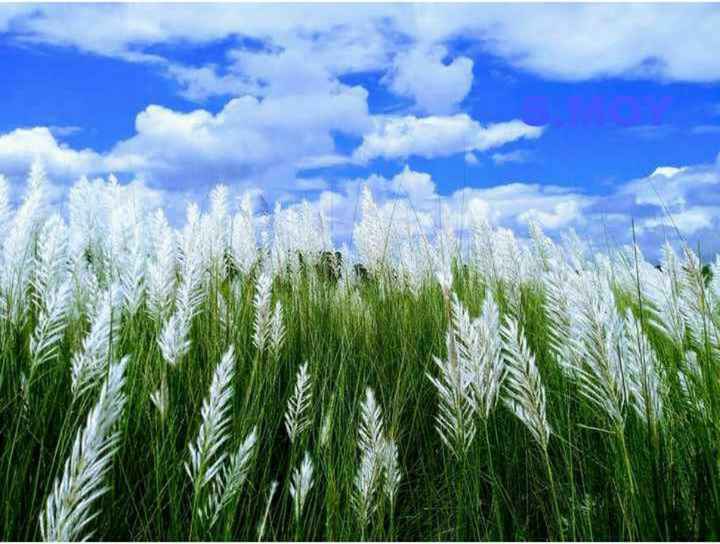
A deep blue sky. Blazing sun. Sweltering heat. Rafts of white clouds drift from south to north. White kash flowers bloom along the riverbanks, swaying endlessly in the breeze — a sight so lovely it soothes the eyes. White herons spread their wings and glide across the blue sky. Black watercocks raise their young in the bamboo groves, while kingfishers perch on jarul trees by the large ponds, hunting for fish. Many kinds of flowers bloom in this season — shiuli, kamini, hasnahena, dolonchapa and beli — filling the air with their fragrance. Small ripples rise on the rivers, canals, wetlands and lakes in the breeze. Boatmen hoist their sails and head to riverside markets and ports, singing traditional bhatiyali folk songs about the beauty and vastness of the river. On moonlit autumn nights, the village atmosphere turns enchanting and dreamlike, with fireflies flitting about. There is also a traditional children’s rhyme about the season, describing water lilies blooming in the wetlands, kash flowers along the riverbank and fishermen casting their nets as autumn arrives.
The cormorant is a beautiful bird that lays its eggs in autumn, typically five to seven at a time. The autumn season spans the Bengali months of Bhadra and Ashwin. The water hyacinth, known as a “wandering flower,” also blooms during this season. Bhadra, the first month of autumn, is notable for several reasons — it is during this month that Hindu communities observe Janmashtami, marking the birth of Lord Krishna. On the last full-moon night of Bhadra, a spiritual sect within the Hindu community sets afloat rafts known as bhela. Fairs are held in various villages to mark Janmashtami and the bhela-floating ritual, with murshidi and other devotional songs performed through the night. The rafts are made from cut bamboo poles and banana-tree trunks, with a small house of colored paper built on top and filled with various fruits, sweets, payesh (rice pudding) and batasha (sugar candy). The raft is then set afloat on the tidal waters. Autumn is also when farmers sow the largest share of their crop seeds. It stands apart from Bengal’s other seasons — red amaranth, spinach and radish are grown in this season, and it brings an abundance of flowers, fruits and vegetables.
Autumn is part of our thousand-year-old heritage, one of the many faces of timeless Bengal. Bangladesh is a land of six seasons, with the weather changing every two months — sometimes scorching heat, sometimes bitter cold, heavy rain, gentle sunshine or dew-laden mornings. Such variety is possible only in Bangladesh, evoking the sentiment of the well-known patriotic verse celebrating the unmatched beauty of one’s own homeland.