Mosques stand in every corner of Bangladesh, and Dhaka itself is called the City of Mosques. Across the country, the call to prayer opens the morning and the muezzin’s call brings in the evening.
Some of these mosques have stood witness to history for centuries; others draw crowds of visitors with their modern design. Great domes, tall minarets, carved walls or wide courtyards: each has its own kind of beauty.
Bangladesh’s mosque architecture holds both the heritage of the Sultanate era and the variety of modern building. Five large and striking mosques show that range well. Here is the history, design and character of each.
1. Baitul Mukarram National Mosque, Dhaka
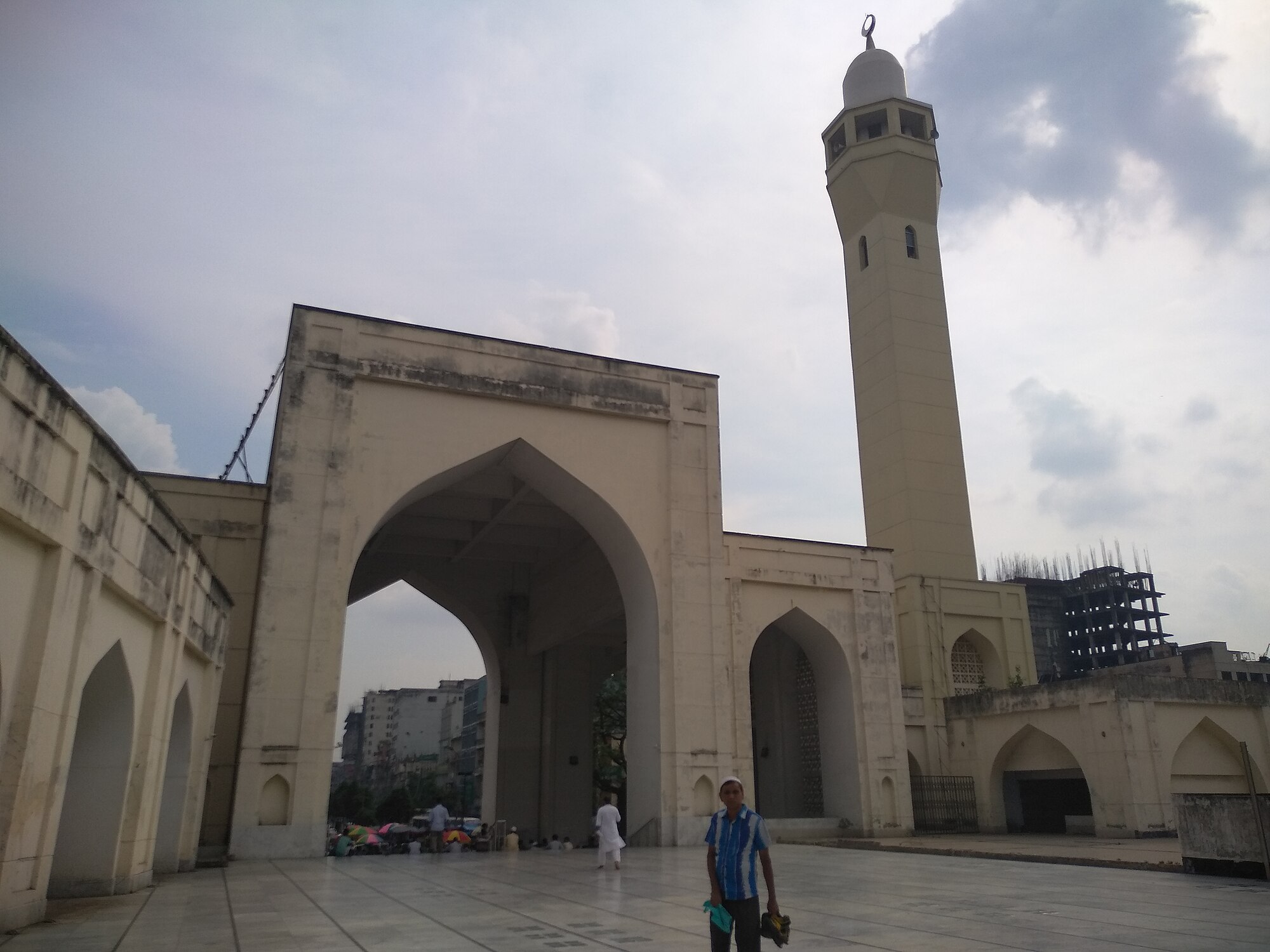
Standing in the busy heart of Dhaka, Baitul Mukarram is not only Bangladesh’s national mosque but also a building of its own kind. Its great cube-shaped mass is easy to pick out in the city’s crowd. Different from the usual mosque design, it is one of the best-known examples of modern mosque architecture in the country.
Construction began on 27 January 1960, to a design by the architect T. Abdul Husain Thariani. Almost three years later, on Friday 25 January 1963, the first Friday prayer was held there.
The mosque’s most striking feature is its cube shape, which recalls the Kaaba. The eight-storey building has no conventional dome over its main prayer hall. That unusual design and its restrained decoration set it apart from many of the country’s well-known mosques.
According to the Bangladesh Tourism Board, about 40,000 worshippers can pray at Baitul Mukarram at once. Its capacity, its distinct design and its central place in the capital give it a special position in Bangladesh’s religious and architectural heritage.
2. 201-Dome Mosque, Tangail
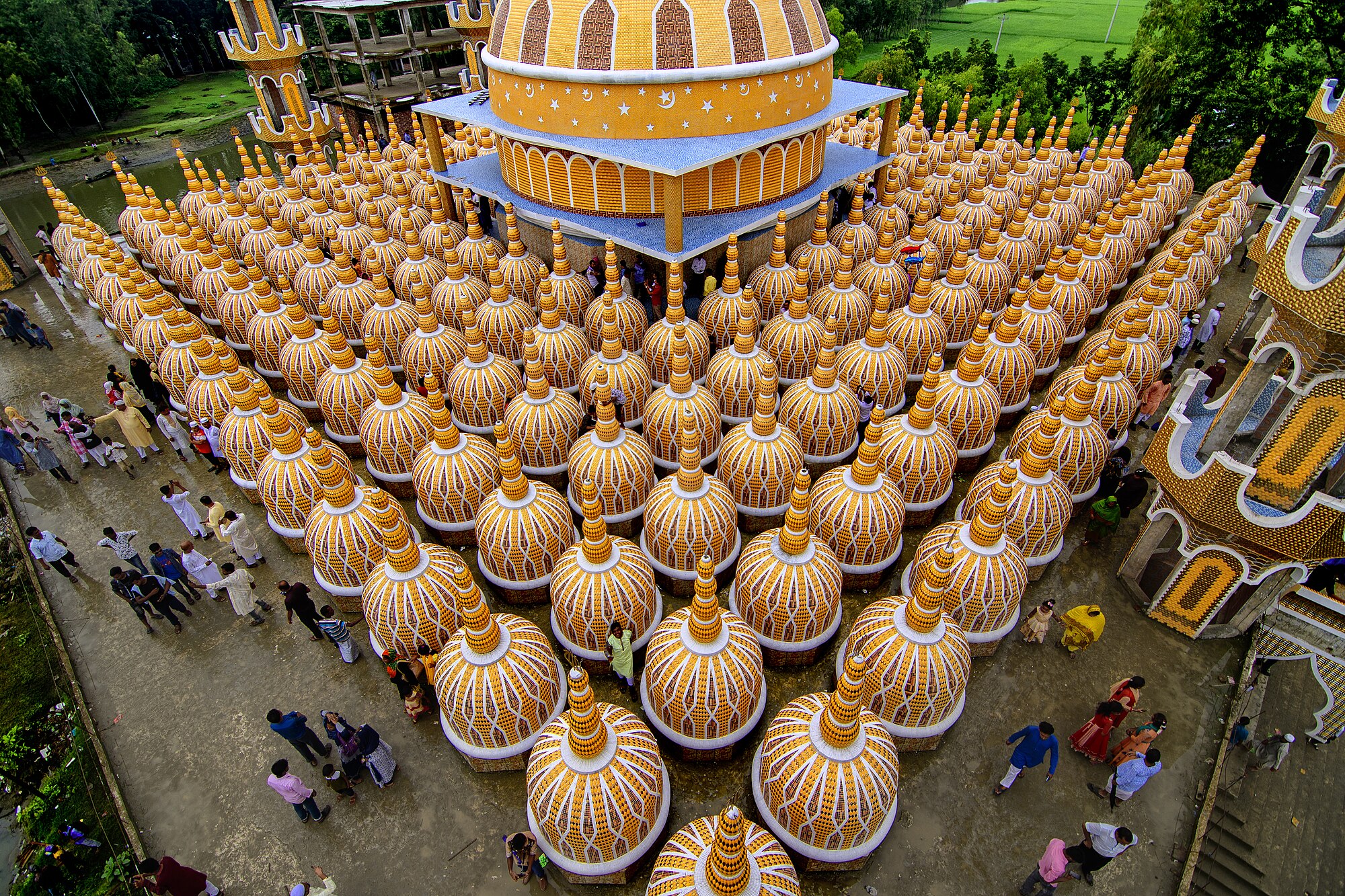
The 201-Dome Mosque stands on the bank of the Jhenai river in South Pathalia village, Gopalpur upazila, Tangail. Its unusual design, its many domes and its tall minaret have made it known across the country.
Construction began in January 2013. The main attraction of the complex, built on about 15 bighas of land, is its 201 domes: one large central dome surrounded by 200 smaller ones. The minarets around the mosque add another dimension to its design.
Its best-known feature is its 451-foot minaret, which news reports in 2019 described as one of the tallest concrete minarets in the world. The pattern of domes and the soaring minaret together make the mosque a rare example of modern Islamic architecture in Bangladesh. According to a 2019 Arab News report, more than 15,000 worshippers could then pray there at once.
3. Baitul Aman Jame Masjid (Guthia Mosque), Barishal
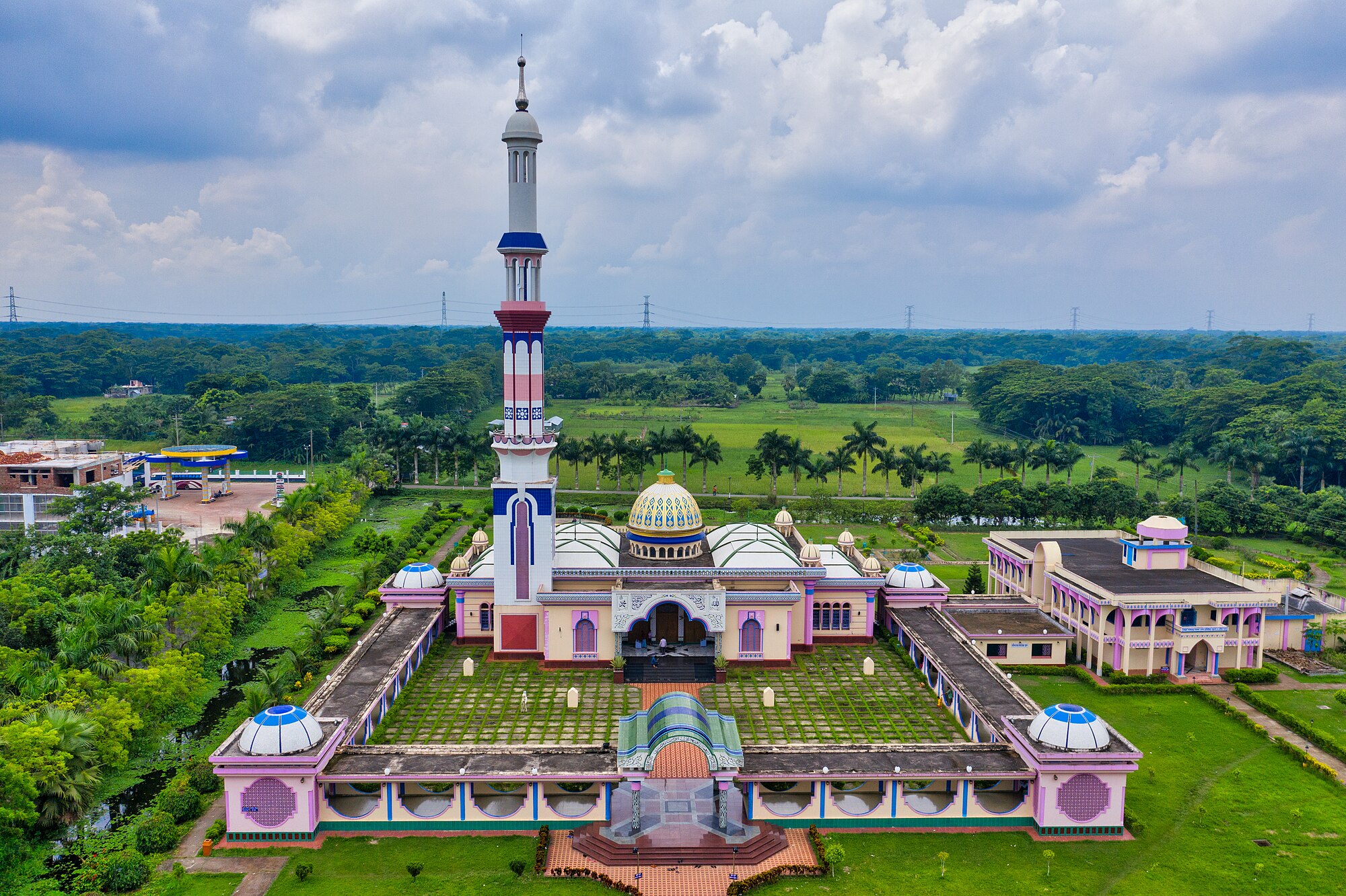
Baitul Aman Jame Masjid stands in Changuria village, Guthia union, Wazirpur upazila, Barishal, and is better known locally as the Guthia Mosque. Its large white building, tall minaret, pond and flower gardens draw visitors’ eyes to the whole complex.
Local resident S. Sarfuddin Ahmed Santu began building the mosque and Eidgah complex on 16 December 2003. The complex, on about 14 acres, was finished in 2006. His younger brother, Md Aminul Islam Nipu, supervised the work.
The mosque has 20 domes and a minaret about 193 feet tall. Its design shows the influence of several mosques in the Middle East, but the Guthia mosque has a character of its own. Calligraphy of verses from the Holy Quran, stained glass, marble and ceramic work adorn its inner walls.
Beside the main entrance lies a large pond in which the mosque is reflected, giving the whole building a different kind of beauty. Flower gardens, paved walkways and two fountains at the entrance surround it. After dark, the lights make the mosque and its grounds even more striking.
Next to the mosque is an Eidgah ground that holds more than 20,000 people. The complex also has an orphanage, a hafiz madrasa, a graveyard and parking. A place of worship set among fine architecture and natural surroundings, it has become one of Barishal’s best-known sights.
4. Sixty Dome Mosque, Bagerhat
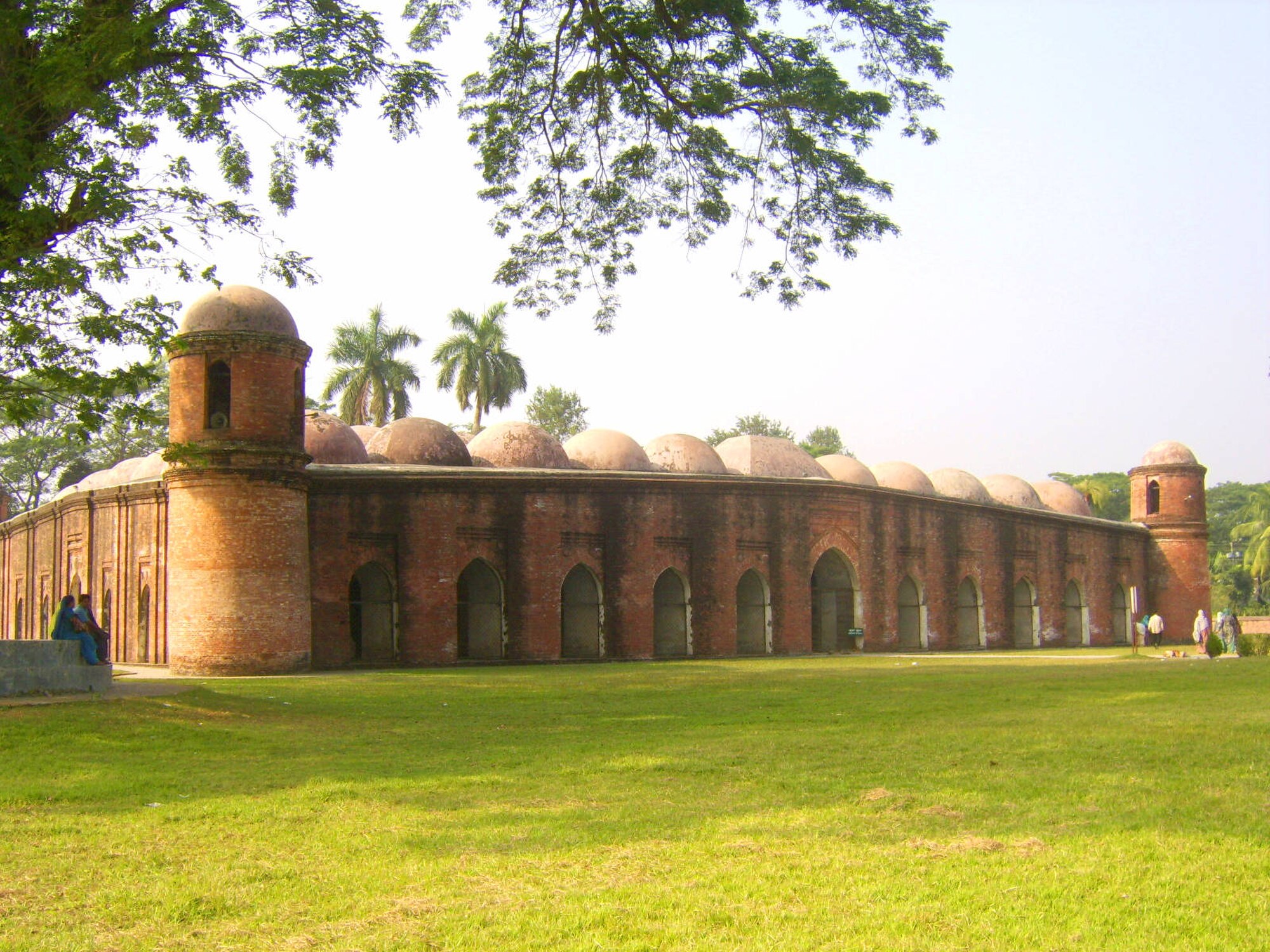
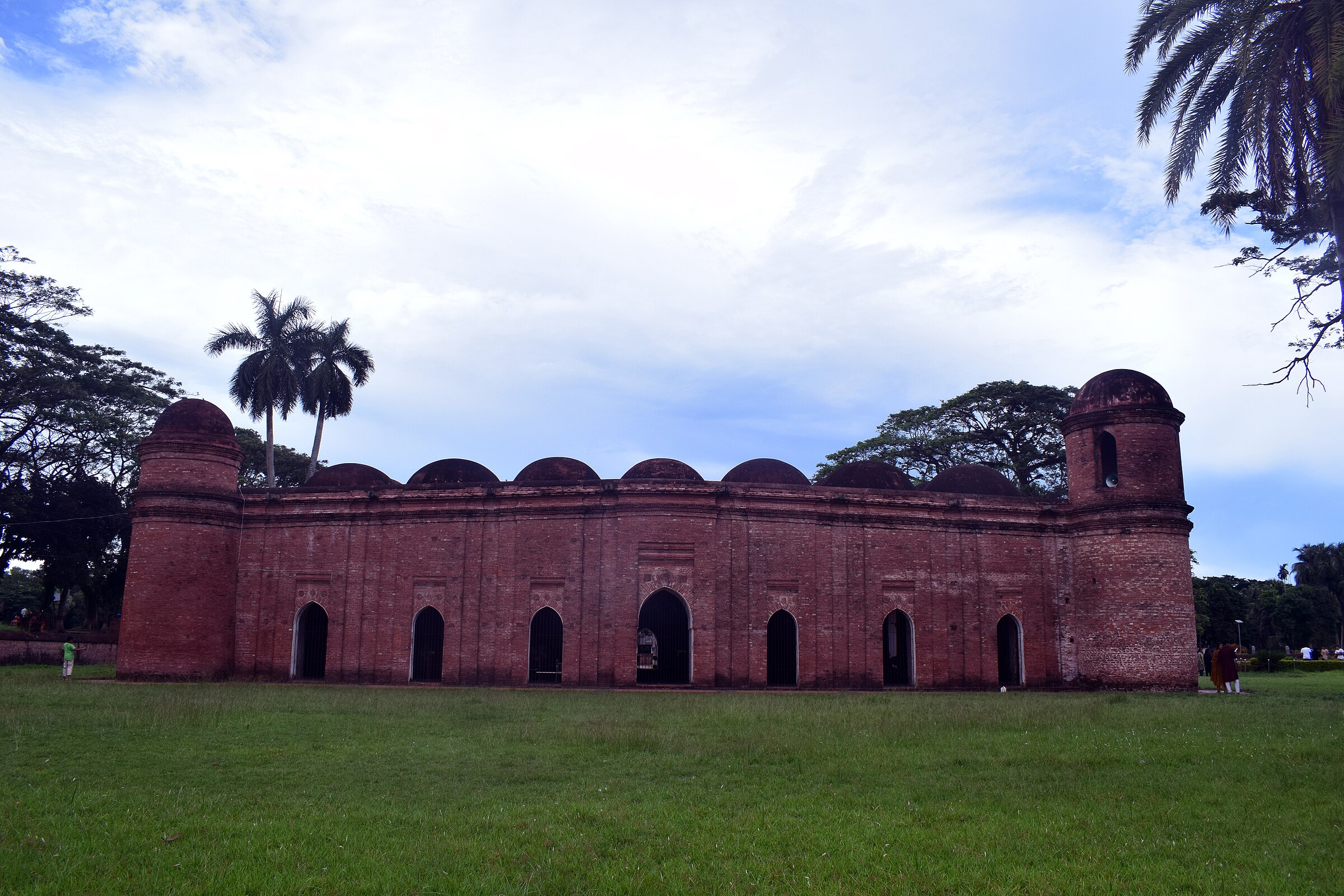
Among Bagerhat’s historic buildings, the Sixty Dome Mosque stands out. Built in the 15th century, it is one of the finest examples of Bengal’s Sultanate-era architecture. Its great brick building, thick walls, arches and rows of stone pillars give it its character.
Work on the mosque began in 1442 and was finished in 1459, according to the Bangladesh Tourism Board. Built by Khan Jahan Ali, it was used not only for prayer but also as a madrasa and an assembly hall. Its construction shows the skill of medieval Bengal’s builders.
Despite its name, the mosque has 77 domes on its roof: 70 half-round domes and, along the middle row, seven built in the shape of the traditional Bengali chauchala hut roof. Add the four domes on the corner towers and the total is 81. Inside, 60 stone pillars stand in six rows of ten from north to south, carrying the great roof and its domes.
Red brick walls, arches and terracotta decoration make its beauty all the more its own. The rows of pillars and arches inside the vast prayer hall show how it was built.
The Historic Mosque City of Bagerhat was added to UNESCO’s World Heritage list in 1985, and the Sixty Dome Mosque is its most important building. In its history, design and engineering, it is a treasure of Bangladesh’s medieval Islamic heritage.
5. Pagla Boro Jame Masjid, Sunamganj
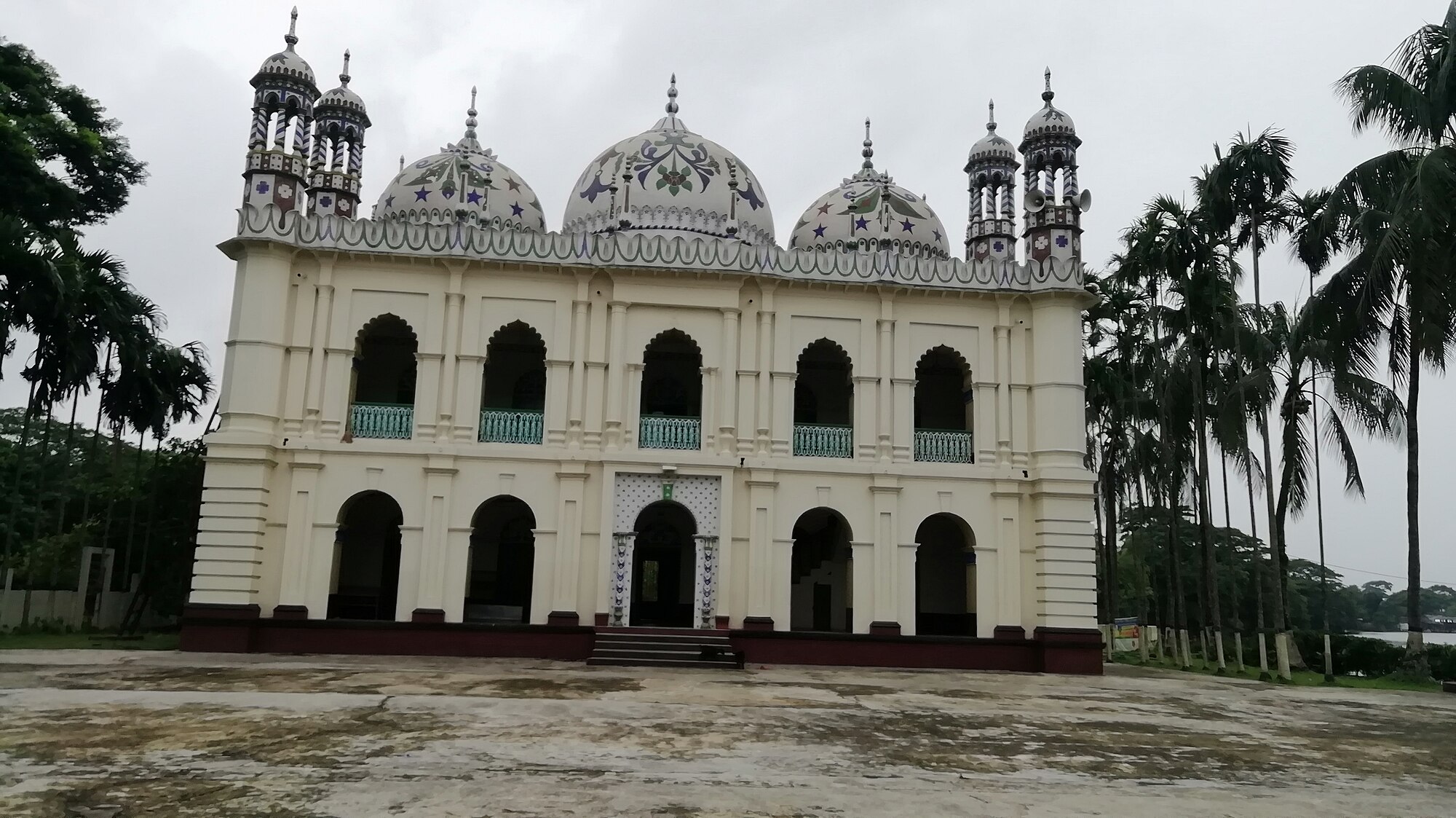
Pagla Boro Jame Masjid stands on the bank of the Mahasingh river in Raipur village, West Pagla union, Shantiganj upazila, Sunamganj. It is also known locally as the Raipur Boro Jame Masjid. Built in the style of a Mughal palace, the two-storey mosque is known for its unusual design and fine craftsmanship.
Local merchant Yasin Mirza, after seeing the architecture of Kolkata and other places on his travels, set out to build a striking mosque in his home village. Its chief architect was Mumin Astagar, and it took about ten years to complete. According to local history reports, Yasin Mirza’s brother Yusuf Mirza was also involved in building it.
Its most striking features are three large domes and six tall minarets. The outside of the two-storey building carries the mark of Mughal palace architecture, and the inside is richly decorated. White and black stone covers the floor; a stone-inlaid mihrab, patterned doorways and wall ornament add to its beauty.
Another notable feature is that its main structure is load-bearing brick, built without steel rods; railway sleepers were used in the ground-floor ceiling. The Mahasingh river runs along the mosque’s north side. Its riverside setting, the Eidgah ground in front and the natural surroundings give it a beauty of its own.
The beauty of Bangladesh’s mosque architecture is not limited to great domes or tall minarets. In some places it is centuries of history and the building style of the Sultanate era; in others, the variety of modern design, wide courtyards and graceful patterns.
These five mosques are notable examples of that varied heritage. Beyond their religious importance, they are bound up with the country’s history and culture. As time passes, keeping their beauty and historic value will need proper conservation and care.
বাংলায় মূল প্রতিবেদন পড়ুন · Read the original Bengali report