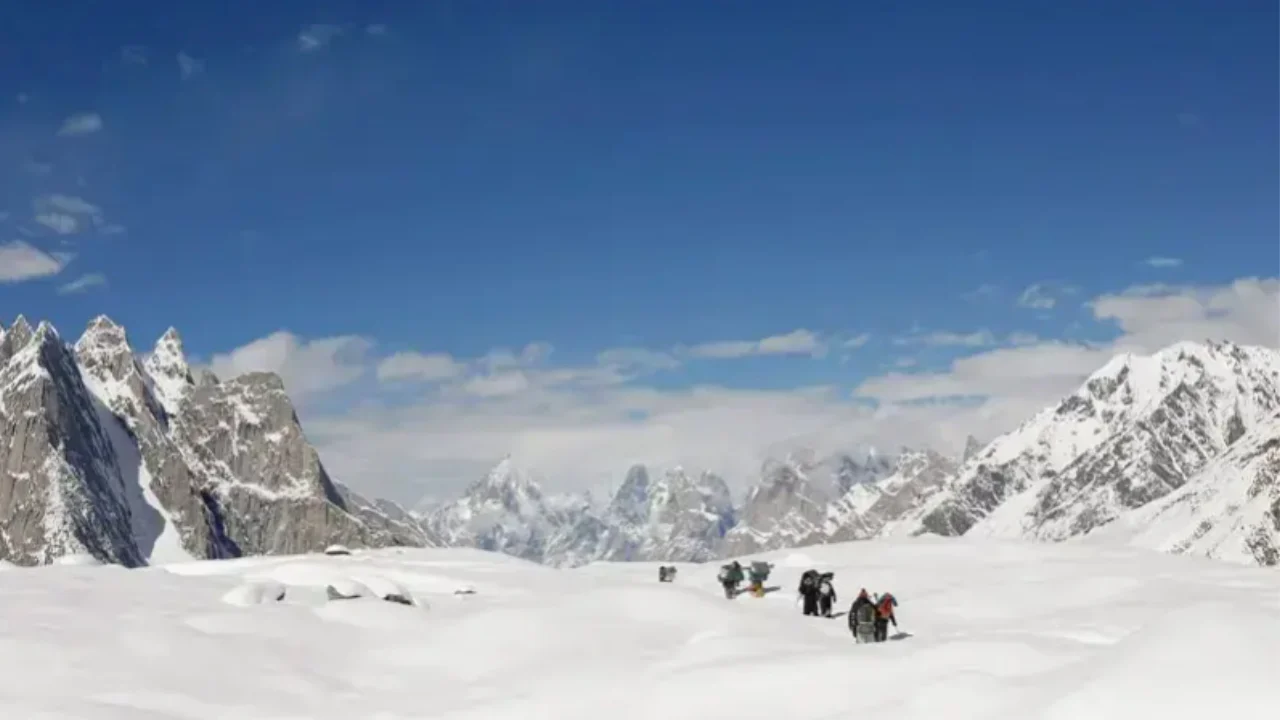
Even amid ongoing tension in the Middle East and fluctuating fuel prices, the number of foreign mountaineers and trekkers has risen in Pakistan’s Gilgit-Baltistan. More than 2,200 foreign expedition members visited the region between April and August this year.
According to Gilgit-Baltistan Tourism Department deputy director Sajid Hussain, foreign tourists have traveled there to summit some of the world’s highest peaks and trek in remote areas, including K2, the world’s second-highest peak, as well as Nanga Parbat, Broad Peak, Gasherbrum I and Gasherbrum II.
Officials say the number of foreign tourists across Gilgit-Baltistan’s tourist areas and open zones, combining the spring, summer and autumn seasons this year, could exceed 10,000. Foreigners do not need special permits for open tourist areas.
The number of foreign expedition members has risen compared with last year. According to tourism officials, foreign and domestic tourist arrivals to Gilgit-Baltistan had declined last year because of the US-Israel war centered on Iran and rising fuel prices.
Although this year’s mountaineering season has ended, trekker traffic continues. Tourists are still traveling even remote routes such as the K2 base camp trek. Officials say trekker arrivals will continue through October. As of June 30 this year, the Gilgit-Baltistan government had earned roughly 350 million Pakistani rupees from expedition and trekking permits.
Alpine Club of Pakistan president, retired Maj. Gen. Irfan Arshad Khan, said the rise in foreign tourists, despite Middle East uncertainty, fluctuating fuel prices and other adversities, is encouraging. He said tourism directly benefits local porters, hotel owners, transport operators and shopkeepers.
He said many countries had issued travel advisories for Pakistan because of the Middle East war, and permits for foreign mountaineers and trekkers were also delayed. Without these problems, he said, the number of foreign expedition members this year could have been even higher than 2,200. More than 4,000 foreign mountaineers and trekkers are expected to visit Gilgit-Baltistan next year.
Even so, the success rate on the region’s major peaks remains low. Avalanches, rockfall, powerful winds and unpredictable high-altitude weather remain major risks for mountaineers.