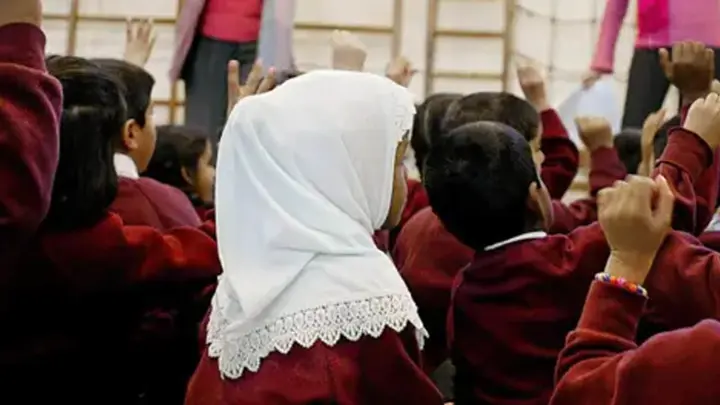
As the new academic year begins, Austria has enacted a new law banning hijabs and other Muslim religious head coverings for girls under 14 in schools. The law applies to both public and private schools in the country.
The government claims the measure is meant to protect girls’ rights and gender equality, and to prevent control and oppression over them from childhood. Critics, however, allege the law targets Muslims and could fuel Islamophobia in the country, and say it may face constitutional challenges.
Austria’s Islamic community has strongly opposed the law, saying it unreasonably restricts the fundamental right to religious freedom and has a discriminatory effect on Muslim girls. The organization said it would help affected families mount a legal challenge in the constitutional court if they wished to do so.
Austria’s constitutional court had earlier struck down a law banning hijabs in primary schools in 2020. The court found that the ban conflicted with the state’s principle of religious neutrality.
Under the new law, if a student wears a hijab, teachers will first discuss the matter with the student and their guardian. Repeated violations will be reported to child welfare services, and as a final step, guardians could be fined up to 800 euros.
Meanwhile, a section of teachers’ organizations and opposition parties have expressed concern over the law. Sigi Maurer of the Green Party alleges the government’s decision will place additional burdens on teachers and create fresh conflict.
Meanwhile, the far-right Freedom Party has called for even stricter measures, demanding a complete ban on hijabs and face-covering garments in schools for both students and teachers.
Austrian Chancellor Christian Stocker has also recently voiced support for banning “political Islam.” While several European countries already ban face-covering garments such as the niqab in public, Austria’s new law specifically targets the hijab worn by Muslim girls.