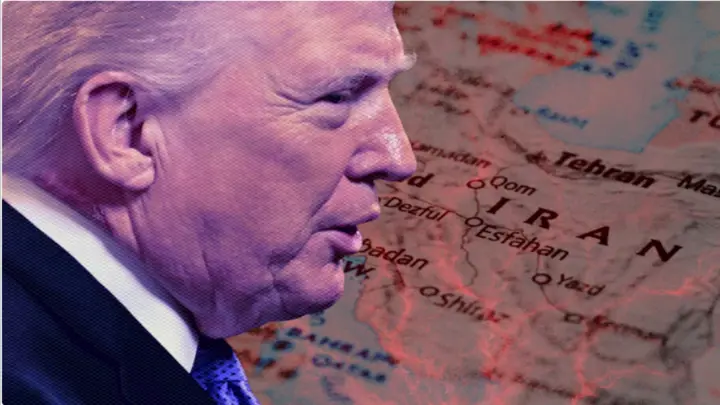
The Iran war that U.S. President Donald Trump promised would be short and swiftly finished is now headed toward becoming a prolonged conflict. The U.S. Defense Department is preparing to extend the deployment of troops stationed in the Middle East through 2027, raising fears that the Iran conflict could turn into a long-term war instead of the quick victory Trump had promised.
About 50,000 U.S. troops are currently in the Middle East, along with 19 warships, fighter jets, air-defense units and paratroopers. Many of these personnel and military units have been ordered to remain in the region longer than originally scheduled.
The long-term deployment plan has emerged from U.S. Defense Secretary Pete Hegseth’s planning, suggesting Washington is preparing to sustain military operations against Iran in some form through 2027.
Trump himself has not yet publicly spoken of prolonging the war. Instead, he is trying to force Iran’s government into concessions by maintaining military and economic pressure. Meanwhile, U.S. Vice President JD Vance has recently objected to even calling the conflict a “war.” Yet military tensions between the U.S. and Iran remain ongoing.
The prolonged troop deployment is also straining the U.S. military. Reports indicate extended warship deployments, troop fatigue, strain on weapons and equipment maintenance, and difficulty maintaining U.S. military capacity in other regions.
The Strait of Hormuz has become another key flashpoint of the Iran war. A vast amount of energy is transported through this vital global waterway. Recent U.S.-Iran tensions have disrupted shipping through the strait, driving up global oil prices.
Over the past several months, the U.S. has combined military strikes on Iran with harsh economic sanctions, aiming to squeeze Iran’s economy to limit its military and nuclear programs. But so far, Iran has not been forced into any major concessions.
Analysts fear that a prolonged conflict could affect not just the U.S. and Iran, but the wider Middle East and the global economy. In particular, prolonged disruption to shipping through the Strait of Hormuz could trigger fresh instability in oil supply and energy markets.
The Trump administration now faces a major question: how long to sustain military pressure on Iran, and how to find a way out of the conflict. If a war launched with promises of a quick end drags on until 2027, it could become a major military, economic and political challenge for the Trump administration on all three fronts.