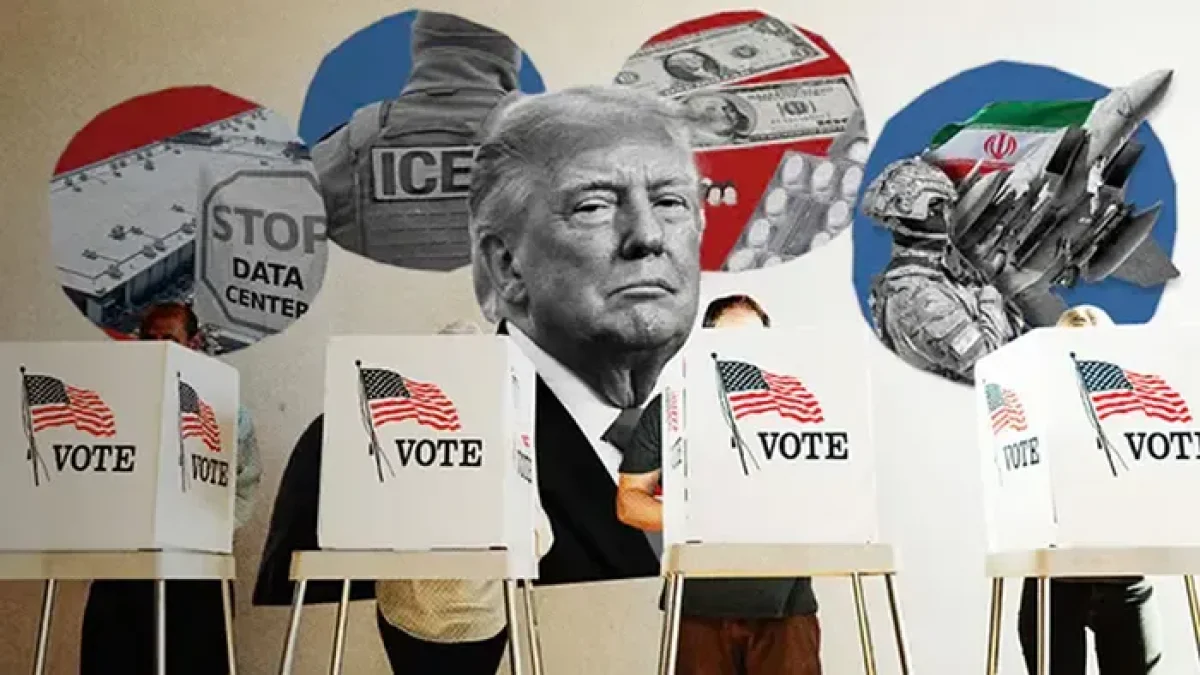
The United States holds its midterm elections on 3 November. They could change the balance of power in Washington. There is no presidential vote, but the ballot will decide which party controls Congress. Because Congress makes laws, approves government spending and oversees the administration, this election is also a big test for President Donald Trump.
It will also give a sense of where his public support stands halfway through his four-year term.
What is a midterm election?
The United States elects a president every four years, but Congress is elected every two years. Because this vote falls in the middle of a president’s four-year term, it is called the midterm election.
This time all 435 seats in the House of Representatives and 35 of the 100 Senate seats are up for election. Alongside the two chambers of Congress, governors and other posts will be elected in several states. The election does not decide the president’s term: under the constitution Donald Trump stays president to the end of it. But losing control of Congress could make it harder for him to pass laws and carry out his policy programme.
Why does Congress matter?
Congress can broadly be thought of as the country’s legislature, though its structure and working differ from Bangladesh’s parliament and other legislatures. It has two chambers, the House of Representatives and the Senate.
House of Representatives: it has 435 voting members. Seats are shared out among the states by population. Members serve two-year terms, so every seat in the House is elected every two years.
Senate: it has 100 members, two senators from each state, who serve six-year terms. Not all seats are elected at once; usually about a third are contested every two years. Both chambers play a part in making laws and moving government policy forward, so winning the House does not bring control of the Senate, and a Senate majority does not guarantee one in the House.
Will Trump be under pressure if he loses Congress?
The result will decide how much support Trump has in Congress for the rest of his term. If the Republicans keep control of both the House and the Senate, it may be relatively easier for him to push his laws and policies forward, though divisions within his own party could still get in the way.
If the Democrats take either chamber, they will be able to block the administration’s legislative plans. If they control House committees, their power to investigate and review government decisions and the administration’s work will also grow.
The two chambers also play different roles in impeachment. The process of bringing impeachment charges can begin in the House. The trial is then held in the Senate, which decides whether to convict and remove from office. But an opposition election win does not mean impeachment or removal will follow. If control of Congress is divided, agreement on spending, tax policy and other important matters can also become harder.
Is Trump’s support falling?
Questions have been raised about Trump’s popularity before the midterms. According to the poll-aggregation site Silver Bulletin, his approval rating was just over 50 percent at the start of his second term but fell to about 37 percent in early October. In the same period, 61 percent of respondents disapproved of him. These figures do not settle the result.
But polls are an important indicator of voters’ mood. In the end, voters’ choices will decide which way the balance of power in Congress goes.
What issues will shape the vote?
The election is not just a popularity contest between Trump and his opponents. Voters will choose candidates for their own districts and, in many places, for state and local offices too. The cost of living, jobs, health care, immigration, education and the direction of the economy could shape their decisions. Some may vote Republican to back Trump’s policies; others may back the Democrats to ensure a check on the administration’s power.
Candidates’ records, their campaign promises and their positions on local interests will also play a part. The weight of these issues can vary by state and group of voters. There is no single list of candidates or common ballot across the United States; what a voter sees depends on where they live.
When will the results be known?
Voting is on 3 November, but there is no guarantee every result will be known on election night. Some seats may be decided quickly, but close races can take longer to count. Counting postal ballots, verifying results, recounts or legal challenges can delay final results.
Control of Congress will be decided by adding up the results of the separate House and Senate seats. A party may gain seats in one chamber and still fall short of a majority in the other. So in this election the result of every seat matters, not only the national vote total. That will show how much political support President Trump has in Congress for the rest of his term, and how easy or hard it will be to carry out his policy programme.
বাংলায় মূল প্রতিবেদন পড়ুন · Read the original Bengali report