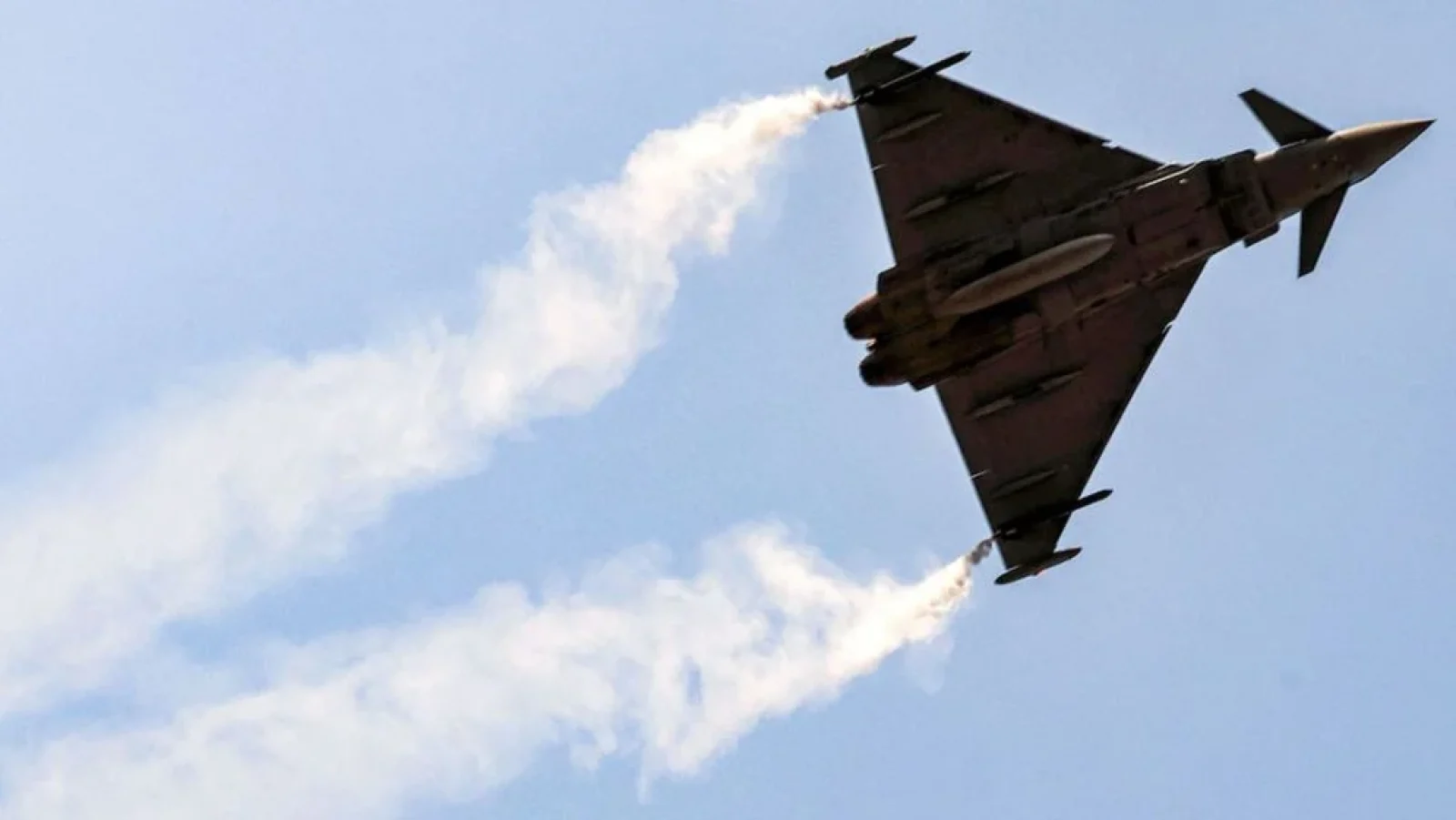
Yemen’s Houthi rebels have claimed to have shot down a Eurofighter Typhoon fighter jet that Saudi Arabia bought from Britain.
Video footage published by Houthi-linked media shows a missile racing toward the aircraft, which then catches fire.
The Typhoon is among the fighter jets Saudi Arabia bought under a long-standing arms agreement with the United Kingdom. Seventy-two jets were bought under a deal called Project Salam, worth an estimated £4.43 billion.
London has long described Saudi Arabia as its “important strategic ally” in the Middle East. If confirmed, it would be a rare case of a jet of this model being destroyed by an Iranian-supplied air defence system.
Steven Wagner, a senior lecturer in international security at Brunel University in the United Kingdom, said the aircraft in the video appears to be a Eurofighter Typhoon, but he expressed doubt about whether it was completely destroyed.
“At the start of the video there looks to be something like an explosion, but I did not directly see any major destructive hit,” he told The Telegraph. “The pilot tried to evade the missile using tactical manoeuvres and flares.”
Wagner added that the weapon used was probably a common Iranian mobile system. The key question now, he said, is how long it has been in use there and whether it arrived before or after the blockade.
He explained that such mobile surface-to-air missile systems lie in wait and launch sudden attacks on fourth-generation fighters such as the Typhoon.
“These mobile systems are switched on just before firing, because if they stay on, the Saudis can detect their radar signal and strike them with missiles,” he said. “Once the job is done they are quickly switched off and moved.”
He said stealth fighters such as the F-35 are somewhat safer from such systems but not entirely free of risk. He advised against drawing final conclusions about Saudi capability from a single loss.
“You cannot say the Saudis are unable to defend themselves,” Wagner said. “But it is clear this pilot fell into a Houthi trap. A mistake like this may not happen twice, and the tactic will become less effective each time it is used. Both sides will adapt to the new situation.”
Meanwhile, fighting on the ground in Yemen between the Houthi rebels and the Saudi-backed Southern Giants Brigades has intensified. In an escalation, the Houthis have for the first time attacked the headquarters of Yemen’s internationally recognised government, firing five missiles at the al-Maashiq presidential palace in the southern port city of Aden.
Yemen’s government said two security guards were killed in the attack, but the prime minister and all members of the cabinet were unhurt. Officials described it as a failed assassination attempt.
The attack has deepened Yemenis’ fears of a full-scale civil war that could draw in powers beyond Saudi Arabia. Saudi Arabia, for its part, is pressing hard diplomatically for other Muslim countries and US President Donald Trump to join the war, and is presenting the Houthis as a threat to global shipping.
বাংলায় মূল প্রতিবেদন পড়ুন · Read the original Bengali report