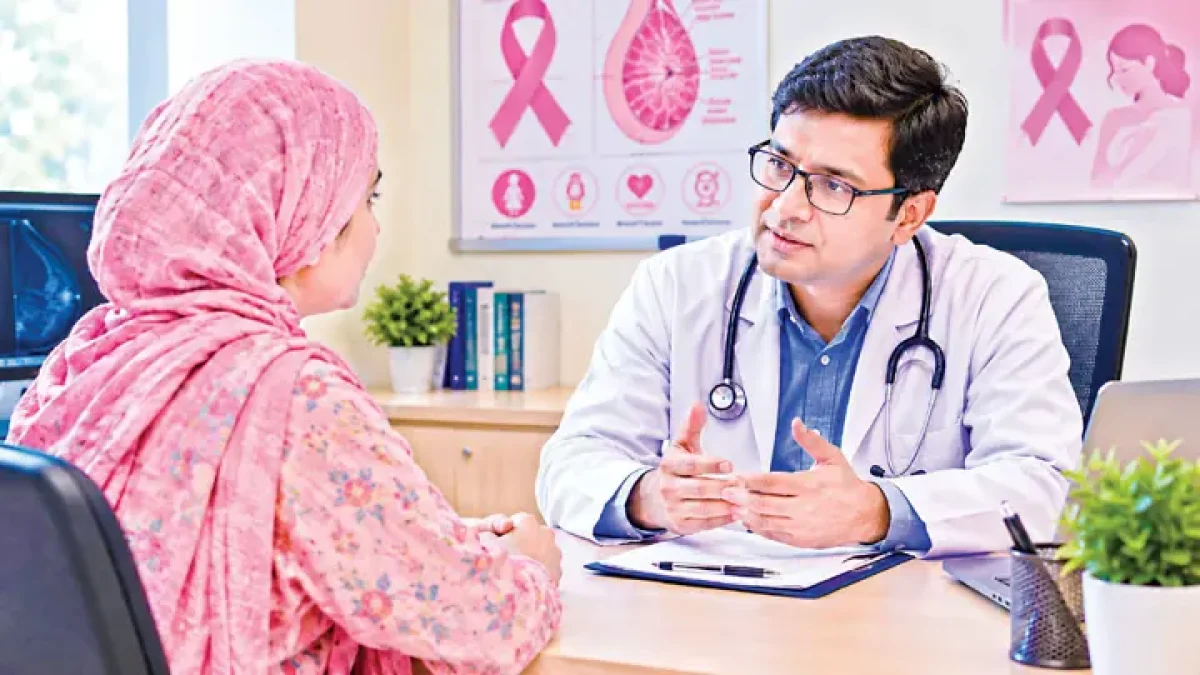
According to global estimates for 2024, about 2.4 million women worldwide were newly diagnosed with breast cancer and about 694,000 women died of the disease.
In this breast cancer awareness month, here is how the risk can be reduced, how the signs of the disease can be recognised and when it is important to see a doctor.
What is breast cancer
Breast cancer is when some cells in the breast grow abnormally, run out of control and form a cancer.
It is more common in women, but men can get breast cancer too.
Remember:
- A lump in the breast is not always cancer.
- Cancer can be present even without pain in the breast.
- Breast cancer can occur at a young age, not only in older women.
- The disease can occur even if nobody in the family has had breast cancer.
Important: many changes in the breast can have causes other than cancer, but there is no way to be sure without tests. See a doctor promptly if any new or unusual change appears.
Who is at greater risk
- Age: the risk rises with age.
- Family history: the risk may be higher if a mother, sister or daughter has had breast cancer.
- Inherited gene changes: changes in genes such as BRCA1 and BRCA2 raise the risk.
- Excess weight: especially after the menopause.
- Alcohol: raises the risk of breast cancer.
- Earlier radiation: especially a history of radiation to the chest at a young age.
- Reproduction and hormones: some reproductive factors and the use of hormones can change the risk.
Remember: about 80 percent of breast cancers are found in women who have no known risk factor beyond being a woman and growing older. So it is important to stay alert even without a risk factor.
What to do to prevent it
Not every case of breast cancer can be prevented, but some habits can help reduce the risk.
- Take regular physical exercise.
- Keep a healthy weight.
- Eat vegetables, fruit and a balanced diet.
- Avoid alcohol.
- Do not smoke.
- Do not use hormone medicines without a doctor’s advice.
- If there is a family history of breast or ovarian cancer, discuss a risk assessment with a doctor.
- Have appropriate screening according to your age and personal risk.
Caution: a healthy lifestyle helps reduce the risk, but it is no guarantee against breast cancer.
Which tests are used to detect it
Breast awareness: know the normal size, shape and feel of your own breasts, and see a doctor if you notice any new change.
Examination by a doctor: a trained doctor can find abnormalities by examining the breasts and armpits.
Mammography: a special X-ray of the breast, which can find some cancers before any symptoms appear.
Ultrasonography: used to assess a lump or other abnormality in the breast. In certain situations it is used instead of, or alongside, mammography.
Biopsy: a sample of suspicious tissue is tested to confirm whether cancer is present.
Remember especially: if there is a lump or another suspicious sign in the breast, do not wait for routine screening. Have a doctor assess it and have the necessary diagnostic tests.
What to do if it is found
First, do not panic. Get an accurate diagnosis and a treatment plan. Treatment for breast cancer depends on the stage of the disease, the features of the tumour and the patient’s physical condition. The types of treatment, and when each may be needed:
- Surgery: removal of the tumour or of the breast, in suitable patients.
- Radiotherapy: in certain situations, to reduce the risk of the cancer coming back locally.
- Chemotherapy: depending on the type of tumour, its stage and the risk of recurrence.
- Hormone therapy: for hormone receptor-positive cancers.
- Targeted therapy: according to HER2 or other specific biomarkers.
- Immunotherapy: for selected patients, especially in certain triple-negative breast cancers.
Before treatment begins, histopathology and ER, PR, HER2 and Ki-67 tests are done as needed. Some patients may also need tests for other biomarkers or genetic tests. Unnecessary treatment is harmful, and delaying necessary treatment is dangerous too, so follow the advice of a qualified cancer specialist.
বাংলায় মূল প্রতিবেদন পড়ুন · Read the original Bengali report