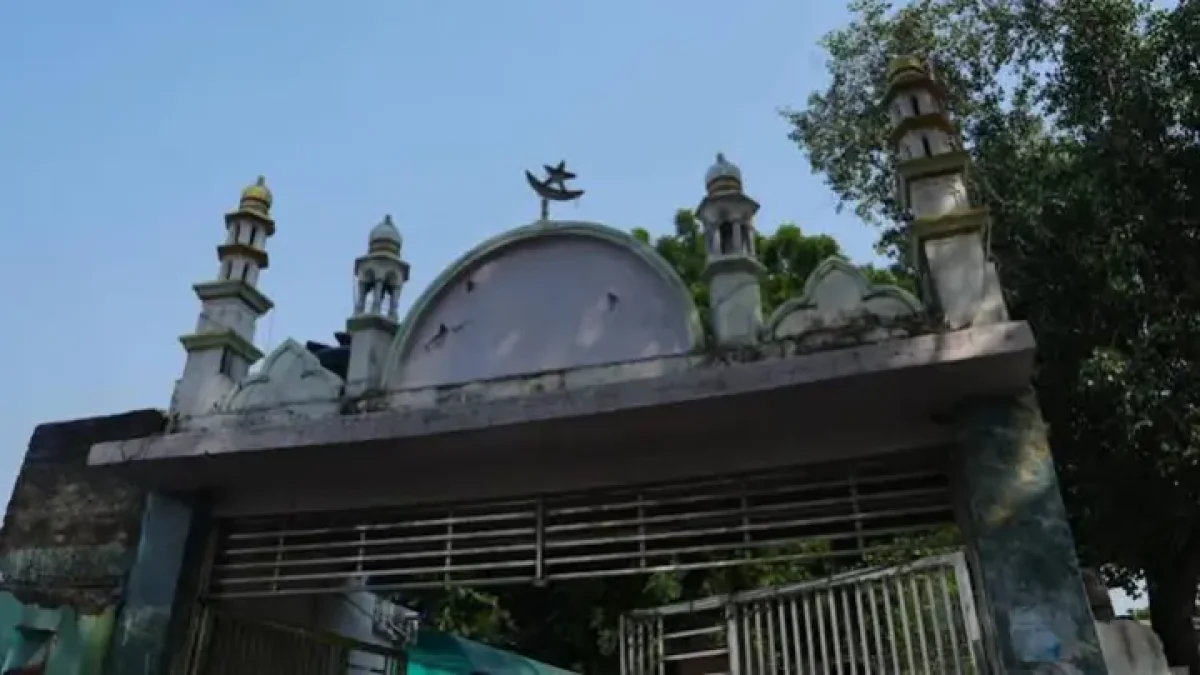
A century-old mosque near the official residence of Indian Prime Minister Narendra Modi is at risk of demolition. Water and electricity to the Race Course mosque in Delhi have been cut while eviction drives go on in the surrounding area. The mosque’s imam says it has been served notice to vacate the premises. The prospect that the mosque could be pulled down has caused concern among Muslims in India.
Where the mosque is, and why eviction is feared
The Race Course mosque stands near the prime minister’s official residence at 7 Lok Kalyan Marg in New Delhi, inside the Race Course Club. It is on the New Delhi Municipal Council (NDMC) list of heritage buildings as a Grade II heritage structure, and was listed in 2009.
Government authorities and the mosque’s caretakers are in dispute over the ownership and legal status of the land. The central government’s Land and Development Office (L&DO) says the land is government property and the structure stands there without authorisation. The Delhi Waqf Board says the mosque and the graveyard beside it were entered as waqf property in the Delhi administration’s official gazette on 8 September 1977. The mosque authorities were given notice to vacate the premises within six days.
Accounts of the notice
The mosque’s imam, Mohammad Harun, says several people who identified themselves as officials of the Land and Development Office told him to leave the mosque. Government officials were quoted as saying the mosque authorities received the eviction notice around 19 October and were told to vacate within six days. Uncertainty remains over who owns the land, how far the eviction drive extends and what will happen to the mosque.
Water and power cut, entry for prayers restricted
Water and electricity to the mosque were cut on 7 October, while slum clearance and demolition work was under way in the area. According to the NDMC, the connections cannot be restored because of the ongoing demolition work and public safety concerns.
Tanveer Ahmed, chief executive officer of the Delhi Waqf Board, wrote to the authorities concerned on 19 and 21 October asking for water and power to be restored. The board says the mosque had a lawful electricity connection for many years and that water and power are essential for regular prayers.
Worshippers were allowed into the mosque for Friday prayers, but entry was restricted afterwards. Police were posted at the mosque gate. In the afternoon a handful of people were allowed to attend the Asr prayer. Worshippers said some who came for the Maghrib prayer in the evening were not let in. With no water or power, the mosque’s caretakers have arranged a generator and are drawing groundwater for ablutions.
Delhi High Court dismisses petition
Imam Mohammad Harun went to the Delhi High Court seeking restoration of the water and power connections. The court dismissed his petition on 15 October. It said there were significant disputes over the petitioner’s rights to and ownership of the mosque land, and over whether the property falls outside the scope of an earlier eviction ruling. Such questions could not be settled within the scope of that writ petition, the court said.
The court also observed that the Delhi Waqf Board had not challenged the decision to cut the connections.
Evictions nearby, hundreds of families displaced
A slum eviction drive is also under way in the Race Course Road area around the mosque. The central government has cited national security in taking possession of land there. Eviction and resettlement work covers about 53 acres, including the Race Course Club and the surrounding slums. Families evicted from three slums in the area have been resettled at Savda Ghevra, about 50 kilometres away. Alongside concern over the mosque’s future, questions have arisen about how worshippers in the area will reach it and pray there regularly.
Waqf board and Muslim groups move to protect the mosque
The Delhi Waqf Board has asked the authorities concerned to intervene to protect the mosque and the graveyard beside it. The board says the property was recorded as waqf in the 1977 official gazette. It has also pointed to the mosque’s heritage status and its long use.
The All India Majlis-e-Ittehadul Muslimeen (AIMIM) and Jamiat Ulama-i-Hind have also taken up the issue. Muslim organisations have called for legal action to protect the mosque and graveyard, restoration of water and power, and guaranteed access for worshippers. A Jamiat Ulama-i-Hind delegation met Union Minority Affairs Minister Kiren Rijiju and asked him to intervene.
The inconsistencies in official statements over the ownership of the mosque land, the scope of the eviction drive and the serving of the notice have not been fully resolved. With water and power cut and worshippers’ entry restricted, concern over the future of the century-old building continues.
বাংলায় মূল প্রতিবেদন পড়ুন · Read the original Bengali report