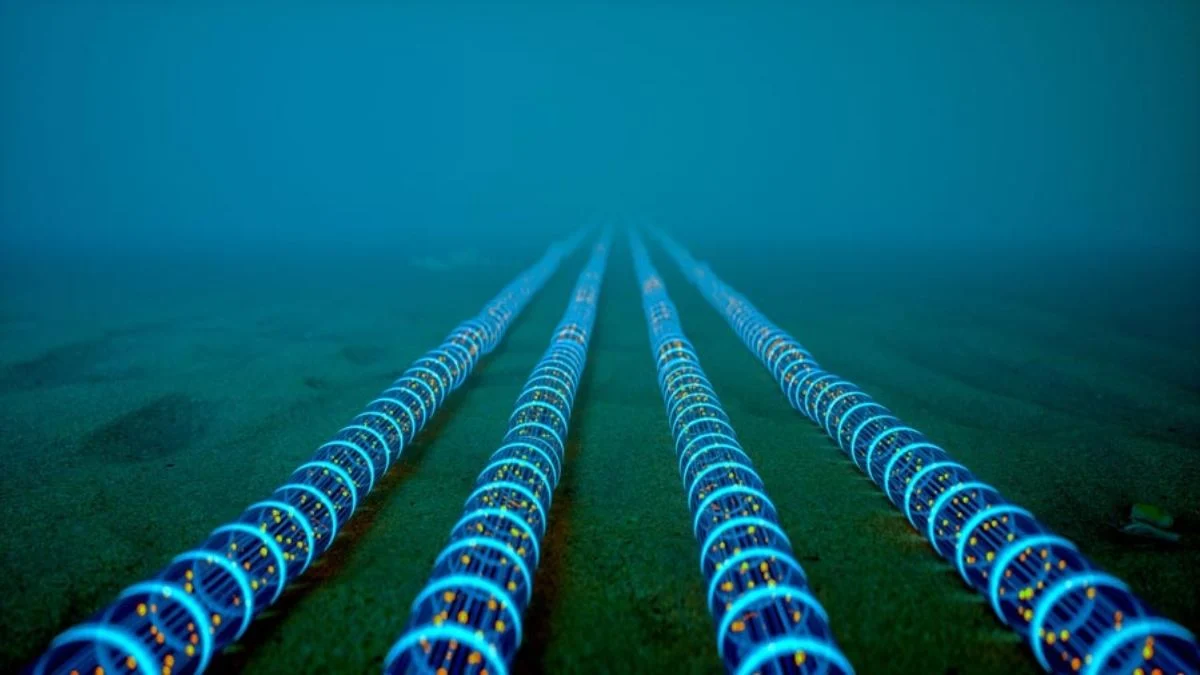
There is now wide debate over whether satellites in space could keep the whole world online if undersea internet cables were cut. Could Elon Musk’s Starlink keep the world connected without interruption? The short answer is that Starlink can keep emergency communications going in a crisis, but it cannot take the place of the vast network of undersea cables.
About 99 percent of our international data travels through fibre-optic cables laid on the seabed. This network, about 1.7 million kilometres long and spread across the world, suffers around 200 incidents a year for various reasons. When a single cable is cut, millions of people can lose internet access and a country’s international data traffic is badly disrupted.
Simple arithmetic shows the difference in capacity between cables and satellites. If a typical undersea cable can carry 20 terabits, or 20,000 gigabits, of data per second, a backup satellite may carry only 1 gigabit.
In other words, a cable can move about 20,000 times as much data as a satellite. Matching the speed of just one cable would need thousands of satellite links running at the same time, which is not practical.
Repairing a damaged undersea cable can take anywhere from a few days to several weeks. During such a crisis, Starlink and other satellites act mainly as a backup safety net.
The technology helps keep essential services running in a disaster, such as hospitals, government emergency services, limited financial transactions and messaging. But satellites cannot meet the demand of a whole population streaming high-quality video at once, moving large data files, or the round-the-clock data needs of large businesses.
Experts say relying on satellites alone is not enough to keep the internet fully secure. Only a combination of three technologies, undersea cables, underground fibre and satellites in space, can keep the world connected and avoid a major digital disaster.
বাংলায় মূল প্রতিবেদন পড়ুন · Read the original Bengali report