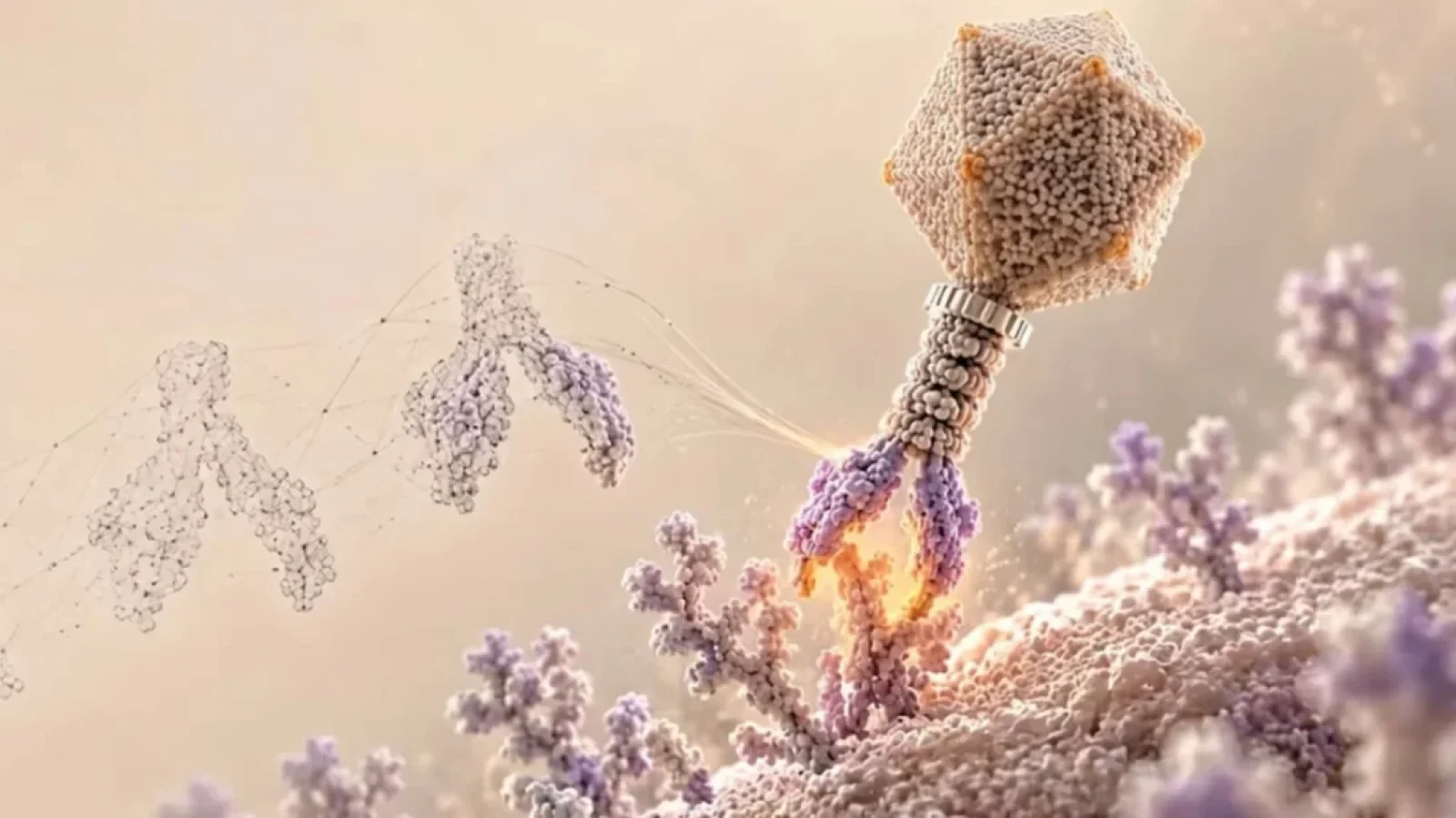
Scientists have given a patient a virus designed with artificial intelligence (AI) as an experimental treatment for an antibiotic-resistant bacterial infection. The virus used to treat the patient, in the United States, was made by Radical Numerics, an AI start-up based in California. The company says it is the first time an AI-designed virus has been given to a human for treatment.
According to a report in the British newspaper The Independent, the experimental treatment was given to a patient with a serious bacterial infection. It used a virus designed by Radical Numerics’ own AI model, Omnii-1.
Omnii-1 designs bacteriophages, or phages, a kind of virus that infects and destroys particular bacteria without attacking human cells. Doctors have already been using phage therapy experimentally as an alternative for serious infections when conventional antibiotics fail.
In conventional phage therapy, doctors usually have to find a natural virus able to kill the bacteria causing the patient’s infection. Radical Numerics’ model took a different approach. Instead of searching for a new virus, it redesigned particular parts of an existing one, with the aim of making a virus better able to recognise and attack the specific strain of bacteria behind the infection.
The company says this AI-based approach could in future make it possible to produce a suitable virus for a patient’s infection within a few days, cutting the time needed to find an effective treatment for complex and antibiotic-resistant infections.
The patient was treated under a programme that allows experimental therapies in special circumstances when standard treatment has failed. Before it was given, the AI-designed virus was tested on bacterial samples taken from the patient. Radical Numerics says that in the laboratory, the virus mixture completely eliminated the antibiotic-resistant bacteria in those samples.
The company has not released details of the patient’s exact diagnosis, how their condition changed after treatment, or whether the infection was fully cleared. Nor has the treatment yet been published in a peer-reviewed paper.
Alongside new possibilities, the use of AI in biological research is also raising safety concerns. In August, researchers at Stanford University and the Arc Institute in the US said they had used AI to design never-before-seen viruses that could kill E. coli bacteria in the laboratory.
That study synthesised and tested about 300 AI-designed viral genomes, of which 16 produced working viruses. The research was carried out on bacteria, not on people.
Researchers have warned that misuse of AI that can design new viruses could pose a serious biosecurity risk, especially if it were used to make viruses able to infect humans. In their experiments, the Stanford researchers concentrated on viruses that target bacteria rather than ones that attack people or animals.
As AI-driven biological research advances, scientists are also stressing the need to regulate the technology and to put strong safeguards in place against its possible risks.
বাংলায় মূল প্রতিবেদন পড়ুন · Read the original Bengali report