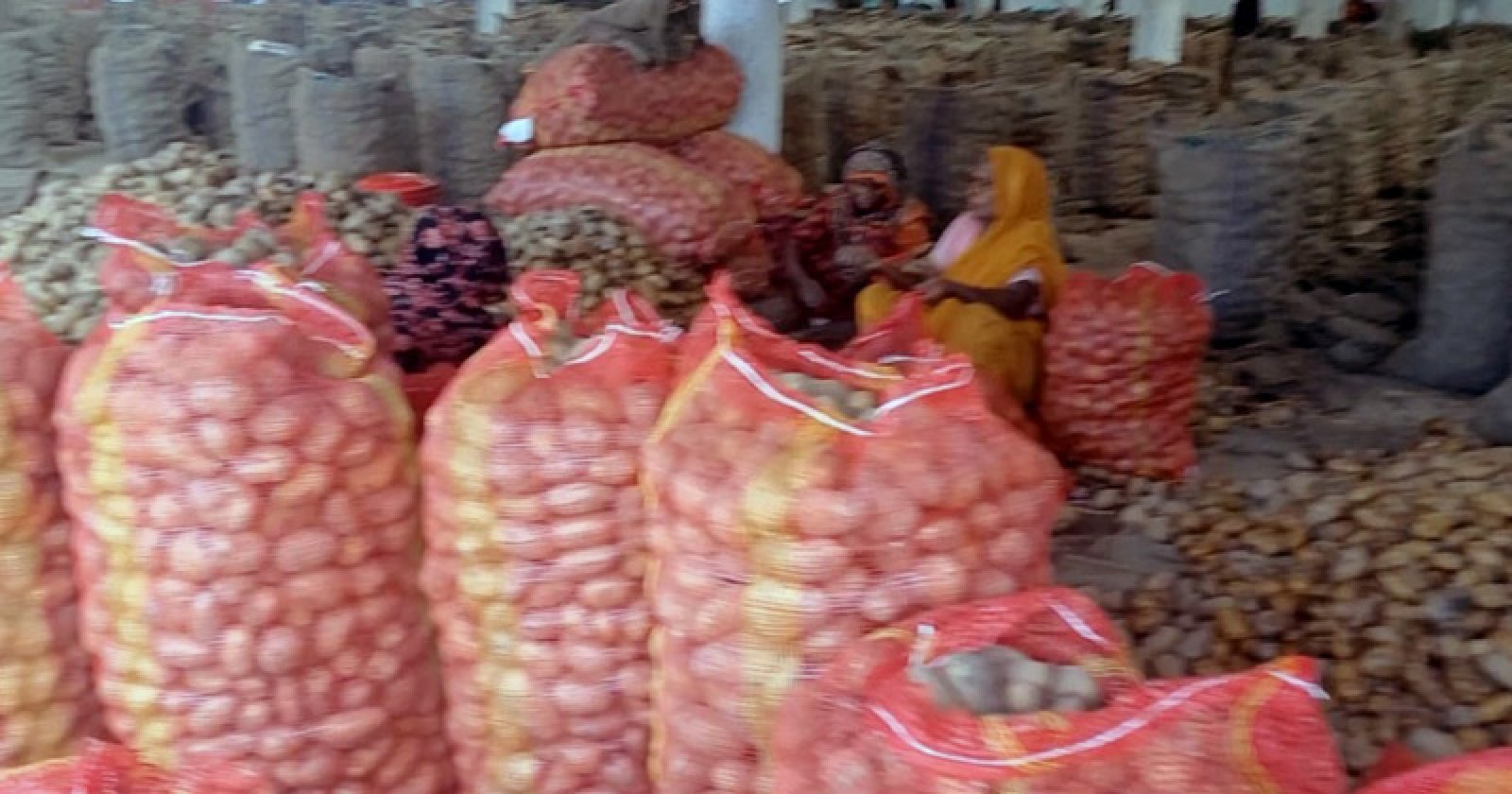
Frustration is mounting among potato farmers and traders in Rajshahi as stored potatoes rot in various cold storage facilities across the district. Farmers and traders allege that the main causes are storing potatoes beyond facility capacity and mismanagement at the cold storages.
Cold storage owners, however, blame frequent load-shedding. As a result, the two sides have traded conflicting accounts over responsibility and compensation for the spoiled potatoes.
Farmers allege that, despite having their own power systems and generators, cold storages stored potatoes beyond capacity at the start of the season. They say the excess potatoes have led to improper storage and poor air circulation, causing them to rot.
Cold storage owners, however, say frequent load-shedding has forced them to run generators to prevent potatoes from spoiling, adding an extra 8,000 to 10,000 taka per hour in fuel costs.
According to the Department of Agricultural Marketing, Rajshahi district has 39 cold storage facilities across its upazilas, of which 37 are operational. These facilities have a combined storage capacity of 433,250 metric tons of potatoes. But with production higher this year, many cold storages have reportedly stored potatoes beyond their capacity. Some facilities were also allegedly forced to accept excess potatoes at the start of the season under pressure from political leaders.
At Tamanna Special Cold Storage in the Talondo area of Tanore upazila, truckloads of rotten potatoes are being removed daily. Saiful Islam, a trader who stores potatoes there, said: “Potatoes were loaded beyond capacity. Now, because of load-shedding, the potatoes are sweating and rotting. We’re having to throw away the spoiled ones.”
Ahad Ali, president of the Rajshahi District Potato and Raw Materials Cooperative Society, said: “Load-shedding isn’t causing much of a problem. The potatoes are rotting because of mismanagement by cold storage owners. Taking on excess potatoes at the start of the season has now created problems with storage management.”
Iftekharul Islam Doni, the organization’s secretary, said: “The potatoes are rotting because of overloading. A cold storage facility needs to reposition its potatoes 25 to 30 times a year. During that process, the potatoes need to be taken out and aired, which involves extra cost. But because many cold storages are holding more potatoes than their capacity allows, they can’t properly carry out this process this year.” Doni added: “Rahman Brothers-1 Cold Storage in Alai Bidirpur, Rajshahi, has a capacity of 14,000 to 15,000 metric tons. Yet it is storing nearly 16,500 tons of potatoes.”
He claimed that nearly every cold storage facility in the district has taken on potatoes beyond its capacity this way.
Fazlur Rahman, secretary of the Rajshahi Cold Storage Association, said: “Some cold storages were forced to take on excess potatoes under pressure at the start of the season. But there’s no problem with cold storage management, and that shouldn’t be causing potatoes to spoil.”
On load-shedding, he said: “A cold storage stays cool for one to two hours after the power goes out. If power still hasn’t returned after that, we have to run generators. Running a generator costs an extra 8,000 to 10,000 taka per hour. We’re having to run generators for one to two hours a day. On top of that, each cold storage has to pay an electricity bill of 2.5 million to 2.8 million taka a month.”
He called for an uninterrupted power supply.
Ramendra Chandra Roy, senior general manager of the Rajshahi Palli Bidyut Samity (rural electrification board), said: “Load-shedding has decreased since last Wednesday. The situation is good now. No one has called in to report problems at the cold storages.”
He said a few hours without power should not cause major problems at the cold storage facilities.
Farmers and traders who have suffered losses from the rotting potatoes have called for a thorough investigation to determine the real cause and appropriate action against those responsible. They have also urged the relevant authorities to intervene urgently to ensure swift, effective measures on compensation for the spoiled potatoes.
বাংলায় মূল প্রতিবেদন পড়ুন · Read the original Bengali report