Is Nepal’s devastating flood turning a corner for international climate journalism? That question is now being asked.
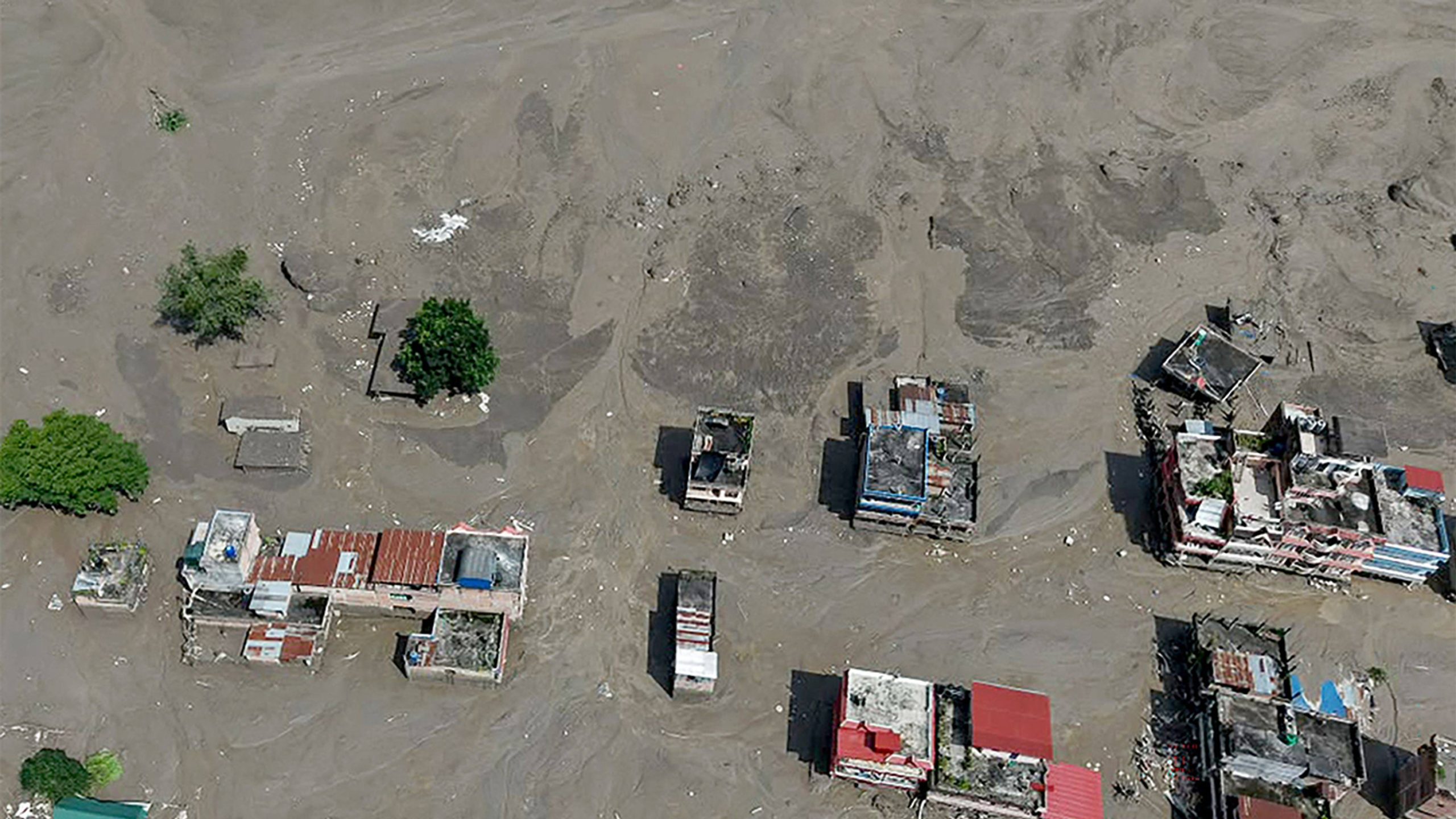
More than 1,100 deaths have been confirmed so far in the deadly flooding in the Himalayan nation of Nepal, with at least 4,000 people still missing. The unprecedented disaster, which swept away buildings, roads and bridges, has stunned the world. But beyond the devastation itself, this tragedy has also marked a turning point in how international media cover the impact of climate change. After years of sluggish coverage of climate issues, there are now signs of a major shift in approach.
Pakistan’s English-language daily The Express Tribune reported Monday (Sept. 7) that, despite overwhelming scientific evidence, leading media outlets have historically shown extreme reluctance to use the phrase “climate change” in disaster coverage. The devastating Hurricane Helene that struck America’s southeast in 2024, the catastrophic wildfires that ravaged Los Angeles in 2025, or the record-breaking heat waves across Europe and Asia throughout 2026 — global warming rarely featured prominently in coverage of any of them. But that picture has changed this week with Nepal’s tragic flooding; even staunchly conservative outlets are now unhesitatingly identifying the disaster as a product of climate change.
The U.N. Environment Programme (UNEP) warned just last week that even with unprecedented cuts to carbon emissions, global temperatures will still rise by at least 1.8 degrees Celsius above pre-industrial levels. Alton C. Byers, an expert at the University of Colorado Boulder, said in a discussion on the Nepal floods that the more glacial ice melts, the more frequent and severe such disasters will become.
Now it isn’t just The Guardian, AFP, The New York Times, AP, Bloomberg or Deutsche Welle — others have followed their lead. Climate coverage on U.S. TV networks had dropped 35% in the first year of President Donald Trump’s second term. But that picture has now changed. NBC News has directly shown glacial-melt statistics while drawing the connection to international disasters.
Even CBS News CEO Bari Weiss — who had laid off the network’s entire climate desk and dismissed climate awareness as “woke,” or supposedly cheap ultra-liberal populism — has seen her network change its tune. Citing expert Daniel Swain, CBS Evening News and its morning show clearly stated in the last week of August that, according to experts, this glacial collapse and extreme weather is fundamentally linked to climate change.
Although “woke” is generally used to mean social and environmental awareness, the word carries a derogatory connotation in right-wing or conservative U.S. politics, where scientific facts like environmental protection or climate change are dismissed not as real problems but as a fashionable agenda of the left or ultra-liberals, mocked with the label “woke.”
Nepal’s political leadership has helped drive this bold shift among journalists. Nepal’s Foreign Minister Shishir Khanal has directly told media that global warming is responsible for this disaster, and that Kathmandu is now demanding compensation from major polluting countries. That statement became a top headline across global media, including Reuters, CNN and the BBC.
Traditional climate deniers, of course, haven’t stayed quiet. The Wall Street Journal has tried to dismiss the entire matter as “Western media speculation,” avoiding any science-based explanation. Meanwhile, internet conspiracy theorists have spread rumors blaming an Alaska-based research project called HAARP for the Nepal floods. AFP’s fact-check unit quickly debunked that claim as false, identifying global warming as the primary cause.
Nepal’s extreme tragedy has once again brought into focus the cruelest truth of the climate crisis: those who pollute the least are the first and worst affected. As author Bill McKibben has calculated, an average American emits about 14 tons of carbon a year, while an average Nepali emits just 0.4 tons.
Contributions to the “Loss and Damage Fund” established at the COP28 summit in 2023 have been modest, but The Nation reported this week that discussions have begun on providing Nepal a symbolic compensation payment. Meanwhile, top energy companies like Exxon knew as far back as 1981, from their own internal research, that carbon emissions would bring catastrophic consequences for humanity — but they kept those findings hidden. If journalism’s core duty is to hold the powerful accountable, now is the right time to make clear that ordinary Nepalis are paying the price for the profits of Big Oil and top petroleum companies.